














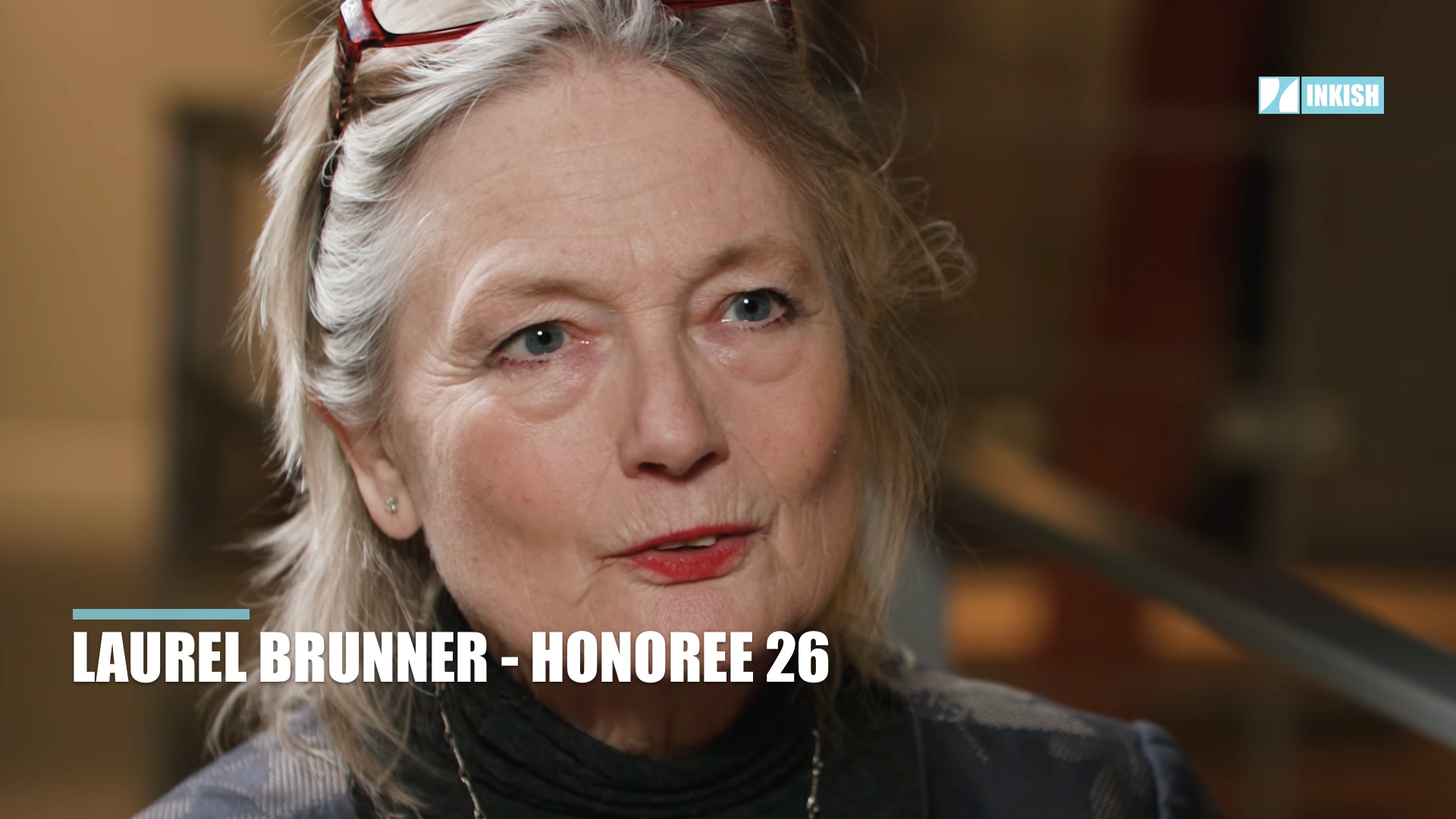
Laurel Brunner · Managing Director · Digital Dots · INKISH Honoree 2026
In this engaging and wide-ranging conversation, Laurel Brunner reflects on a life shaped by curiosity, movement, music, technology, and an enduring passion for the printing and publishing industry.
From her love of dancing—fueled by a lifelong connection to music and an energetic personality—to her international upbringing between London, Germany, New York, and California, she shares how cultural mobility shaped her worldview. After leaving a conventional life in the UK at just 21, she moved back to the United States, studied linguistics and English literature at University of California, Los Angeles, and supported herself through college by working with Jonathan Seybold.
What began as a temporary typing assignment evolved into a formative role within the Seybold organization, helping build what would become one of the most influential platforms in desktop publishing and digital prepress. She reflects on the early days of desktop publishing, the revolutionary shift from traditional prepress workflows, and how those foundational years directly connect to today’s digital data-driven publishing ecosystem. The work done then, she explains, laid the groundwork for a world where digital content creation and distribution are accessible to anyone—from novelists to global brands.
Now at 69, Brunner remains deeply engaged in the industry, even as she balances technical writing with her desire to focus more on fiction. As a convenor within an international standards technical committee focused on graphics technology and sustainability, she leads a global working group developing standards for sustainable print. Sustainability, she explains, has always been personal—driven by an intolerance for waste and a belief that efficiency and environmental responsibility can coexist with commercial success.
The conversation explores generational change, industry reinvention, and the tension between what leaders say and what they are willing to give up. She reflects on how innovation often comes from necessity, recalling how the prepress revolution forced companies to become more efficient to survive. The same logic, she argues, applies to sustainability today: real progress often follows commercial incentives.
She also discusses the challenge of being heard in a fast-moving information landscape, the importance of writing in ways that resonate, and how global collaboration—sometimes from the most unexpected places—helps shape meaningful industry standards.
Receiving recognition for her work came as a surprise, especially since she considers herself more of a behind-the-scenes contributor than a visible industry personality. Yet her influence spans decades of transformation in publishing, digital workflows, and sustainability advocacy.
The conversation concludes with reflections on the power of publishing itself. Whether through newspapers, books, labels, or digital substrates, she describes printing as the vehicle through which society shapes and shares knowledge. Events that bring people together person-to-person—without corporate filters—remind her of the early Seybold seminars, where innovation was born in conversation as much as in conference sessions.
A thoughtful and energetic dialogue about global perspective, sustainability, generational responsibility, and the enduring belief that publishing—at its core—shapes how we understand the world.



Contact
Digital Dots
TN19 7JB Burwash
United Kingdom
Email : lb@digitaldots.org

Fri February 27th
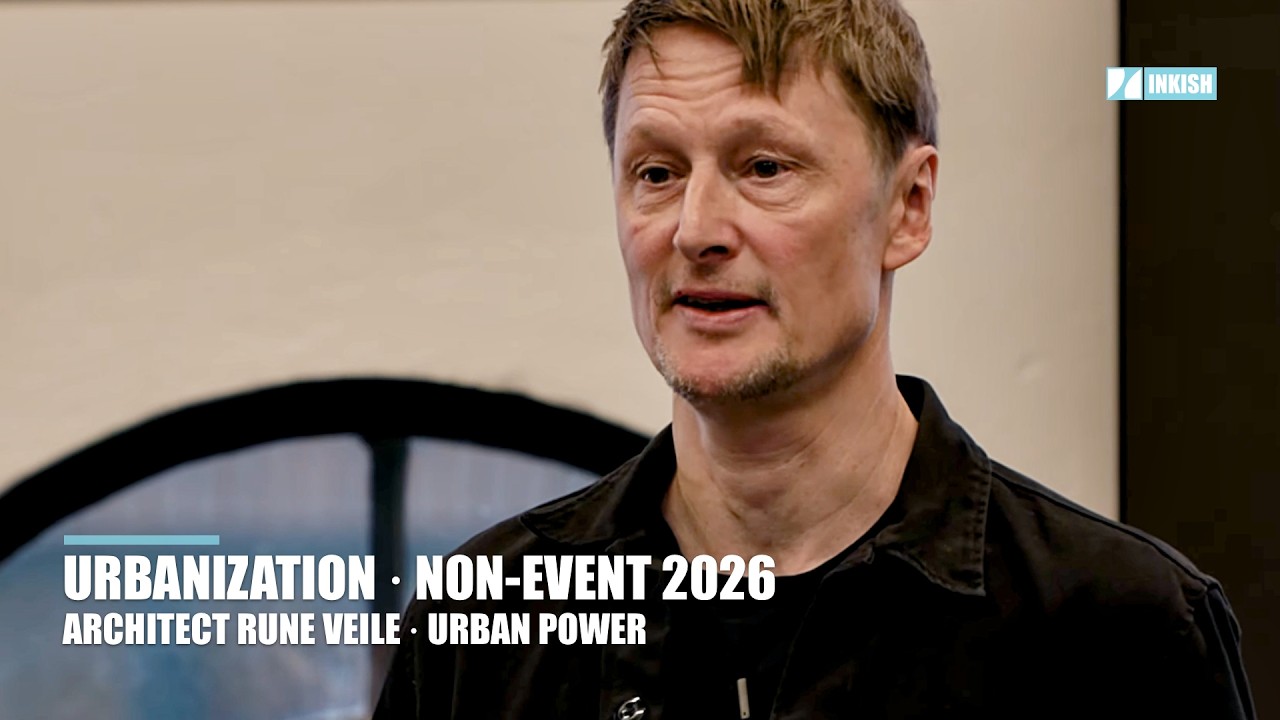
Architect Rune Veile · URBAN POWER · at t...
In this inspiring and visually rich presentation, Rune Veile, co-founder of Urban Power, takes the audience on a journey through contemporary Danish urbanism and the challenges shaping our cities. Founded around 12 years ago with two partners, Urban Power works at the intersection of buildings, landscape, and urban planning, guiding clients through complex processes that often span 5, 10, or even 15 years. Many of the projects shown are still evolving—reflecting the long-term nature of meaningful urban transformation. Rune Veile outlines the urgent issues facing Denmark: rising CO₂ emissions from inefficient housing and demolition, biodiversity loss, increasing car dependency, flooding from cloudbursts and sea level rise, and the fundamental challenge of limited land in a small country. Drawing on national statistics, he highlights how each person in Denmark effectively accounts for more than 1,000 square meters of urbanized space when infrastructure, parking, and leftover areas are included. The conclusion is clear: we must use space far more intelligently. Through conceptual proposals and built projects, he demonstrates how Urban Power addresses these challenges by combining functions, reusing existing structures rather than demolishing them, thoughtfully densifying cities, integrating biodiversity into public spaces, and strengthening pedestrian and cyclist connections. Ideas such as a continuous green spine connecting fragmented natural areas across Denmark and a high-speed rail ring transforming the country into a “one-hour city” illustrate how infrastructure and ecology can be reimagined at a national scale. The presentation then moves into concrete examples around Copenhagen and Scandinavia: transforming former shipyard halls into student housing and event spaces; converting outdated office parks into mixed-use residential communities; creating “symbiosis housing” that combines offices, urban farming, kindergartens, and homes within one building; and designing community-oriented housing in wood and low-CO₂ materials. Rune Veile emphasizes identity, social interaction, and shared facilities as essential components of sustainable living—not only reducing emissions but improving quality of life. He also discusses the realities of development, including municipal regulations, affordable housing requirements, and the financial pressures shaping modern cities. Projects range from dense harbor developments to nature-integrated housing in Norway and large-scale visions for entirely new urban districts. The talk concludes on a personal note with the home Rune Veile designed and built for his own family—an experiment in climate adaptation prepared for future flooding. Constructed over three years, the house reflects both technical precision and lived experience, reinforcing his belief that architects must understand every scale of building, from national planning to the smallest construction detail. Throughout the presentation, Rune Veile makes a compelling case that cities are not just part of the climate problem—they are central to the solution. With creativity, long-term thinking, and intelligent use of space, urban environments can become more sustainable, more resilient, and far more livable.