


















Call in the experts David van Driessche CTO FourPees
Calling in an expert can be the missing link to successfully find and implement the right tools or automation for your (printing) business. In this episode we address some of the major questions that arise.
Company slogan:
More output, less hassleHelping print operations succeed by implementing hassle-free automation.
For more than a decade now, Four Pees nv provides solutions that streamline entire print and packaging productions all across the globe.They have sales operations in Belgium, The Netherlands, The United Kingdom and France and also rely on a network of 40+ partners worldwide to give the customer the best service possible.
Four Pees was founded in 2007 in the city of Ghent in Belgium.Main goal: automation that flows smoothly. Automation that not only makes work easier but also helps companies thrive.In short: hassle-free solutions to headache-inducing operational challenges.
Some facts:
200+ implementations
14 years of experience
40+ tech partners
4,000 recurring customers
CTO, David van Driessche
https://www.linkedin.com/in/davidvandriessche/
Hi, I’m Jacques. And this is ’10 to INKISH’ with David van Driessche, the CTO of Four Pees. With headquarters in Ghent. And we’re talking printing industry again. So welcome. Hi David! Welcome again to a new episode of ’10 to INKISH’. But today we’re actually going to talk a little bit about calling in an expert. Right? So, but first of all, before we get into this, maybe just give us a little introduction on yourself and on your company ‘Four Pees’.
Sure. As you said, my name is David. I’m the CTO of ‘Four Pees’ and ‘Four Pees’ is a value-added software distributor and integrator. I’m also at the moment Executive Director of the Ghent Workgroup. Which means I’ve been involved in PDF and automation and standardization over the last twenty-five years. I think, yeah.
Well, impressive. Yeah. So, should I call you David or Executive Director? No, just kidding.
David will be fine.
Okay David will do it then. Well anyway, like we always have in this episode of ’10 to INKISH’… Here again, we have asked you to bring along like a small, short video clip on the topic ‘calling in an expert’. Do you even need one? Or do you do it yourself? But I propose that we have a look at the video clip and then we can dig into it a little deeper.
When is the right time for a printer to call in some external help?
Probably sooner than you do today. I find it very strange. But if your shoulder hurts, then you’re going to go to a doctor. And most people will do that relatively quickly. You’re not going to wait six months or a year. When you look at this in a business context, we tend to struggle along for quite a long time before you reach out and get help. Bringing in an expert doesn’t mean that everything needs to change or that you need to keep with the medical comparison that you need to go and have a full body scan immediately. You can just go to an expert, try to look at an immediate problem and see what the possibilities are. And I think that is something that companies should do quicker than they do today.
What is the extra value an external consultant can bring to the table?
I really like the term external experts. Because it identifies what I think are the two value points. The first thing is that it is someone who is external. He’s outside your company. And that means that their vantage point is almost certainly going to be completely different than your own. It is always easier to spot the problems in someone else’s organization than it is in your own organization. That’s how it is. And then next to that, the expert part is, of course, important as well. Even if you have technical people in your company, you probably don’t have technical people who spend one hundred percent of their time thinking about preflight quality control. Web-to-print automation, you name it. An external expert, that is probably what they do. They think about this all the time. And they think about it and refer what they see in different companies. And the experiences that they see in different companies can help what happens in your company. So, I think those are the two main values in there.
Isn’t it going to be much more expensive?
It’s not going to be for free. That should be obvious. I think if you bring in expertise then that needs to be paid for. If you bring in quality expertise, again, quality is paid for. When this topic comes up with printers, I sometimes ask them whether they are going to print my business cards for free. And unfortunately, so far the answer is, is negative and that’s how it should be to be honest. What you need to ask yourself is: if I don’t do this, how much efficiency, how much money do I leave on the table by not bringing in someone external? And by not trying to solve the problems that we’re running into. So of course, you need to look at balance and return on investment. That is important. And you need to find an expert that you feel happy with and that you can trust. But I think if you look at good advice, the return on investment is always there. Whether it’s immediate or in the long term.
Do you only work for big printers (who can afford this)?
Strangely enough, a lot of the most influential projects that we do with people are relatively small. Because if you focus on a real pain point and you can solve that, then that’s going to have a really big effect on the organization. So, what you see is that sometimes we just come in and we do a few hours of training or a few days of training on software that they already have. And that allows them to be much more efficient. Or you work with them on creating a preflight report that is easier to understand for their clients. Which then kind of redefines the relationship you have with those clients. So, when you’re thinking about a project that you do with an external expert, you shouldn’t always think that the whole company is going to change. It can be really small things, low hanging fruits. And so, no, I don’t think that this is only for a bigger organization. So, I think the impact can be just as profound and just as affordable for smaller printers. Absolutely.
Right, David. So, yeah, very interesting that you say this. Because printing plants, print shops are often very secretive, aren’t they? And closed environments. So, yeah, maybe it’s a big plus when you get like someone very experienced who has seen a lot. To get them in and avoid the same traps that are the ones maybe I stepped into. Right. So, yeah. So anyway, David, thank you for your great insights. And obviously the topic was ‘Call in the expert’. I can truly say here that we have one here. And not only from the Ghent Workgroup. But I think all the team with Four Pees. So, if anyone is looking into this topic to maybe get an expert? Absolutely. Check out your contact details in our web page. And they can contact you or Four Pees, for that matter. So, and you guys, thank you for watching again. And I hope I’ll catch you in the next one. See you then. Bye.




Contact

Mon April 1st
Increased Productivity using CERM and ESKO ·...
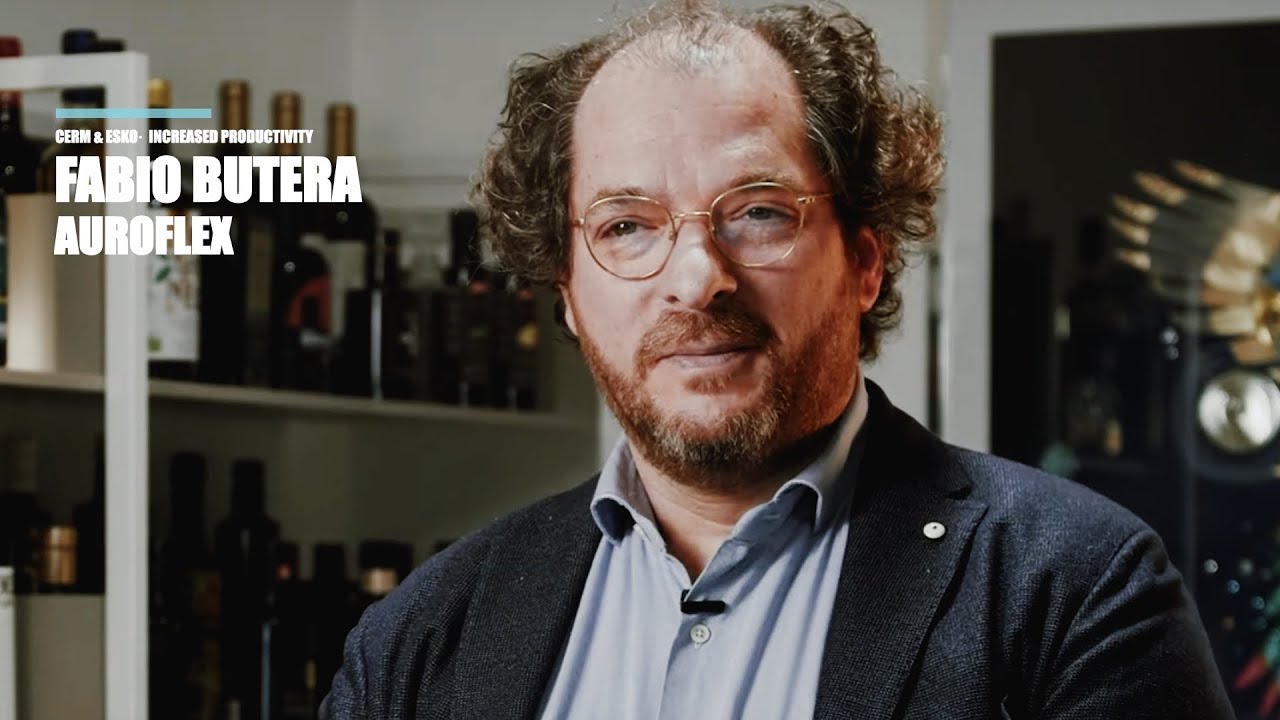
Increased productivity is extremely important - and yes, CERM and ESKO play an enormous role with the Sicialian label producer Auroflex. Still, the business is developed around a quality and passion for supporting the Sicilian wine, food, and luxury products industry. But Auroflex does many things that are a bit out of the standard, for example, an annual design competition, where designers are invited to challenge Auroflex - and all the designs are produced to show what's possible - and as Fabio Butera tells INKISH, this develops a close relationship between Auroflex and the designers, that eventually will make some of the most complex and interesting design. Auroflex produces labels in both flexo, digital, and offset. The most important reason for investment in print technology is from Nilpeter - an offset/flexo hybrid machine - by all means, an amazing company, and see how CERM and ESKO are used in planning, pricing, color management, and, of course, inspection - in tightly integrated solutions - merging beauty with efficiency - love it.