













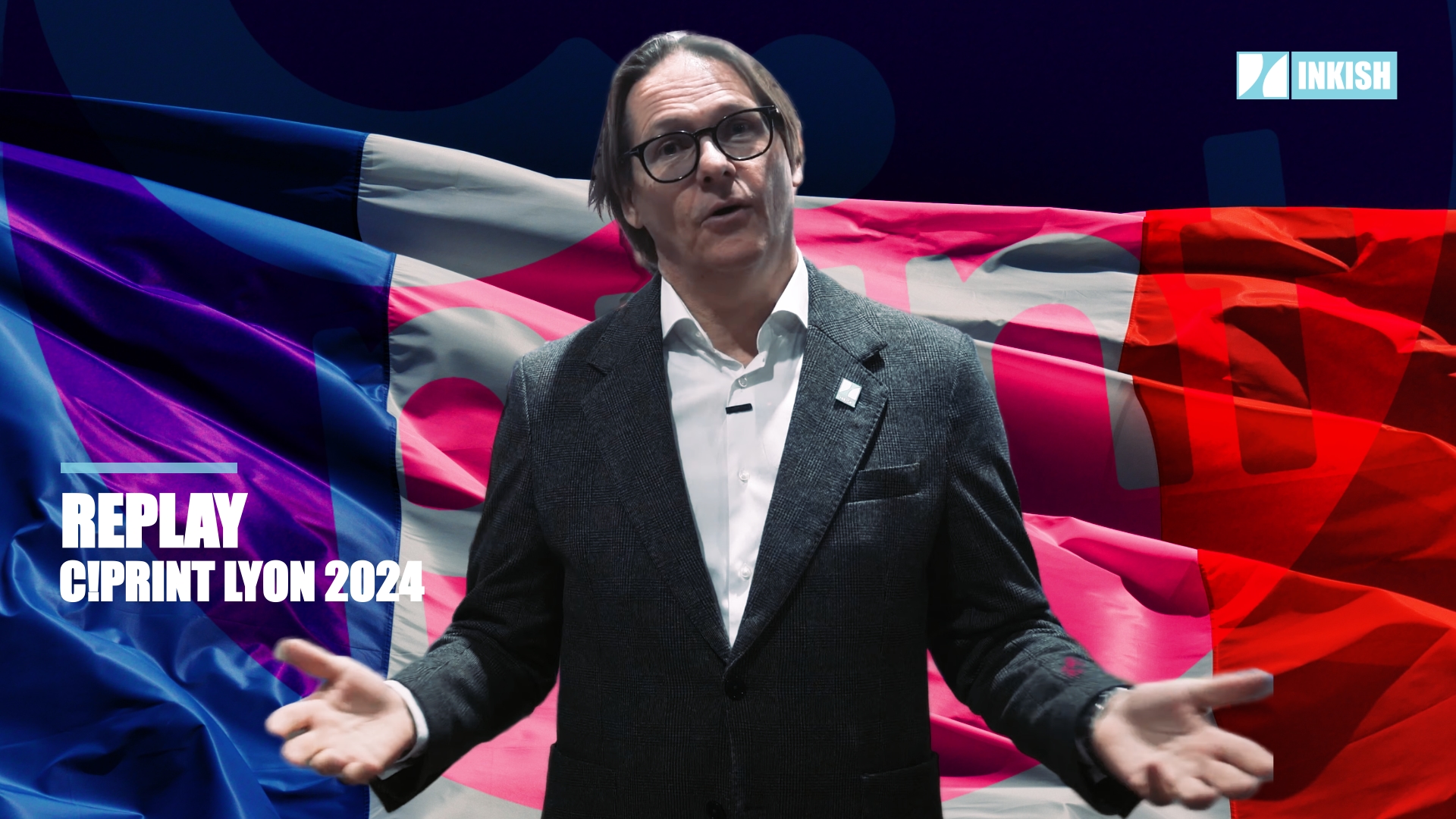









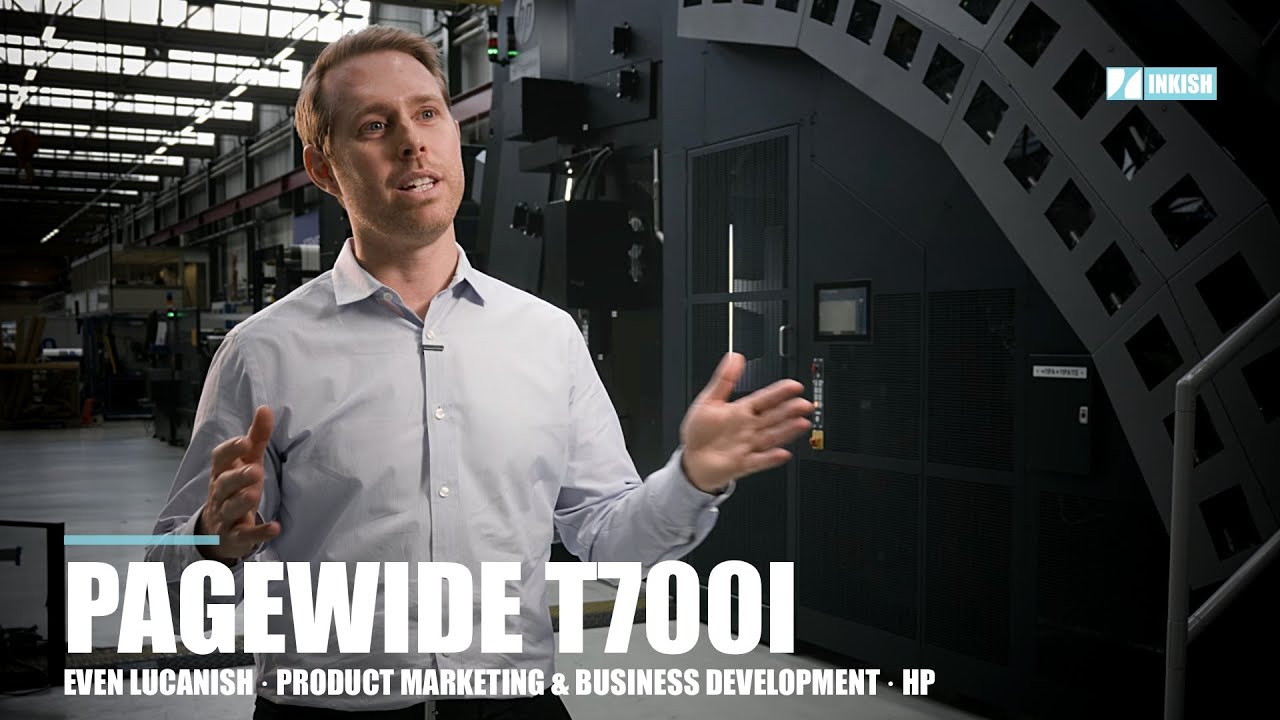
Even Lucanish · Product Marketing & Business Development · PageWide T700i · HP
This video features Even Lucanish explaining how digital packaging solutions are designed to complement, not replace, large-scale analog production. He emphasizes that the packaging industry still depends on long runs, which is why significant effort has gone into ensuring that the economic crossover points between digital and litho production make practical sense. The discussion focuses on how digital presses can add capacity, modernize older equipment setups, and improve overall efficiency within packaging facilities.
Lucanish describes the T700 as a strong fit for the litho-lamination market, particularly for integrated producers or larger independents with single-face laminators. The press is positioned as a complementary asset that allows shorter runs to be shifted to digital, while longer runs remain on litho equipment, reducing setup times and improving utilization across the plant. He explains how higher laminator speeds, enabled by roll-fed digital printing, can increase throughput and unlock additional capacity in existing operations.
The video explores the concept of crossover economics, noting that jobs under roughly 30,000 sheets are often more cost-effective digitally, especially when multiple SKUs are involved. Digital printing allows multiple graphics to be produced sequentially in a single continuous run, effectively combining many short runs into a single longer digital run. Beyond cost, color consistency is highlighted as a key advantage, with digital production delivering repeatable results over time without manual adjustments.
Lucanish also addresses broader adoption challenges, explaining that packaging has been more cautious with digital than commercial print, but that real-world installations have helped demonstrate its benefits. He points to easier staffing and training, tighter integration with MIS and ERP systems, and long-term platform upgradability as essential factors. The video concludes with a comparison of the T700 and T1100 platforms, outlining how form factor, corrugator compatibility, and versatility determine where each solution fits within the packaging and corrugated markets.



No Data Found.
Content for this section will appear here once available
Tue January 6th
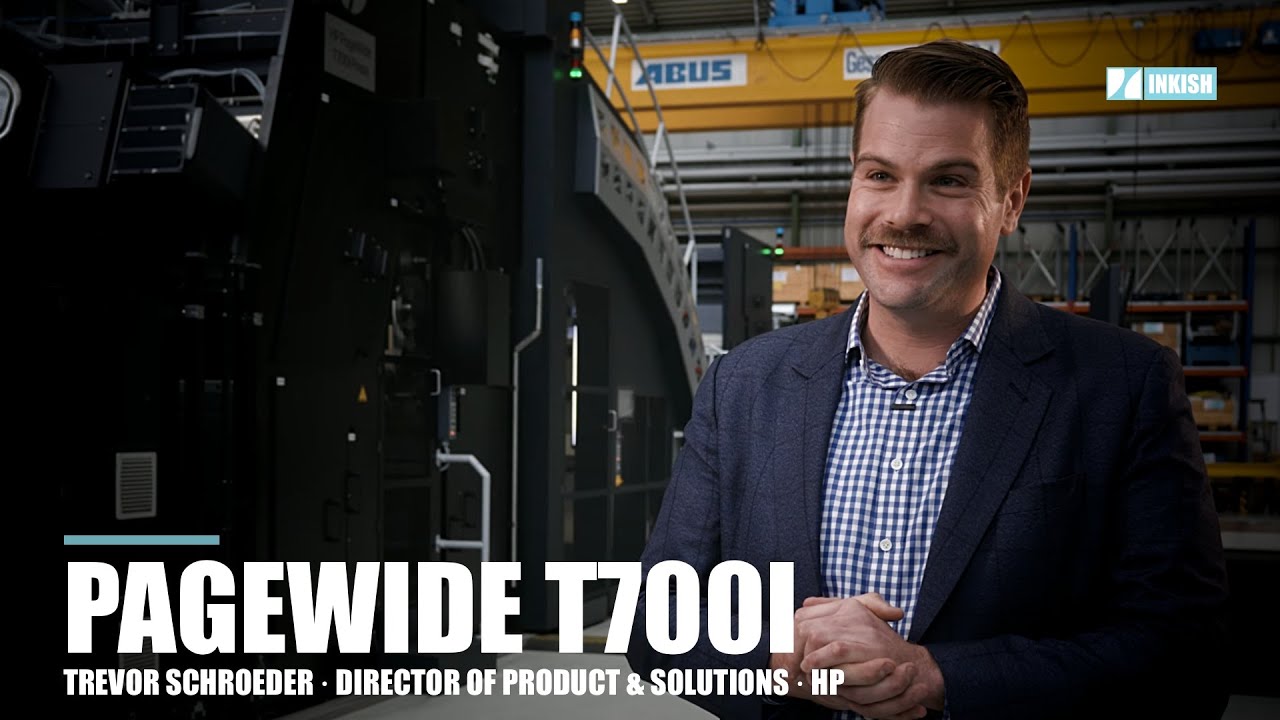
Trevor Schroeder · Director of Product & So...
This video features Trevor Schroeder discussing how HP approaches print as a set of distinct segments, shaped by long experience in areas such as photo printing, publishing, direct mail, and commercial print, and more recently by rapid growth in packaging. He reflects on the industry’s shift from analog to digital and how similar transformations are now playing out across all segments, with inkjet packaging standing out because of its speed, quality, and ability to handle very high volumes. Labels and packaging are described as a significant growth opportunity within HP’s portfolio, combining inkjet and liquid electrophotography technologies. The conversation explains how packaging differs from other print segments due to supply chain complexity, large repeat volumes, and increasingly unreliable forecasts. Digital printing, supported by more interconnected software and ERP systems, enables faster responses to changing demand. Schroeder also addresses material and substrate challenges, including long or unpredictable lead times and strong demand driven by the shift from plastic to paper, particularly in Europe. These trends require manufacturers to reassess strategies, understand their customers’ needs, and invest in the right equipment. The video also touches on material science collaboration across the value chain, ongoing consolidation in the packaging industry, and the importance of manufacturing efficiency beyond the press itself. Digital production is presented as a way to optimize entire plant workflows, free up constrained capacity, and unlock growth within existing assets. The discussion concludes with insights into HP PageWide Industrial’s focus on high-throughput, integrated systems and platform-based investments designed to adapt to evolving packaging and corrugated market demands.