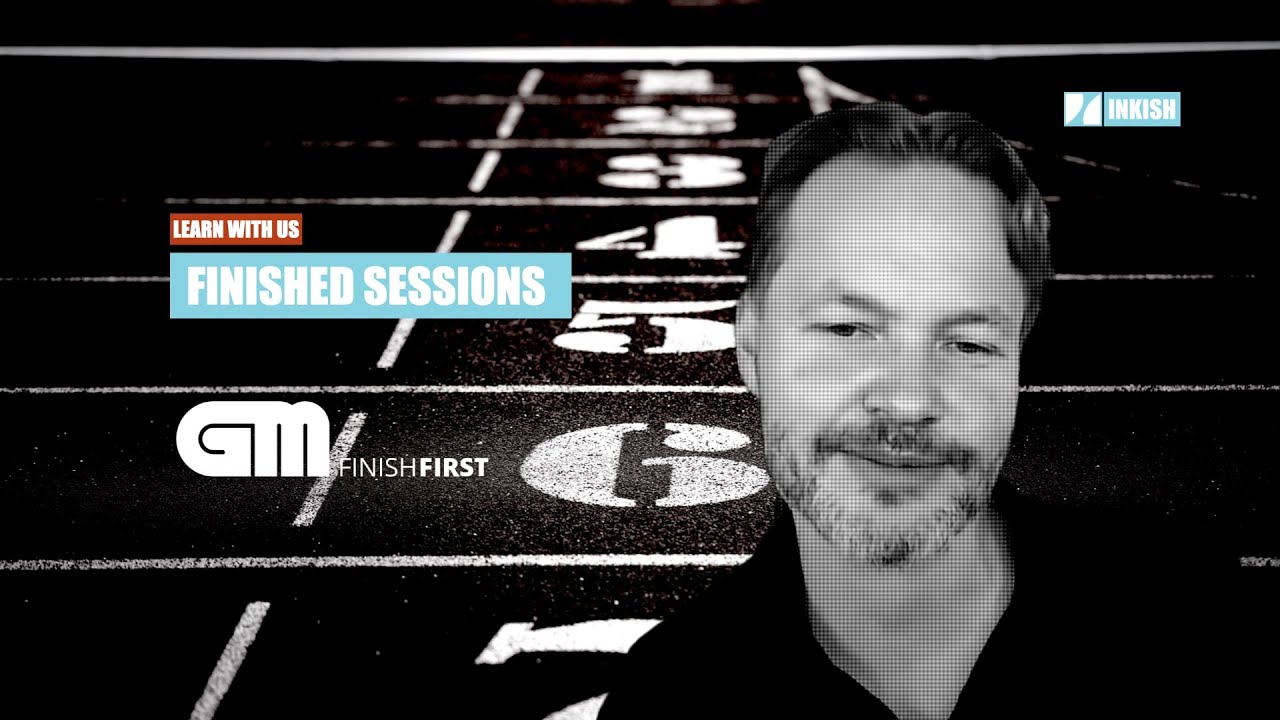
The Finishing Line · GM · Uffe Nielsen · GM

If passion flows in the veins, Uffe Nielsen is a living example. His family-driven company GM (Grafisk Maskinfabrik), has developed into a global supplier of amazing finishing technology for converters, and in this Learn With Us session, he gives us an in-depth introduction to GMs products and, in particular about the company’s self-developed laser cutter. Really interesting!

En Felix Fischer · Managing Director · Die Pharmadrucker

Felix Fischer · Managing Director · Die Pharmadrucker

German edition click here. A small, family-owned printing company in Germany focuses entirely on pharmaceutical and cosmetics printing, with a strong ambition to be the fastest producer of pharmaceutical leaflets and instructions for use. The business originated from a concession to print a weekly newspaper, which served as the foundation for the Bernecker family’s printing activities. For decades, print news remained dominant, but over the past 20 years, the industry has changed significantly. Despite the company’s heritage and long-term direction, recent global instability has shown that outside forces can quickly disrupt small businesses. The pharmaceutical focus began roughly ten years ago, though they had handled related work earlier. Over time, customer needs and available production technologies pushed them further into the pharma niche. Finding skilled labor in Western Europe is difficult due to demographic change and fewer young people pursuing manufacturing roles. The company attracts younger workers with its flat structure, but must invest in training. Pharmaceutical print remains highly specialized even though it still involves printing, cutting, and folding. The substrates used are extremely light—40 to 60 gsm—and require technical adjustments, new processes, and training to manage. Their promise of fast delivery — often within 24 hours and typically within 10–15 working days — sets them apart. Their small size and short-run focus make this speed possible. To support this model, they are transitioning from offset to inkjet, eliminating plates, chemicals, and various mechanical components. This shift improves turnaround time, maintenance needs, and sustainability. The company’s folding work is highly complex—often involving more than ten folds—and few machine builders can support these requirements. H+H became a partner because both companies shared the same development goals. Their configuration includes rotary cutting followed by complex folding. The M9 folder automates pocket adjustment, appealing to younger employees who expect touchscreen functionality. Operators still fine-tune settings, but setup time is drastically reduced. The company sees itself as a development partner, helping refine both folding and thin-paper inkjet solutions. Implementations required collaboration, careful communication, and rapid response to issues from the technology supplier. The production setup delivers major benefits: faster operation, fewer processing steps, fewer operators, reduced error potential, and greater value creation in a single line. The move to inkjet also eliminates heat as a production factor, which they note as significant.
De Felix Fischer · Geschäftsführer · Die Pharmadrucker

Felix Fischer · Geschäftsführer · Die Pharmadrucker

Ein kleines, familiengeführtes Druckunternehmen in Deutschland konzentriert sich vollständig auf den Pharma- und Kosmetikdruck und verfolgt das klare Ziel, der schnellste Produzent von Beipackzetteln und Gebrauchsanweisungen zu sein. Das Unternehmen entstand aus einer Konzession zum Druck einer lokalen Wochenzeitung, die den Grundstein für die Druckaktivitäten der Familie Bernecker legte. Über Jahrzehnte hinweg blieb der Zeitungsdruck führend, doch in den vergangenen zwanzig Jahren hat sich die Branche stark verändert. Trotz des Erbes und der langfristigen Ausrichtung hat die jüngste globale Instabilität gezeigt, dass äußere Einflüsse kleine Unternehmen schnell beeinträchtigen können. Die Spezialisierung auf Pharmazie begann vor etwa zehn Jahren, obwohl entsprechende Arbeiten bereits zuvor durchgeführt wurden. Mit der Zeit führten Kundenanforderungen und die verfügbaren Produktionstechnologien zu einer stärkeren Ausrichtung auf dieses Marktsegment. Es ist schwierig, in Westeuropa qualifizierte Arbeitskräfte zu finden – bedingt durch demografische Entwicklungen und die abnehmende Zahl junger Menschen, die eine Tätigkeit im produzierenden Gewerbe wählen. Das Unternehmen zieht junge Mitarbeiter durch flache Hierarchien an, muss jedoch in deren Ausbildung investieren. Pharma-Druck bleibt trotz seiner Ähnlichkeit mit herkömmlichem Drucken, Schneiden und Falzen hochspezialisiert. Verarbeitet werden extrem leichte Grammaturen – 40 bis 60 g/m² –, die eine technische Anpassung, neue Prozesse und Schulungen erfordern. Das Versprechen schneller Lieferungen, häufig innerhalb von 24 Stunden und typischerweise innerhalb von 10–15 Arbeitstagen, hebt das Unternehmen deutlich hervor. Seine geringe Größe und der Fokus auf Kleinauflagen ermöglichen diese Geschwindigkeit. Zur Unterstützung dieses Modells stellt das Unternehmen von Offset- auf Inkjetdruck um und eliminiert damit Druckplatten, Chemikalien sowie verschiedene mechanische Prozessschritte. Diese Umstellung verbessert die Durchlaufzeiten, den Wartungsaufwand und die Nachhaltigkeit. Die Falzarbeiten sind hochkomplex – oft mit mehr als zehn Falzungen – und nur wenige Maschinenhersteller können diese Anforderungen erfüllen. H+H wurde Partner, weil beide Unternehmen die gleichen Entwicklungsziele verfolgen. Die Konfiguration umfasst einen rotativen Querschneider, gefolgt von einer komplexen Falzmaschine. Die M9-Falzmaschine automatisiert die Einstellung der Taschen, was insbesondere für jüngere Mitarbeitende attraktiv ist, die eine Touchscreen-Bedienung erwarten. Die Bediener müssen weiterhin Feinjustierungen vornehmen, doch die Rüstzeiten werden erheblich verkürzt. Das Unternehmen versteht sich als Entwicklungspartner und trägt zur Optimierung sowohl der Falz- als auch der Dünndruck-Inkjet-Lösungen bei. Die Implementierung erforderte enge Zusammenarbeit, präzise Kommunikation und schnelle Reaktionszeiten seitens des Technologieanbieters. Der Produktionsaufbau bietet erhebliche Vorteile: höhere Geschwindigkeit, weniger Prozessschritte, weniger Bedienpersonal, geringeres Fehlerrisiko und höhere Wertschöpfung in einer einzigen Linie. Der Umstieg auf Inkjet eliminiert zudem Hitze als Produktionsfaktor, was als bedeutend hervorzuheben ist.

En Christoph Schacht · Co-Founder · Printess · PRINTING United 2025

Christoph Schacht · Co-Founder · Printess · PRINTING United 2025

At Printing United 2025 in Orlando, Morten B. Reitoft from INKISH meets his good friend Christoph Schacht, co-founder of Printess, on the final day of the show. Both laugh about how tired everyone feels after several intense days of meetings and interviews, but the energy returns quickly as they begin talking about how far Printess has come in just a few years. Morten recalls speaking with Christoph during the COVID years, when he and his partner, also named Christoph, were quietly building something new. At that time, he wouldn’t say much, but Morten remembers seeing the name Printess already written on their office staircase. Christoph smiles and says that’s where it all started—an idea, a bit of secrecy, and a lot of hard work. About a year later, at LabelExpo Europe, the industry first saw the now-iconic pink branding and the platform's first working version. Since then, Printess has developed into a full-scale editorial and personalization solution for professional online printing. Christoph explains that they wanted to do one thing and do it right, focusing entirely on editing. Not a simple online editor, but something powerful enough for professionals and built to scale for the largest players in the industry. Unlike typical web-to-print tools that offer only simple business card editors or lightweight design interfaces, Printess is built for complexity. It handles text flow, typography, image manipulation, dynamic layouts, and automated data integration, all inside the browser. Christoph says that this is their seventh editor, and they have learned from every earlier version. This time, they didn’t cut corners—they built their own typography engine, even though it was costly —and now they deliver true Adobe-grade quality. Today, more than fifteen million print products are created annually through the platform. Morten points out that Printess also includes AI-driven template generation, allowing a user to type “barbershop” and receive instantly customized, print-ready marketing materials. Christoph confirms that under the hood, it’s complex technology, but for the end user, it’s as easy as using an iPhone. They combine powerful design tools for professionals with an intuitive buyer-side editor for consumers. That simplicity, he says, is key. Christoph also introduces Printess Make, a new solution for online printers that currently only offer PDF uploads. He explains that Printess Make was built for print providers who risk losing customers to platforms like Canva. Canva moved from being just a design tool to also offering printing, and that changes everything. Printess gives printers the same power—a complete online design experience under their own brand without losing customers to someone else’s platform. Printess operates as a white-label SaaS platform that enables printers to maintain full control of their brand and customer relationships. Christoph explains that the buyer never leaves the printer’s website, and Printess earns per transaction, so printers only pay for what’s actually produced. This year marks Printess’s first official appearance in the United States, and Christoph says the response has been very encouraging. They focused first on Europe to refine the model and support structure, but now, as a pure SaaS platform, scaling globally is easy. They don’t ship servers or need large local teams, just great people willing to stay up a bit later for U.S. time zones. When Morten asks about the company’s next steps, Christoph says they are happy where they are and will stay laser-focused on editing—precise, powerful, and scalable. Partners like Infigo have already integrated Printess into their web-to-print systems. Printess is not a competitor but an enabler, helping partners grow stronger. As they close the interview, Morten smiles and says that the name that once appeared quietly on a staircase is now on everyone’s lips at Printing United. Christoph laughs and says it has been quite a journey and that this is only the beginning for Printess.

En Stefan Schülling · Managing Director · MBO Post Press Solutions · PRINTING United 2025

Stefan Schülling · Managing Director · MBO Post Press Solutions · PRINTING United 2025

At Printing United in Orlando, Morten B. Reitoft from INKISH speaks with Stefan Schülling, Managing Director of MBO Group in Germany, about the company’s international position, market outlook, and the strong energy at this year’s exhibition. With more than 830 exhibitors and record-breaking visitor numbers, Schülling describes the atmosphere as vibrant and encouraging — far busier than many recent European trade shows. He emphasizes that the return of large crowds is a positive sign for the entire industry, especially for companies like MBO that invest heavily in both technology and presence at major global events. Schülling explains that while MBO operates worldwide, the American market has always been especially important. The company established a direct organization in the United States early on and continues to see strong demand there. However, he stresses that MBO’s strategy remains global, with each region playing a vital role in the company’s success. He acknowledges that current economic conditions vary by region — with challenges in Asia, emerging markets, and the effects of tariffs and currency shifts — but remains confident in MBO’s ability to navigate these factors and continue growing internationally. When comparing markets, Schülling notes that MBO is perceived somewhat differently across regions. In Europe and most other parts of the world, the company is still best known for its high-performance folding machines — a core technology that built its reputation. In the United States, however, MBO has become increasingly recognized for its continuous inkjet and postpress finishing solutions. This shift, he explains, is the result of both stronger digital print adoption in North America and MBO America’s successful focus on modular, inline finishing systems that integrate seamlessly with high-speed digital presses. Looking ahead, Schülling sees significant potential to expand these same technologies in Europe. While acknowledging that competition remains strong, he believes MBO’s innovation pipeline and upcoming product introductions will strengthen its position. Technologies already proven in the U.S. market — particularly in digital finishing and automation — will soon be made available to European customers as well, creating new opportunities for growth. As the discussion concludes, Stefan Schülling expresses optimism about the future, saying that while the industry continues to evolve, MBO’s commitment to innovation and adaptability remains unchanged. “Being pessimistic is not the right attitude,” he says. “Opportunities are always there — we just have to look for them.”
No Data Found.

Content for this section will appear here once available