















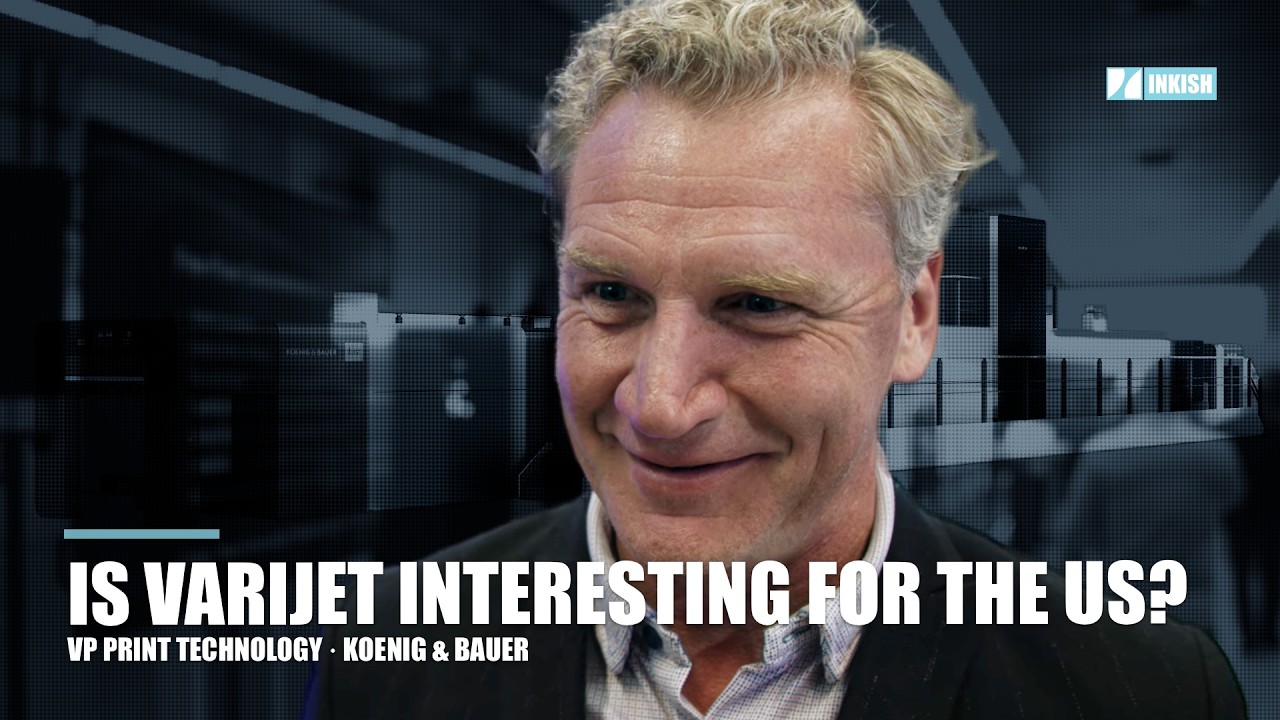
Is VariJET interesting for the US market? Chris Travis · VP Print Technology · Koenig & Bauer
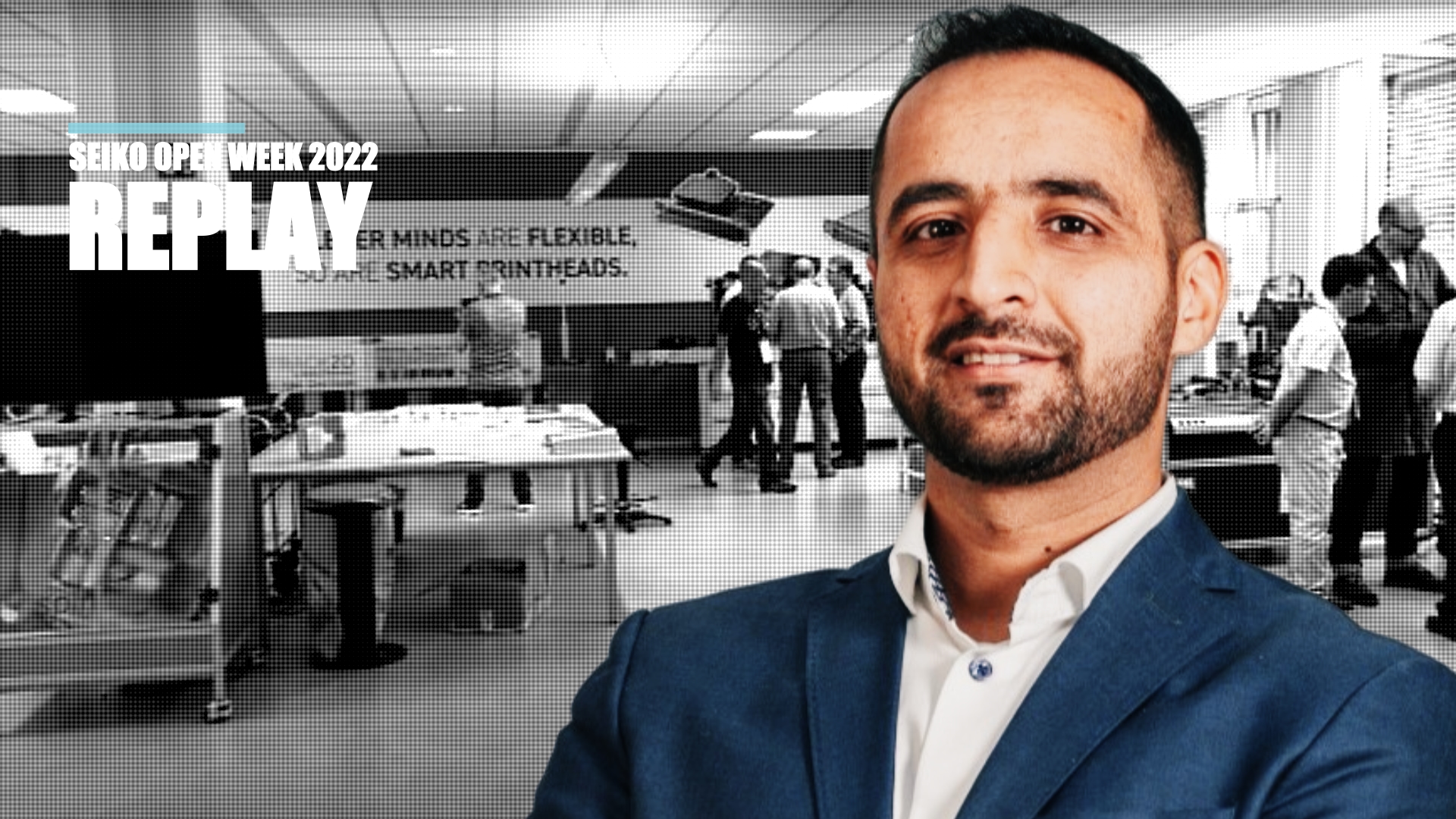
At Koenig & Bauer’s variJET Open House in Radebeul, Morten B. Reitoft speaks with Chris Travis, a familiar face to many in the industry and, for some, almost synonymous with Koenig & Bauer itself.
With more than 20 years in the company, Chris Travis has seen the evolution from traditional offset to the growing role of digital, and that experience frames the conversation. Because while the variJET represents something new for Koenig & Bauer in sheetfed inkjet, it’s not arriving in a vacuum. Inkjet has already been established in other segments, but this is different. This is about bringing digital into folding carton production at scale.
The discussion quickly moves beyond technology and into market reality. In North America, where Chris Travis spends much of his time, the interest is clear. Run lengths are coming down, but more importantly, expectations are changing. It’s not only about shorter runs, it’s about new opportunities. New applications. New ways of using print.
That’s where the variJET starts to make sense.
It’s positioned to complement offset, not replace it. Taking work off traditional presses where it no longer fits efficiently, while at the same time opening doors to applications that simply weren’t possible before. Variable data, connected packaging, individualization, these are not just features, they are entry points into new business.
And that’s where the conversation becomes interesting.
Because as Chris Travis points out, having a machine like this is not just about production. It’s about what it enables commercially. It gives printers a tool to approach customers differently, to bring ideas to the table that go beyond price and volume.
There is also a clear acknowledgment that the market is evolving unevenly. In Europe, regulation and traceability are strong drivers. In North America, the push is different. More focused on engagement, on how packaging connects with consumers, how it becomes part of a broader experience.
Different drivers, same direction.
The B1 format plays an important role here as well. It places the variJET in a segment where there are still relatively few digital alternatives, offering a combination of size, quality, and flexibility that stands out in the current market.
What comes through in this conversation is not hype, but a pragmatic view of where things are heading. Inkjet is no longer something to explain or defend. It is understood. The question now is how to use it effectively, where it fits, and how it can create value alongside existing technologies.
Watch the interview with Chris Travis to hear how one of the industry’s most experienced voices sees the opportunities, challenges, and direction for digital in folding carton production.



No Data Found.
Content for this section will appear here once available
Fri June 26th
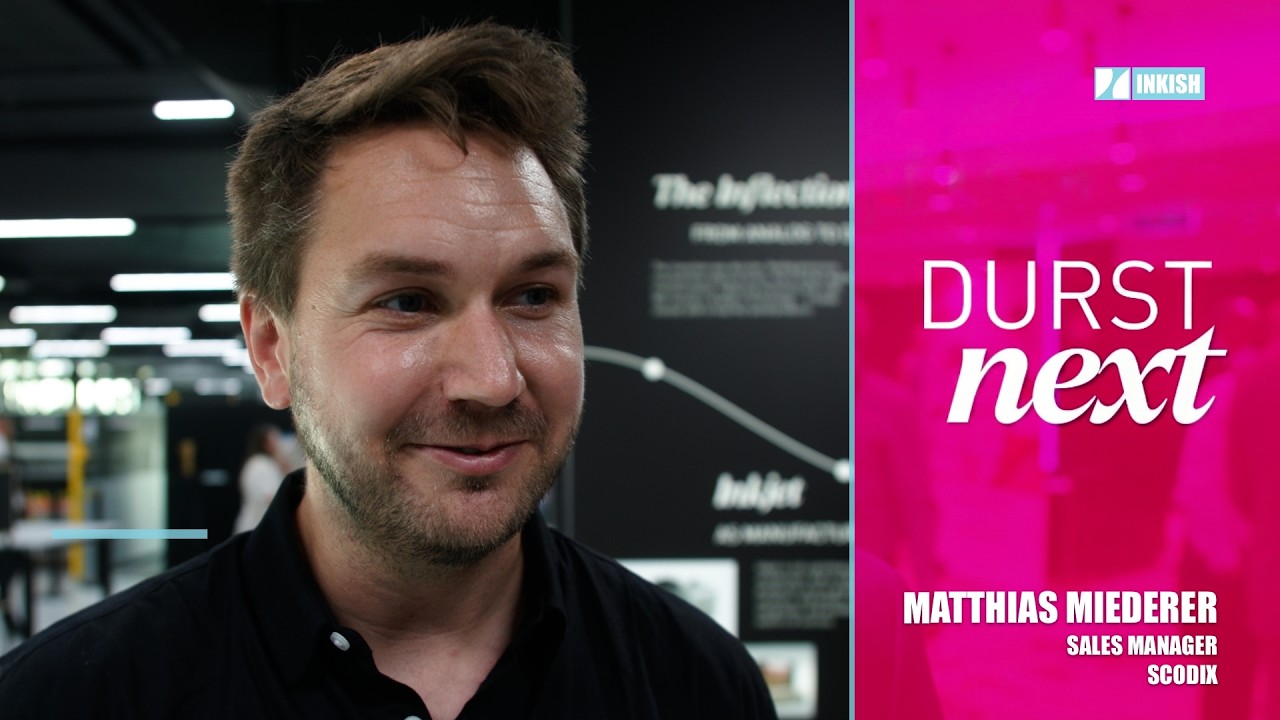
Matthais Miederer · Sales Manager · Scodix ...
At Durst's Print Next event in Brixen, Wayne Beckett speaks with Matthias Miederer, Regional Sales Director DACH at Scodix, about the continued evolution of digital embellishment and why the technology is becoming increasingly relevant across commercial print, packaging, and wide-format applications. Having spent more than a decade working with digital embellishment technologies, Matthias reflects on his journey through the industry and explains why joining Scodix represented the next logical step. Today, he is responsible for the DACH region, one of Europe's most important markets for value-added print, where printers are increasingly looking beyond commodity production towards higher-margin applications. The conversation explores the launch of Scodix's newest platform, which significantly expands the range of printable substrates. From lightweight commercial papers to corrugated board, rigid materials, Dibond, and acrylic, the new press enables print service providers to address a far broader range of applications with a single investment. For many businesses, this opens opportunities to serve new markets while creating greater flexibility across existing production. Wayne also asks an important question that many print service providers may be considering themselves: if you don't already offer digital embellishment, where should you begin? Matthias believes the starting point is not the technology itself but the business case. Digital embellishment is fundamentally about creating additional value, allowing printers to differentiate their products, command higher margins, and generate new revenue streams rather than competing solely on price. The discussion also highlights the growing opportunities within packaging, where shorter production runs and increased demand for premium finishes continue to drive interest in digital embellishment technologies. As brands look for ways to create greater shelf impact without sacrificing flexibility, solutions such as those from Scodix are becoming increasingly relevant. A fascinating conversation about innovation, value creation, premium print, and why digital embellishment continues to open new opportunities across multiple print markets.