

































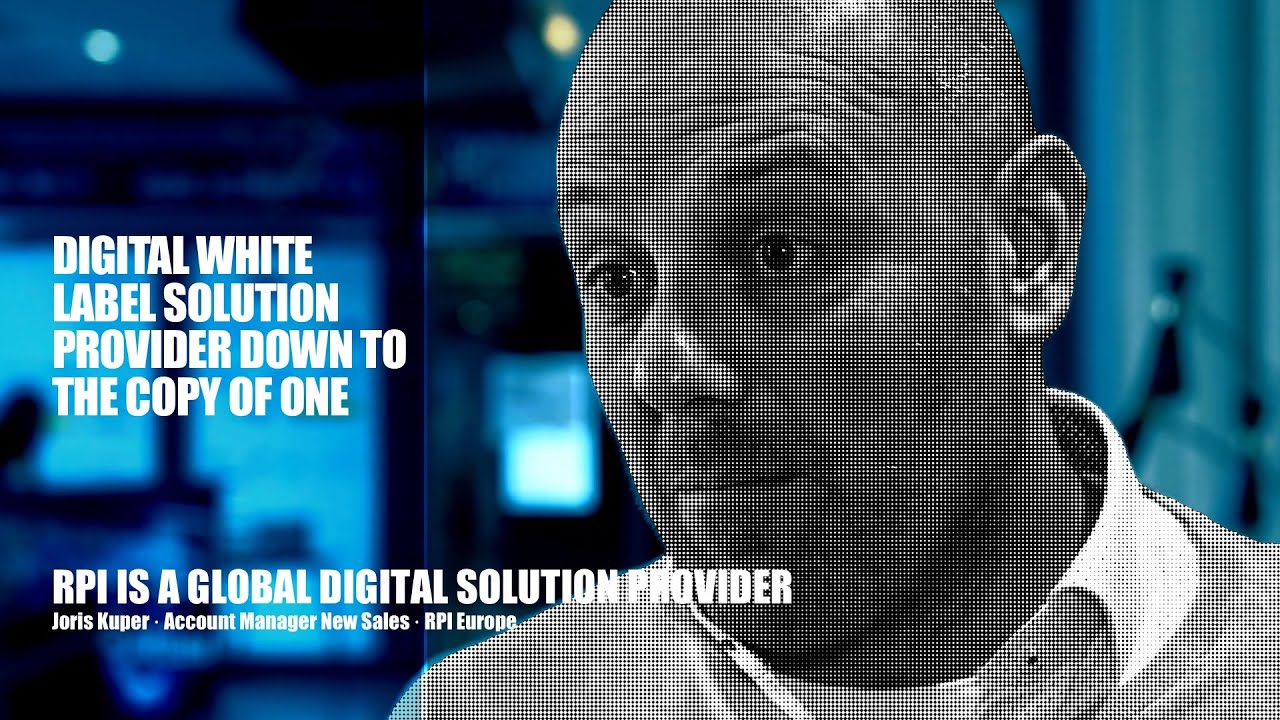
RPI Is a Global Digital Solution Provider Joris Kuper Account Manager New Sales RPI Europe
RPI has operations in the US and Europe, and partners in Australie able to deliver consistent digital print globally down to the copy of one. We met with Joris Kuper, Account Manager New Sales, RPI Europe, at the recent Online Print Symposium in Munich.
Great story.
You only print white labels? 🙂
No, not white labels.
We print many products, like photo products, like a photo books, calendars, cards. and then we also do, business products like brochures, flyers, business cards, all that kind of products. And we worked for many global brands, all over the world.
So yeah, we have, Three facilities in the U S one in Europe. And then we have partnerships with other companies that produce for us. Yeah. As a provider.
In the past, we were a commercial printer. but, in 2008, we moved to white label printing only and also moved into digital only. So. We used to do offset rates. Okay, so you are digital print only? Digital. Yeah, correct.
That’s a always a challenge to, work with our customers. Forecasts. we tried to predict as good as possible, but, yeah, sometimes it’s hard to we are depending on the marketing activities of our customers. Yeah, so we’re always somewhere down below the chain. hopefully things go well. sometimes they don’t, but on the other hand, sometimes, volumes are higher than expected, of course.
So it’s always a challenge, especially during the peak season, November to December. yeah, many of our customers are still in the photo space and that’s a very, very busy period in our company.
But we are still growing and we are expanding our platform or our network. with other, facilities, to be strategically and geographically more important to our customers. one of the reasons that we implemented integrated a Australian partner recently, so we can local fulfillment in Australia as well.
And also for other products that we can’t produce in house, like canvas products, or we look for partnerships with other companies that connect to our platform.
To some extent. Yes, of course. A local production is getting more and more important, of course. but, yeah. consistency throughout the, facilities with your, color management, marketing pieces. other. Customer specific products that you want to deliver? yeah. I think we are in a good space.
We tried to, maintain the, the same, equipment in our facilities. so we guarantee same type of product, same quality throughout all our facilities. And then also color management, is also a global, part of our daily daily work, of course,
The paper types are not always globally available. So we work sometimes with slightly comparable paper types. Yeah, our reprint rate is below 1% so, which is very good in the market. I guess
We track everything through barcode driven system. So, yeah, we are able to, track each order throughout the day. So you know exactly. If there’s an error, you exactly know where it is. You can see. So you can solve the problem before it’s shipped. Actually, in our production, we have a lot of manual checks, also, visual checks, prints, smears, dots, whatever that can occur in the machine.
And then after cutting, of course, also other errors might occur. So we’d always do checks throughout the process. And as soon as we notice there something wrong, we send a reprint to our printer and start the process again.
So we are actually a specialized in the batch size one productions. So our entire flow is set up. to handle that. So we are thick books, big books, small books, hardcover, softcover, everything, running through each other. but, yeah, offering that to our customers, that flexibility and that, variety of products, that’s very important to them.
We are depending on the shippers, of course. as soon as we handed over to our carriers, it’s more or less out of our hands. So, we have good partnerships, but, yeah, things might happen, could happen during transportation. Not everybody treats a book, like it should’ve been treated or they get lost sometimes.
But I think that’s something that, yeah, the entire market has to deal with. Unfortunately.
I really like it. It’s a good environment. to meet other people in the, in the market. customers, competitors learn from other companies, during their presentations. and, yeah, see the challenges they face. in some cases they look familiar.





Contact
RPI Print, Inc
5657 EN Eindhoven
Netherlands
Email : hello@rpiprint.com
Wed September 30th
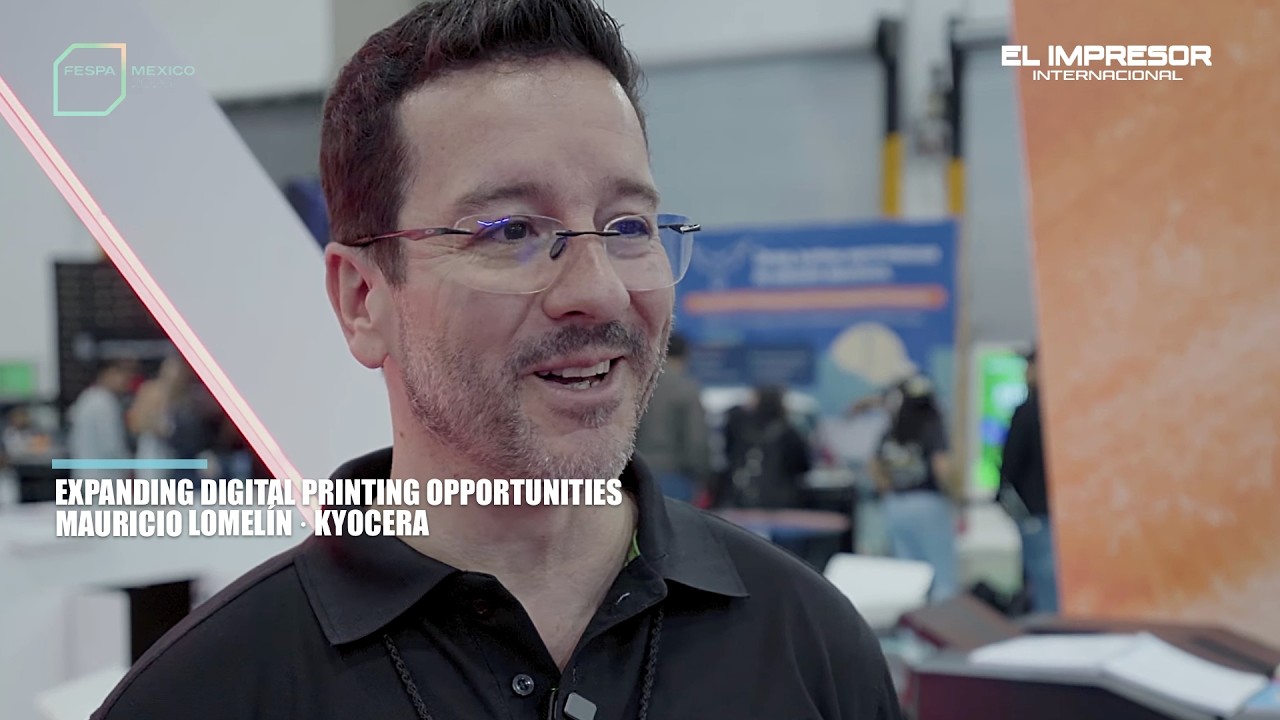
Mauricio Lomelín · Kyocera | Expanding Digi...
English description below: Desde FESPA México 2026, Claudia Mendoza conversa con Mauricio Lomelín, de Kyocera, sobre la evolución de la impresión digital, las nuevas oportunidades para la industria gráfica y la estrategia de la compañía para ampliar su presencia en el mercado de impresión de producción. Mauricio presenta la TASKalfa Pro 15000c, conocida como Victoria, un equipo de inyección de tinta con tecnología propia de Kyocera, capaz de producir hasta 150 páginas por minuto y alcanzar volúmenes de un millón de páginas mensuales. Con aproximadamente 30 equipos instalados en México y 1.000 a nivel mundial, según Mauricio, la compañía continúa consolidando su presencia en aplicaciones como la producción de libros, los documentos transaccionales y la impresión de grandes volúmenes. La conversación también presenta Nova, la nueva propuesta de equipos de producción láser de Kyocera, diseñada para complementar la tecnología inkjet. Mauricio explica cómo la combinación de ambas tecnologías permite a los impresores desarrollar procesos de producción más flexibles, reducir costos operativos y avanzar hacia la impresión bajo demanda. La sustentabilidad, la eficiencia energética, la integración de software y la transición de la impresión tradicional a la digital completan una entrevista que muestra las oportunidades que Kyocera identifica para el futuro de las artes gráficas. --- At FESPA Mexico 2026, Claudia Mendoza speaks with Mauricio Lomelín from Kyocera about the company's expanding presence in production printing and the growing opportunities for print service providers transitioning from conventional to digital technologies. Mauricio introduces the TASKalfa Pro 15000c, nicknamed Victoria, a high-volume inkjet press powered by Kyocera's proprietary printhead technology. Capable of producing up to 150 pages per minute and handling monthly volumes of up to one million pages, the system targets applications ranging from book production to transactional documents. According to Mauricio, Kyocera has approximately 30 installations in Mexico and recently reached 1,000 installations worldwide. The interview also explores Nova, Kyocera's new production toner systems, which complement its inkjet technology and enable printers to combine different production methods. Mauricio discusses how these solutions support the transition toward digital and on-demand printing while emphasizing low operating costs, productivity, and workflow integration. Sustainability, energy efficiency, variable data printing, and Kyocera's broader ambitions in the graphic arts industry are central themes in a conversation about the changing requirements of modern print production.