























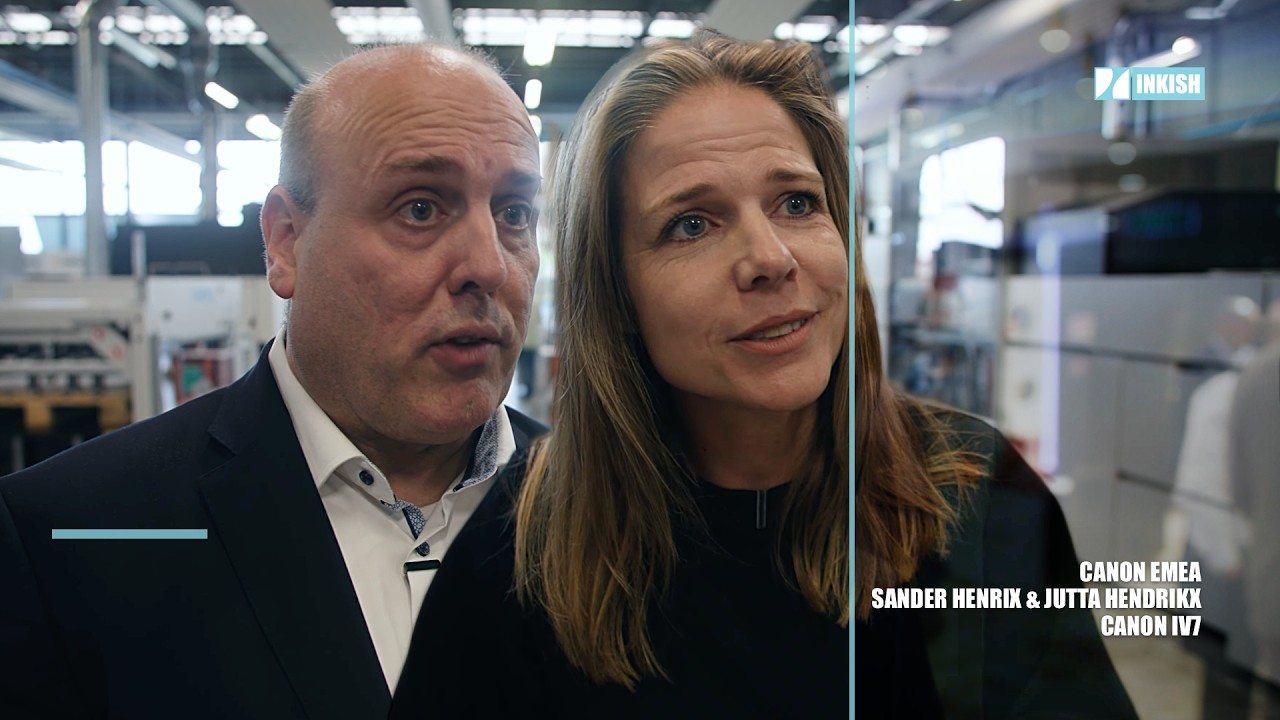
Sander Hendrix & Jutta Henrikx · Canon EMEA · Canon IV7 · Power to Move

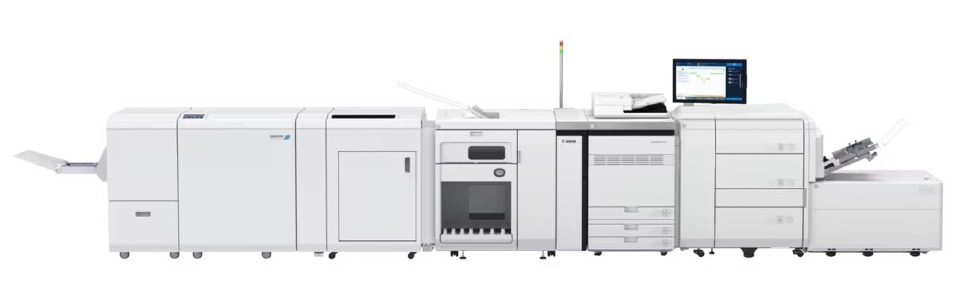
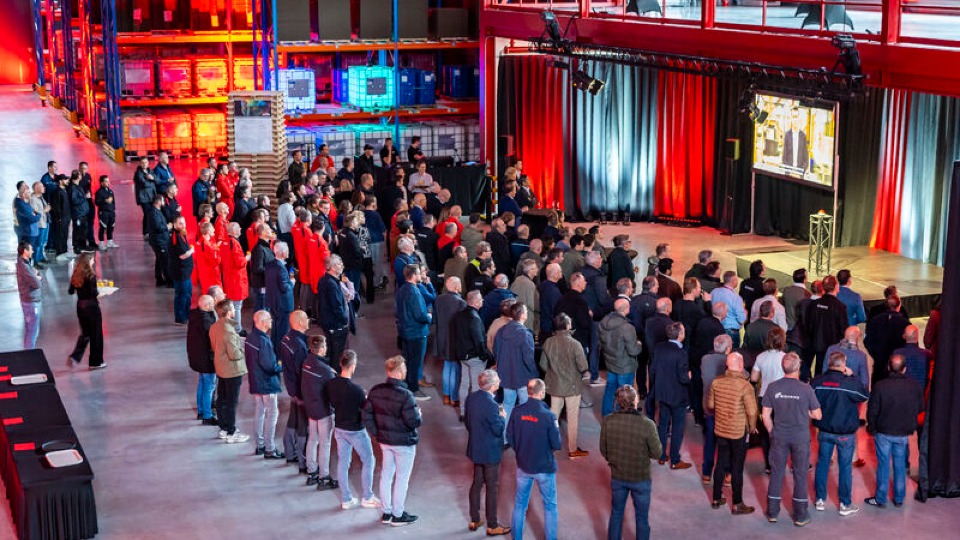
At Canon’s Power to Move event in Venlo, Morten B. Reitoft speaks with Sander Hendrix and Jutta Hendrikx about one of Canon’s most significant developments in sheetfed inkjet printing: the new VarioPress iV7.

The conversation explores the long journey that led to the launch of Canon’s new B2 sheetfed inkjet platform. Building on years of experience gained from the VarioPrint i300 and iX3200 platforms, Canon has developed a press designed to address the growing demand for higher productivity, greater flexibility, and larger sheet sizes while maintaining the quality and workflow advantages that have made sheetfed inkjet increasingly attractive to commercial printers.

Hendrix and Hendrikx explain how customer feedback has played a central role in the development process. As print runs continue to decline and turnaround times become increasingly critical, printers are looking for technologies that can streamline production from order entry through finishing. The VarioPress iV7 is designed to fit into that reality, offering the benefits of digital production while expanding the range of applications and volumes that can be handled efficiently.

The discussion also examines the evolving relationship between offset and inkjet printing. Rather than focusing solely on ink costs or the press’s speed, Canon emphasizes total production efficiency, reduced lead times, improved workflow integration, and the ability to move jobs seamlessly through the production process. According to Canon, the crossover point between offset and digital continues to move upward as both technology and business requirements evolve.

A key part of the interview focuses on the technical innovations behind the VarioPress iV7, including Canon’s own printhead technology, advanced automation, continuous ink circulation, and a newly developed flat paper path that supports a wider range of substrates while maintaining consistent print quality. Combined with technologies inherited from earlier platforms, these developments are intended to deliver the reliability, quality, and labor efficiency required in modern production environments.

The conversation concludes with a broader discussion about the future of sheetfed inkjet, the importance of workflow optimization, and Canon’s ambition to help commercial printers transition more offset work into digital production without compromising quality or profitability.

Recorded at Canon’s Customer Experience Center in Venlo ahead of the Power to Move event, this interview provides valuable insight into Canon’s strategy for the future of commercial print and the thinking behind the development of the VarioPress iV7.

En Louiis Van der Linden & Jutta Henrikx · Canon EMEA · Canon iX1700 · Power to Move

Louiis Van der Linden & Jutta Henrikx · Canon EMEA · Canon iX1700 · Power to Move

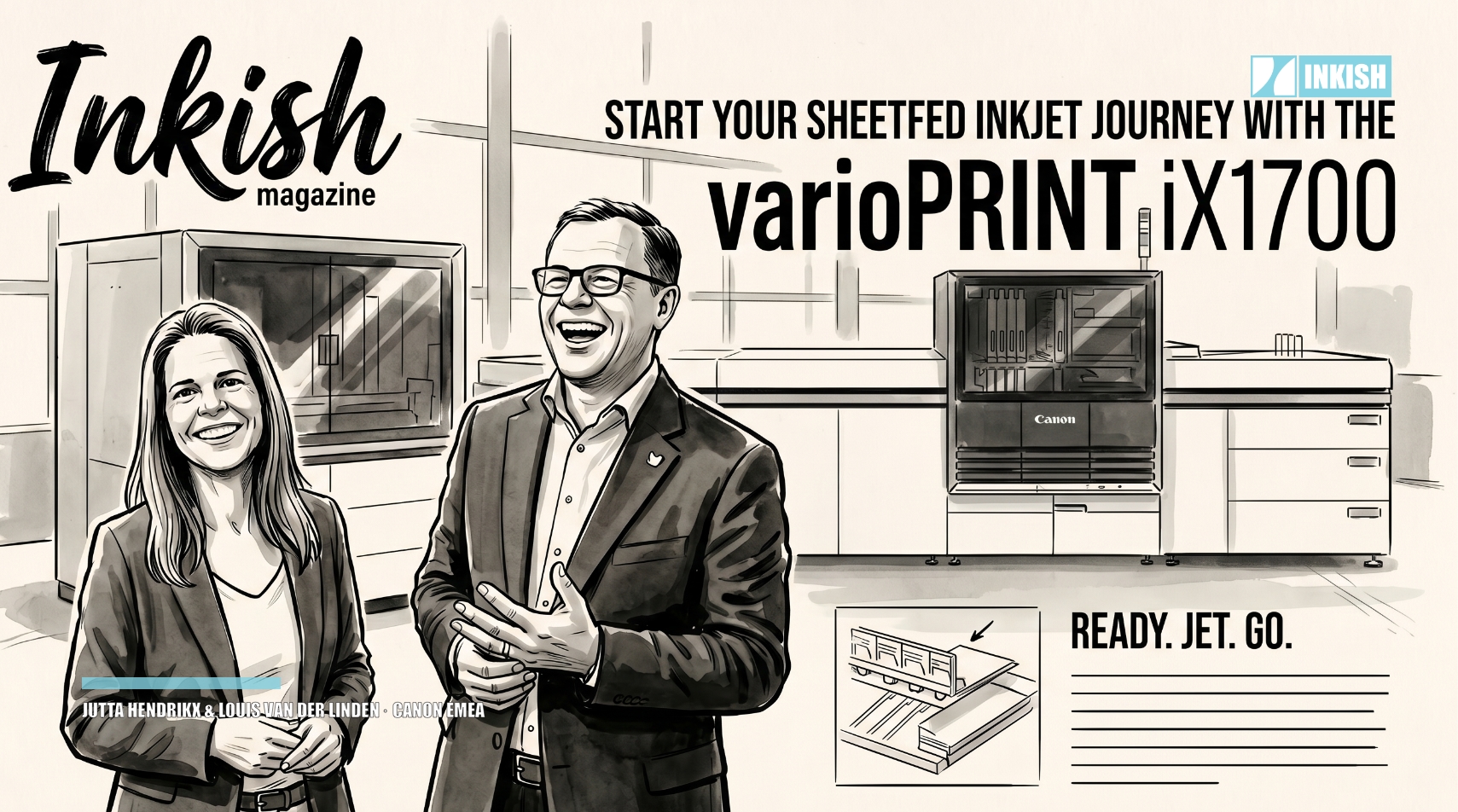
At Canon's Power to Move event in Venlo, Morten B. Reitoft speaks with Jutta Hendrikx and Louis Van der Linden about the VarioPrint iX 1700, Canon's latest addition to its growing sheetfed inkjet portfolio. While Canon's larger sheetfed inkjet presses have attracted significant attention for their ability to replace higher-volume production environments, the VarioPrint ix 1700 has been developed to address a different segment of the market. Designed for monthly volumes starting around 300,000 A4 impressions, the press opens the door to sheetfed inkjet for print providers who may previously have considered the technology beyond their requirements or investment range. The conversation explores how the VarioPrint iX 1700 fits into Canon's broader strategy of providing customers with multiple technology options rather than forcing a choice between toner and inkjet. According to Hendrikx and Van der Linden, the market increasingly demands solutions that combine the flexibility traditionally associated with toner devices with the productivity and efficiency advantages of inkjet technology. The VarioPrint iX 1700 is intended to bridge that gap. The discussion also looks at the types of applications Canon expects the press to serve. Commercial print, brochures, postcards, greeting cards, and other high-quality applications are obvious targets, but the platform's quality also makes it relevant to markets such as photo products and premium print applications. At the same time, the machine's flexibility allows customers to configure paper input and output capacities to meet their specific production requirements. Another topic is the increasingly important role of long-sheet applications. With support for sheet sizes up to 364 × 660 mm, including duplex printing, the VarioPrint iX 1700 enables the production of products such as six-page brochures, larger-format covers, and a variety of value-added commercial print applications that traditionally required alternative production methods. Throughout the conversation, Hendrikx and Van der Linden emphasize that Canon's objective is not to replace one technology with another, but to provide customers with the widest possible range of choices. As print businesses continue to evolve, selecting the right technology becomes less about whether a device uses toner or inkjet and more about matching production volumes, applications, workflow requirements, and business objectives. Recorded at Canon's Customer Experience Center in Venlo ahead of the Power to Move event, this interview offers insight into how Canon sees the next phase of sheetfed inkjet adoption and where the VarioPrint iX 1700 fits within that vision.

En Nuray Isik · Portfolio Director Large Format Graphics · Canon · Colorado XL · Power to Move

Nuray Isik · Portfolio Director Large Format Graphics · Canon · Colorado XL · Power to Move

At Canon's Power to Move event in Venlo, Nuray Isik and Morten B. Reitoft discuss the evolution of Canon's Colorado platform and the introduction of the new Colorado XL. The conversation begins with the story behind UVgel technology, which has been at the heart of the Colorado family for nearly a decade. Isik explains how Canon set out to overcome the compromises traditionally associated with large-format printing by developing a technology that combines the advantages of multiple print processes while avoiding many of their limitations. The result is a platform capable of printing on a wide variety of media with excellent durability, low ink consumption, and consistent image quality. A significant part of the discussion focuses on the unique properties of UVgel technology. Unlike conventional inks, UVgel maintains its shape on the substrate, enabling precise image reproduction, reduced ink usage, and consistent performance across a broad range of applications. Isik also explains how the technology enables the creation of both matte and gloss effects with the same ink set, eliminating the need for additional varnishes or dedicated channels and giving print service providers new opportunities to add value to their products. The conversation also explores Canon's approach to color reproduction. While some competing technologies rely on multiple additional colors to expand the color gamut, UVgel achieves impressive results with a streamlined CMYK configuration and optional white ink. According to Isik, this simplifies operation while still delivering the color performance customers require. Attention then turns to the Colorado XL, Canon's latest addition to the portfolio. Building on the success of the Colorado M-series, the XL expands the platform into wider-format and rigid-media applications while maintaining the productivity, automation, and ease of use that have become hallmarks of the Colorado family. Isik explains how customer demand for larger formats and greater application flexibility helped shape the development of the new platform. The discussion concludes with a broader look at trends in the large-format graphics market. While speed remains important, Isik believes customers are increasingly focused on overall productivity, workflow efficiency, and application versatility. The ability to produce more work, on more substrates, with less complexity is becoming a key differentiator as print service providers look for new ways to grow their businesses. Recorded at Canon's Power to Move event in Venlo, this interview offers insight into the thinking behind one of Canon's most important recent product developments and the future direction of large-format graphics printing.

En Cindy Schramm · European Product Manager · Canon · ColorStream 7000 walkthrough · Power to Move

Cindy Schramm · European Product Manager · Canon · ColorStream 7000 walkthrough · Power to Move

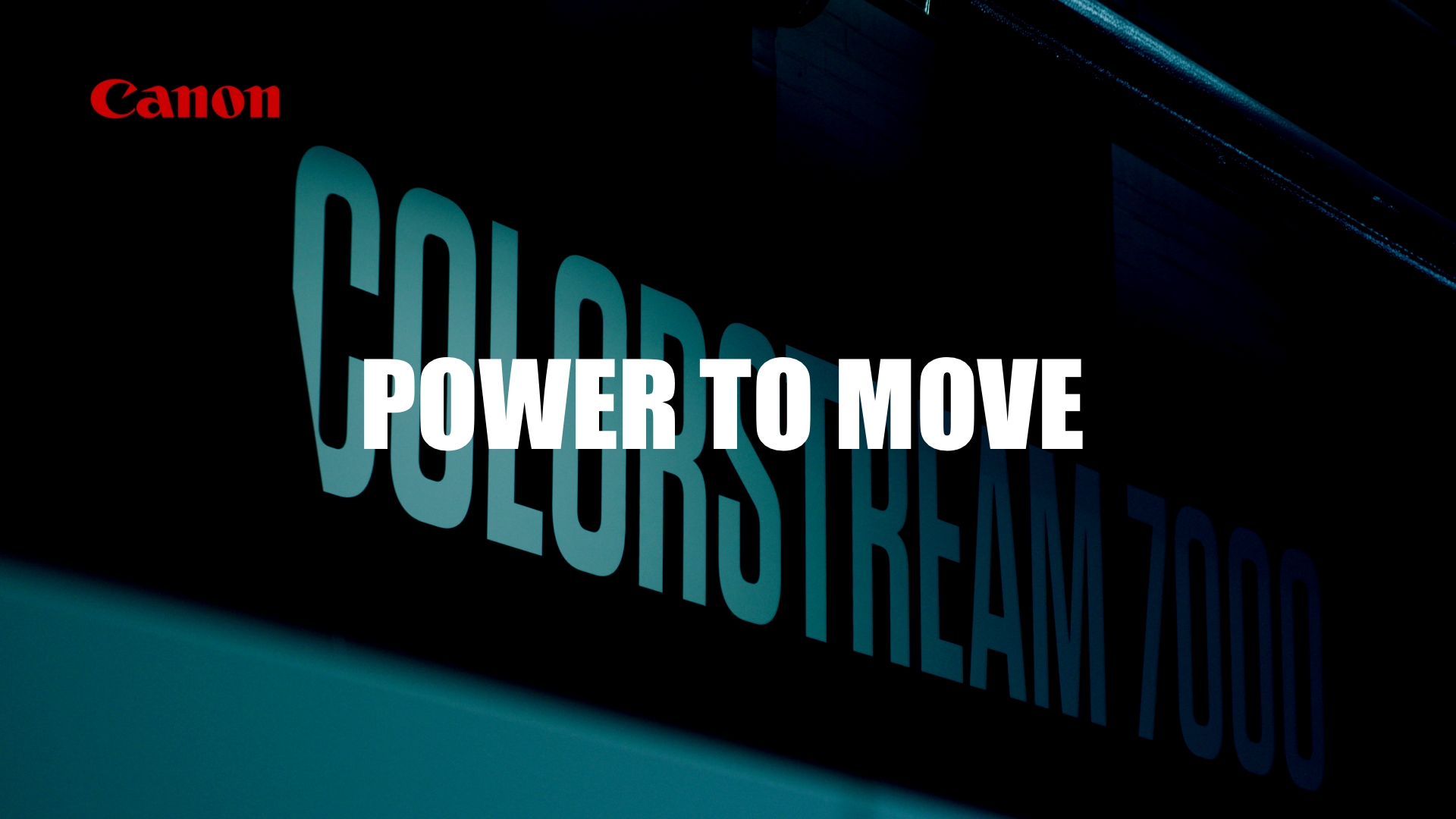
At Canon's Power to Move event in Venlo, Morten B. Reitoft speaks with Canon Europe Product Manager Cindy Schramm about the world premiere of the new ColorStream 7000. While the machine is officially positioned as the successor to the ColorStream 6000, the conversation quickly reveals that the story is much more about bringing proven technologies from the flagship ColorStream 8000 platform to a broader segment of the market. Schramm explains how Canon has combined more than fifteen years of customer feedback with the latest developments in web-fed inkjet technology to create a platform aimed at business communication printers, transactional printers, direct mail specialists, and selected book manufacturers. The ColorStream 7000 introduces several technologies previously reserved for higher-end systems, including advanced web cleaning and automation features designed to improve uptime, reduce maintenance, and make productive printing on recycled papers a realistic business proposition. The discussion also covers the changing requirements of print service providers, the replacement cycle now facing many first-generation inkjet installations, and the importance of balancing productivity, quality, security, and operational simplicity. As Schramm explains, not every customer requires the highest speeds or resolutions available in the market, but every customer expects reliability, profitability, and a platform that can evolve with future needs. The interview concludes with a guided walk around the new press, providing insight into the engineering decisions behind the ColorStream 7000 and Canon's strategy for continuous-feed inkjet in the years ahead.