





















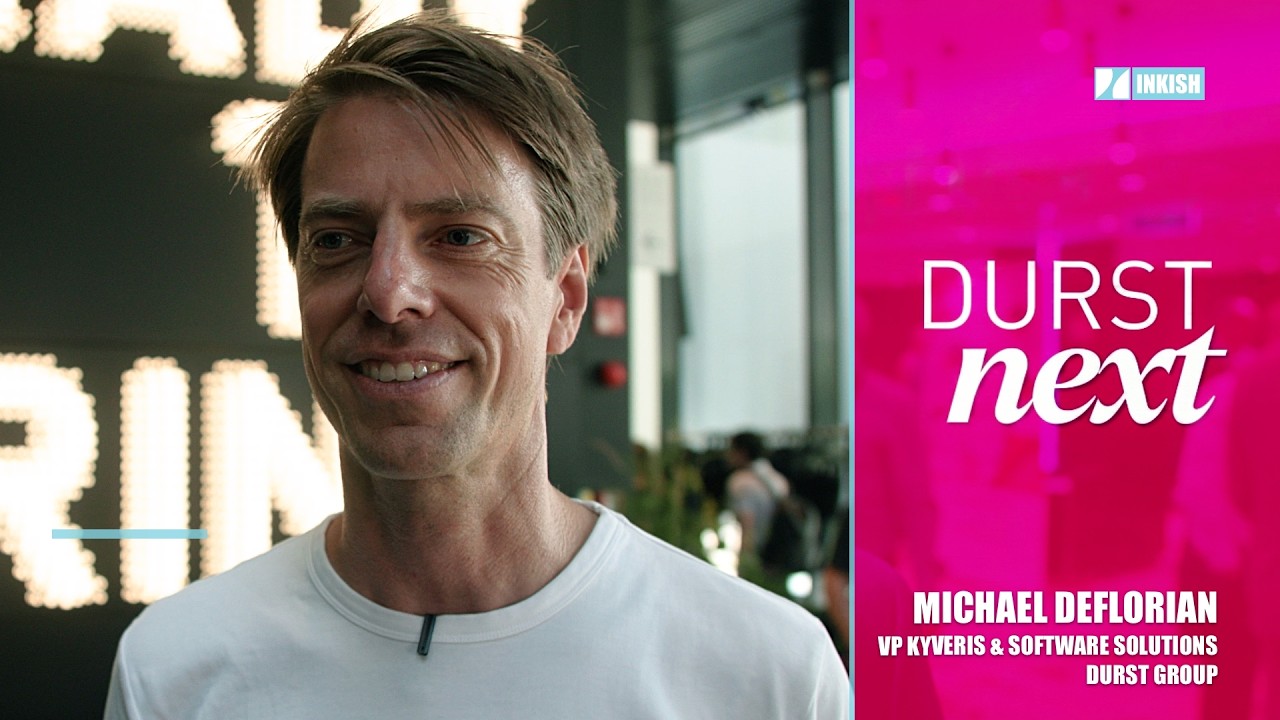
Michael Deflorian VP Kyveris & Software Solutions DURST Group DURST Next
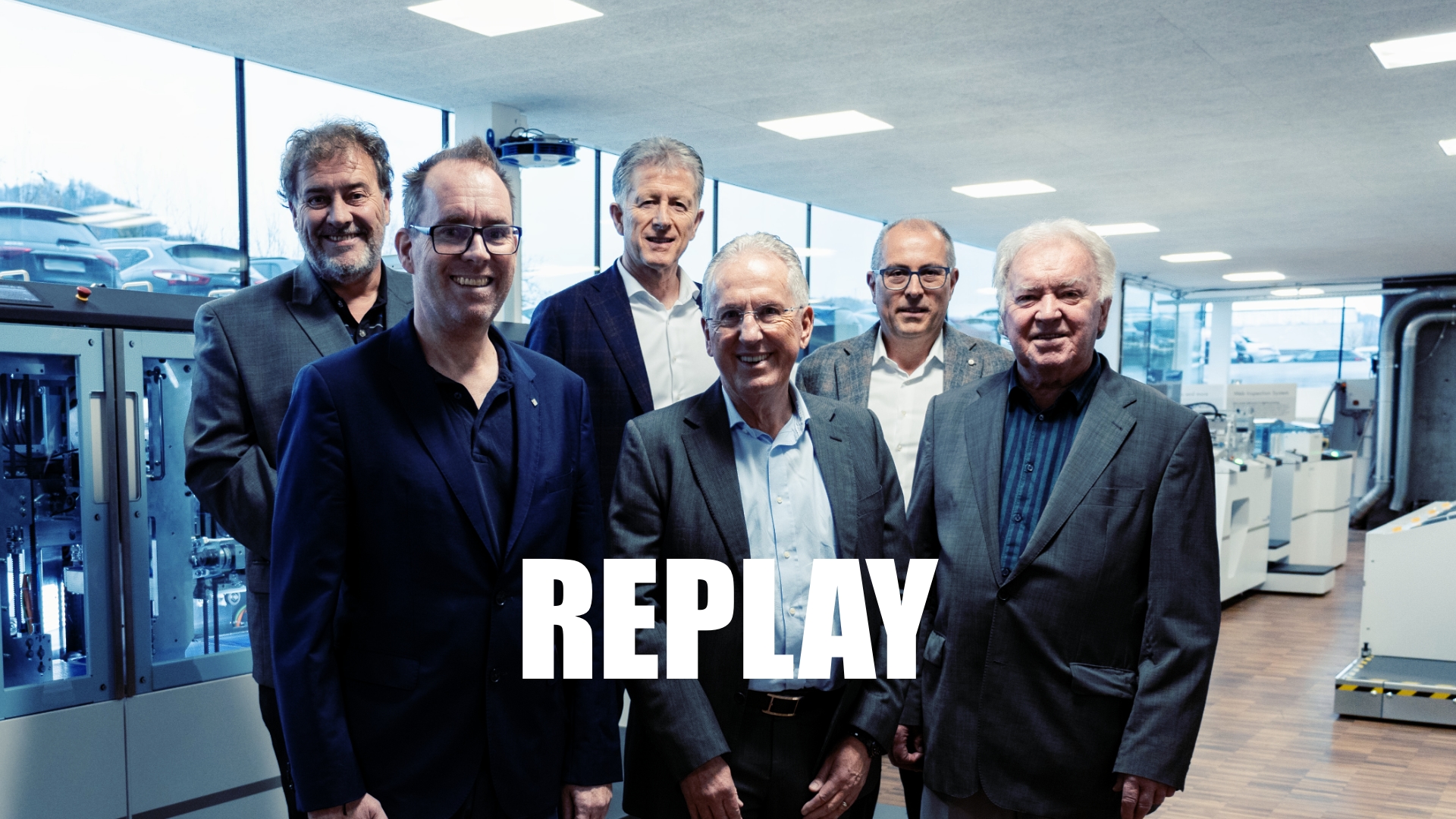
At The Durst Next event in Brixen, Wayne Beckett speaks with Michael Deflorian about Kyveris, Durst’s ambitious vision for the future of intelligent, connected print production.
Following Christoph Gamper’s keynote and a series of in-depth customer sessions, Michael explains how the industry’s understanding of Kyveris is rapidly evolving. What initially appeared to be another workflow platform is now emerging as something far more comprehensive: an open ecosystem designed to capture production knowledge, connect machines, orchestrate workflows, and ultimately enable autonomous manufacturing.
During the conversation, Michael outlines the five pillars behind the Kyveris strategy. The foundation remains Durst’s expertise in hardware and application knowledge, but the next layers introduce connected workflows, intelligent orchestration, artificial intelligence, and eventually robotics. Together, these technologies are designed to transform isolated production devices into a continuously learning manufacturing environment where every job contributes new knowledge to the system.
One of the central themes is Industrial Intelligence. Michael explains that the objective is to create consistent production results regardless of machine, operator, factory, or shift, while simultaneously reducing waste in both materials and production time. By capturing the knowledge that today often exists only in the minds of experienced operators, Kyveris aims to make expertise available throughout an organisation, creating more predictable production and helping businesses overcome the growing shortage of skilled labour.
The discussion also explores Durst’s modular philosophy. Rather than requiring customers to adopt an entirely new ecosystem, Kyveris has been designed as an open platform where printers can implement individual capabilities at their own pace. Whether the need is production planning, workflow orchestration, AI-assisted decision-making, or eventually autonomous material handling through robotics, each business can build its own journey towards higher levels of automation.
Michael also discusses the role of artificial intelligence and robotics in future print production. AI will help analyse production data, optimise workflows, recommend process improvements, and continuously refine machine performance, while autonomous mobile robots and robotic systems will increasingly handle material movement throughout the factory. Together, these technologies represent Durst’s long-term ambition to create highly connected manufacturing environments where people, machines, and software work together more efficiently than ever before.
A fascinating conversation about industrial intelligence, artificial intelligence, connected manufacturing, and why Kyveris may become one of the industry’s most significant developments over the coming decade.



No Data Found.
Content for this section will appear here once available
Wed October 7th
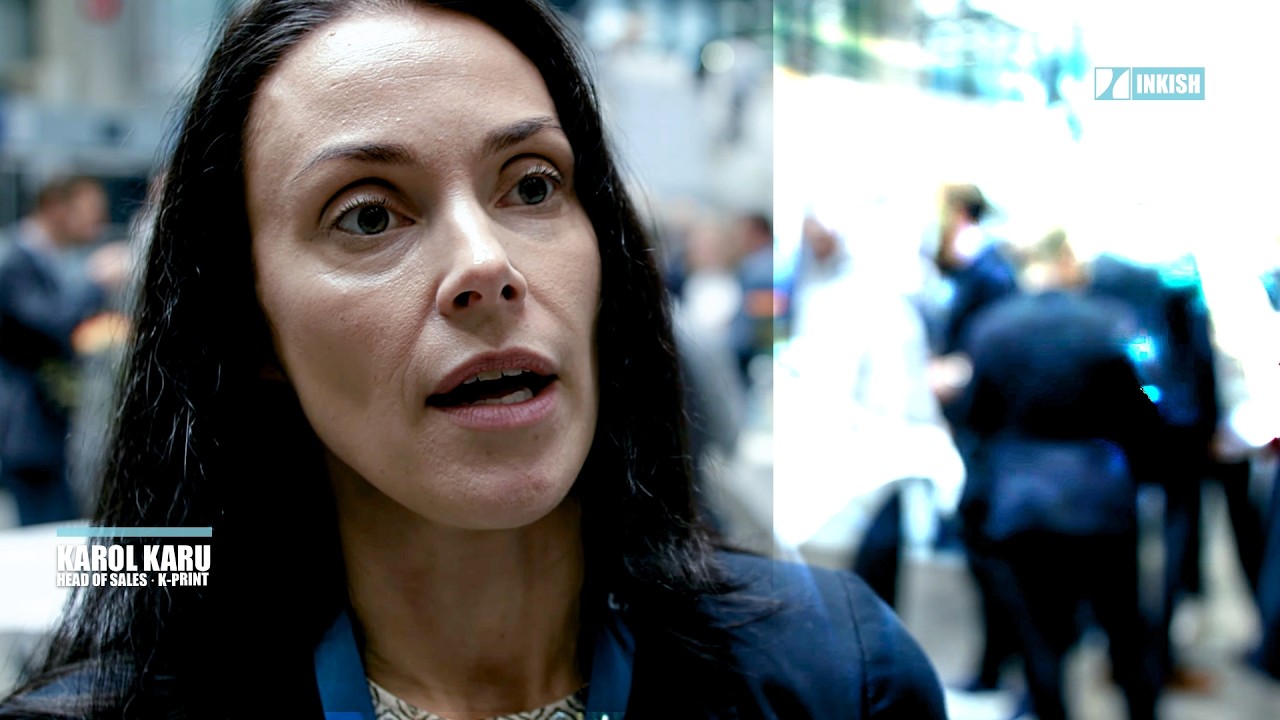
Karol Karu · Head of Sales · K-Print · Sh...
Karol Karu is the Head of Sales for Estonian printing company K-Print. In this interview, she talks about how the Nordia/Baltic consolidation is a huge advantage for them. She also surprises your humble editor by saying that they experience larger print runs on average and therefore, of course, keep an eye on digital, but they are not really afraid of the competition here. Super interesting!