












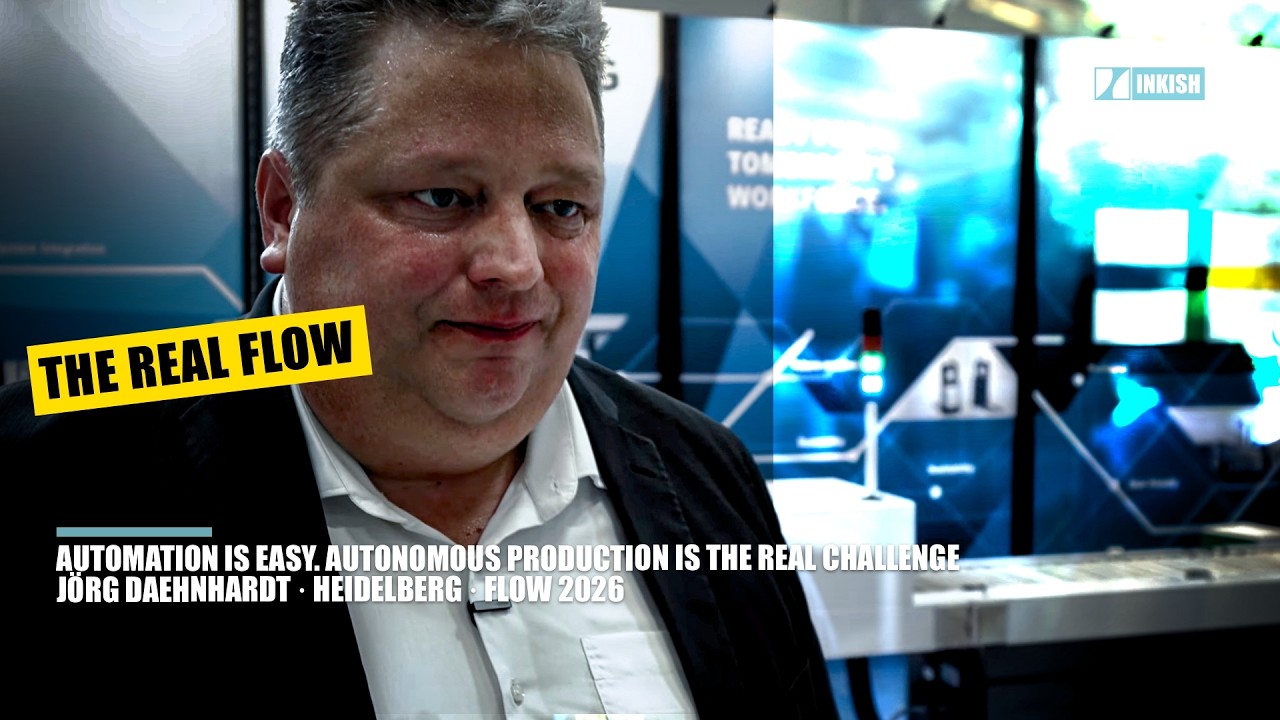
Automation Is Easy. Autonomous Production Is the Real Challenge · Jörg Daehnhardt · Heidelberg
What happens when printing presses become faster, print runs become shorter, and every single sheet could be a different job? The real challenge may no longer be printing — but everything that happens afterward.
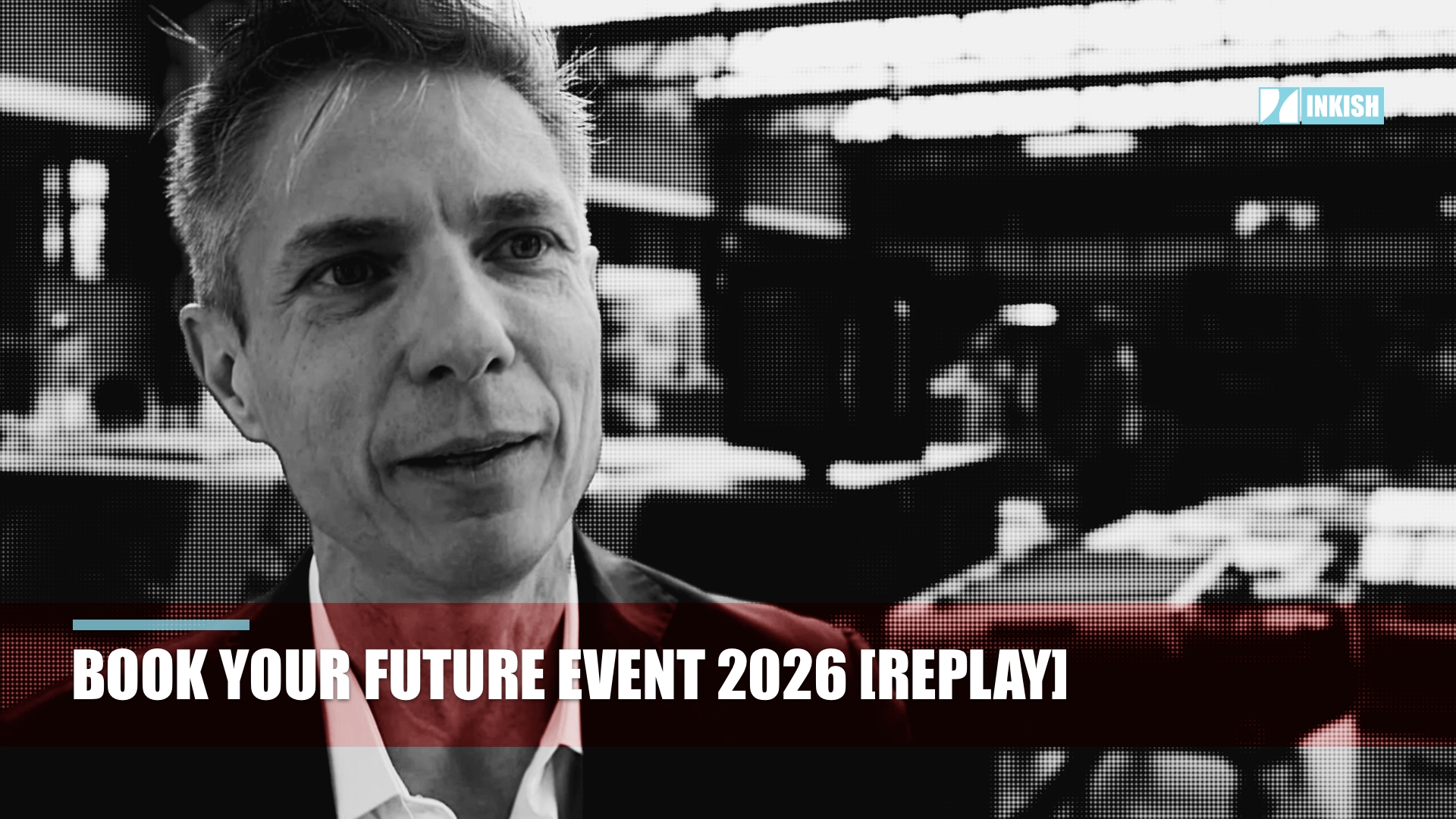
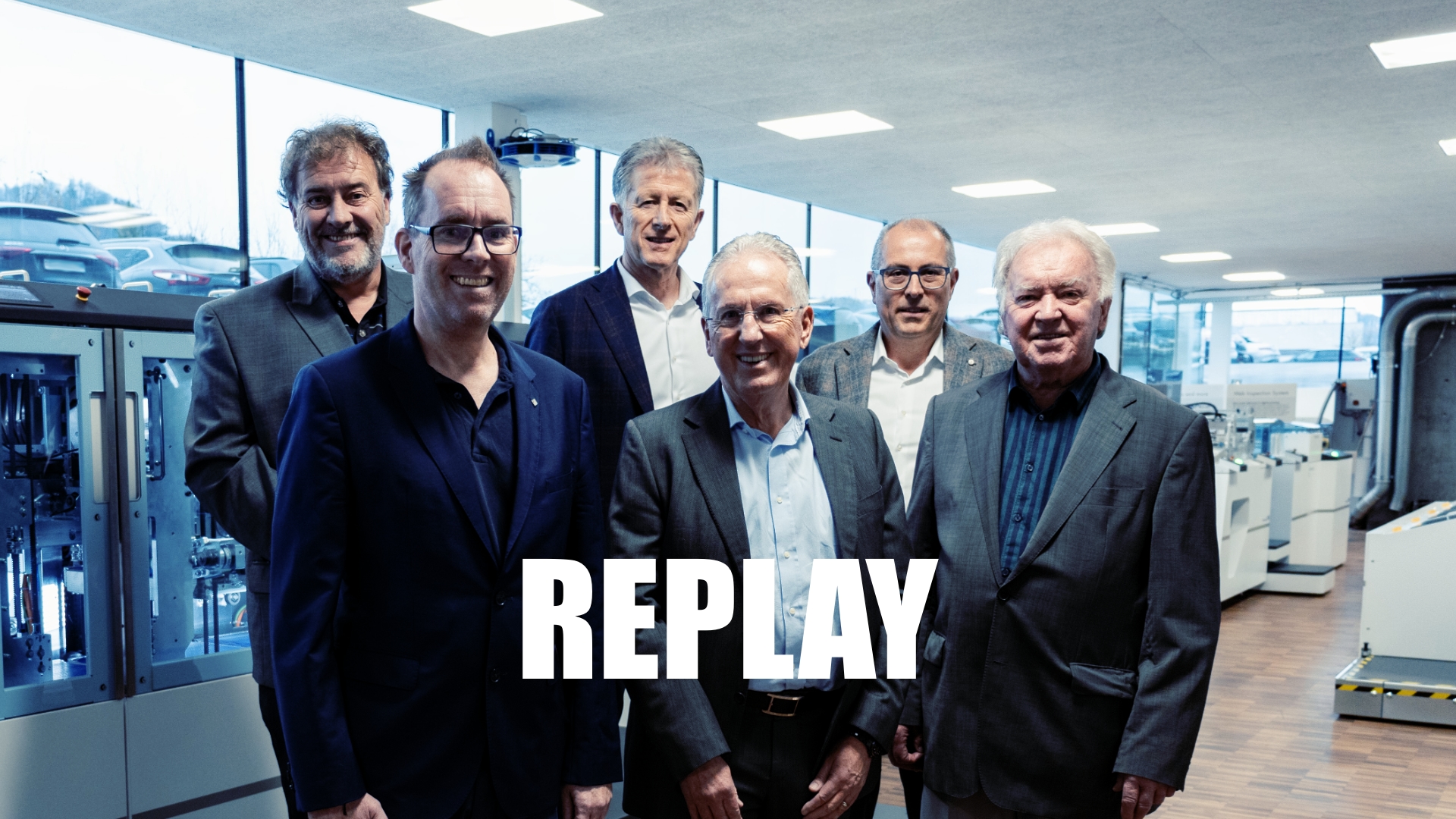
At FLOW 2026 in Bad Hersfeld, INKISH’s Morten Reitoft meets Jörg Daehnhardt from Heidelberg for an interesting conversation about robotics, automated finishing, and the transition from automated processes to truly autonomous print production.
Heidelberg demonstrates one of its compact, flexible robotic stacking solutions, giving visitors an opportunity to explore the details that can make a significant difference in everyday production. From palletizing capacity and mobility to the ability to adapt to different production requirements, Jörg explains why seemingly small technical differences can have a substantial impact on productivity.
But the conversation quickly moves beyond robotics.
With Heidelberg’s growing portfolio of digital printing solutions, including Jetfire 50 and Jetfire 75, the company faces an increasingly important challenge: how to finish digitally printed products efficiently when production moves toward ultra-short runs and even a product of one.
That’s where Heidelberg’s Stahlfolder Fireline enters the picture.
Designed for automated digital print finishing, Fireline connects folding, cutting, and workflow technology to help printers move from printed sheets toward finished products with fewer manual interventions. Through integration with other finishing technologies, Heidelberg is developing an increasingly connected production environment that can accommodate different product types, workflows, and customer requirements.
Jörg also introduces an important distinction between automation and autonomous production. Automating an individual process is one thing. Creating a production environment that can manage job changes, maintain quality, and operate reliably with minimal intervention is something considerably more demanding.
And Heidelberg recognizes that no single manufacturer can provide every solution. By working with finishing partners and supporting interfaces to other equipment, the company is increasingly positioning itself as a systems integrator rather than simply a supplier of individual machines.
A fascinating conversation about robotics, digital finishing, open integration, and why the next major productivity improvements in printing may depend on everything that happens after the sheet leaves the press.
Recorded at FLOW 2026 · Bad Hersfeld, Germany · INKISH

No Data Found.
Content for this section will appear here once available