



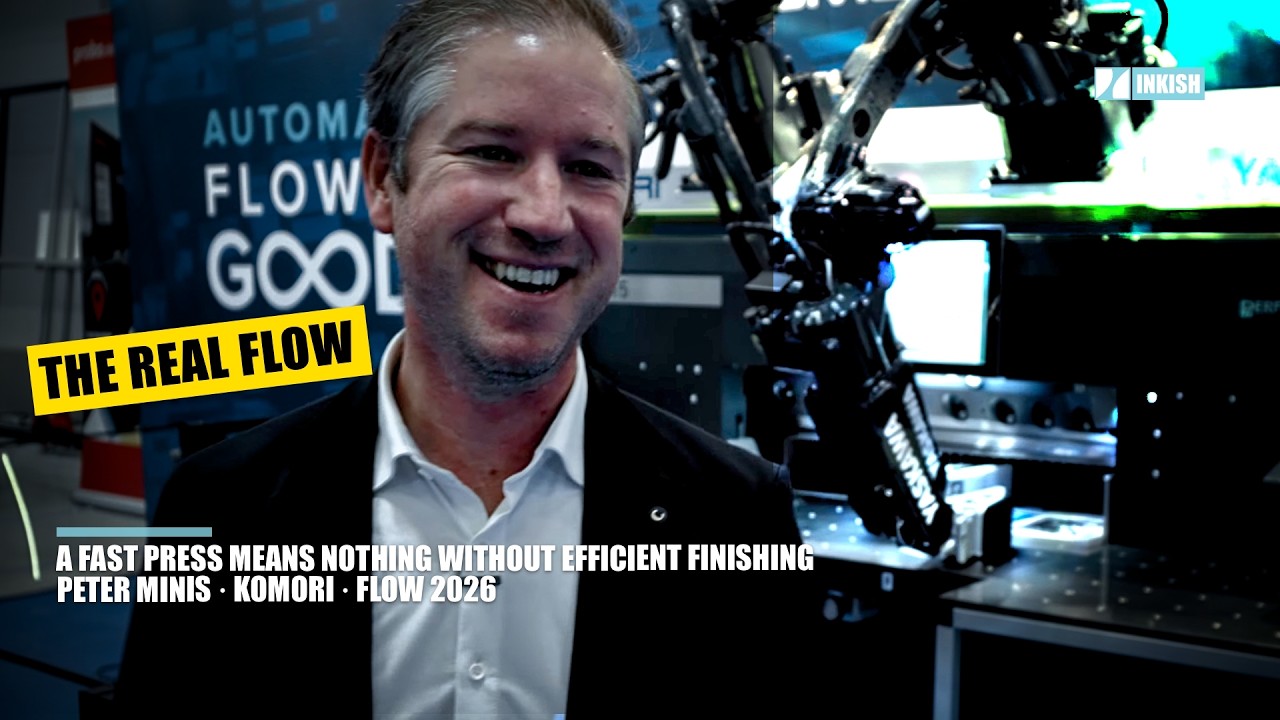
A Fast Press Means Nothing Without Efficient Finishing · Peter Minis · Komori · FLOW 2026
What happens when someone who learned to operate a guillotine in his father’s printing company sees two industrial robots doing the same job automatically?
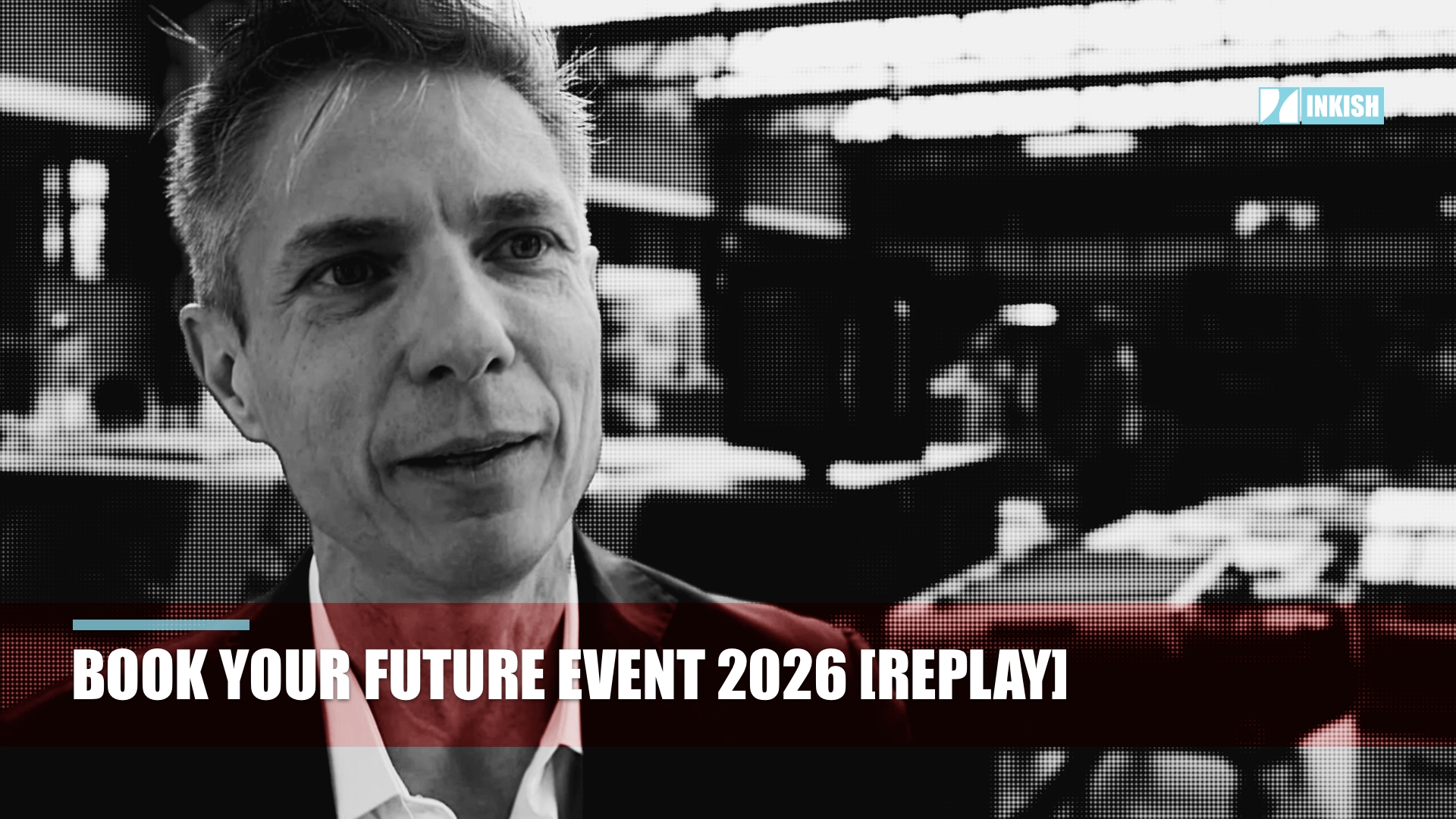
At FLOW 2026 in Bad Hersfeld, INKISH’s Morten Reitoft meets Peter Minis from Komori for an engaging conversation about robotics, artificial intelligence, finishing automation, and how the printing industry is changing.
Peter has a personal connection to print finishing. Growing up around his father’s printing company, one of his first jobs was operating a guillotine. Decades later, he finds himself at FLOW, where Komori, MBO, and Yaskawa are demonstrating a robotic cutting solution designed to eliminate repetitive manual handling and improve production efficiency.
For Peter, the benefits are immediately recognizable. He knows the physical demands of working at a guillotine, but he also understands the importance of precision, reliability, and consistent throughput.
The conversation explores why combining Yaskawa’s industrial robotics expertise with Komori and MBO’s understanding of printing and finishing creates new possibilities for automation.
But the discussion goes far beyond the robots.
Peter explains how the industry is moving away from evaluating individual machines toward understanding the productivity of the entire production environment. A printing press can be incredibly fast, but if finishing becomes a bottleneck, the overall result is still inefficient.
Software and artificial intelligence are accelerating this transformation. At FLOW, Peter and his colleagues even used AI to develop a practical lead-registration application, demonstrating how quickly new tools can be created to solve everyday business problems.
And as Komori expands its portfolio beyond printing presses, the company is opening conversations with customers who may use competing press technologies but still need better finishing and automation solutions.
Peter also shares his impressions of FLOW, particularly the openness, enthusiasm, and genuine interaction between exhibitors and visitors — something he believes distinguishes the event from traditional trade shows.
A conversation about embracing new technology, connecting production processes, and why the future of print profitability depends on the performance of the entire factory, not just the speed of the printing press.
Recorded at FLOW 2026 · Bad Hersfeld, Germany · INKISH

No Data Found.
Content for this section will appear here once available
Fri November 6th
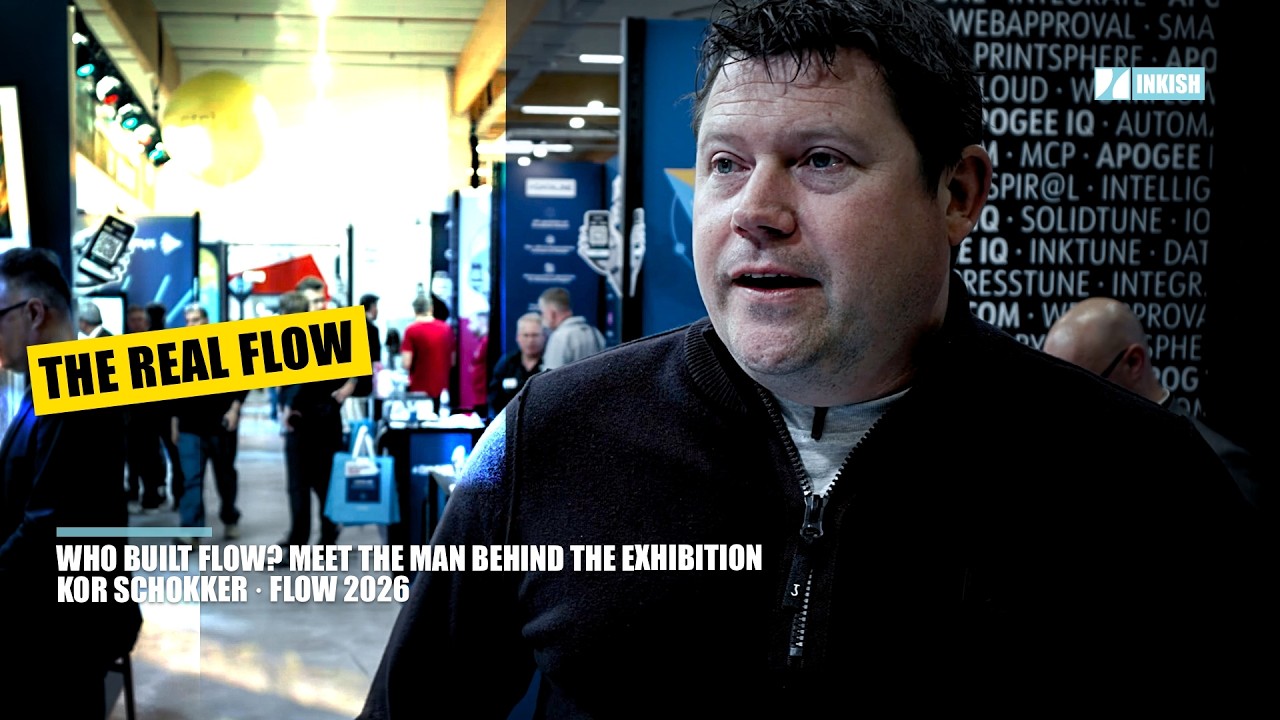
Who Built FLOW? Meet the Man Behind the Exhib...
What does it take to transform a working print factory into an exhibition — and then take everything down again just a few days later? On the final day of FLOW 2026 in Bad Hersfeld, INKISH's Morten Reitoft meets Kor Schokker from Schokker Producties, the man whose team built the exhibition environment that brought FLOW to life at Probo's production facility. For Kor and his team, exhibition construction is nothing new. But transforming an entire factory into a professional, welcoming exhibition with a consistent visual identity, numerous exhibitors, and thousands of details to coordinate is quite another challenge. Schokker Producties is a Dutch company specializing in exhibition construction, signage, vehicle wrapping, interior applications, and visual communication. With a team of approximately 15 people, the company serves customers primarily in the Netherlands while following them to exhibitions internationally. Kor also shares an interesting perspective on his long-standing relationship with Probo. Rather than operating his own large-scale printing facility, he relies on Probo as a trusted production partner, providing quality, competitive pricing, and fast delivery. It's a relationship that demonstrates how specialization and outsourcing can work together successfully. And sustainability is an important part of the story. The exhibition structures are designed for reuse, enabling the creation of impressive environments without starting from scratch each time. As FLOW comes to an end, Kor and his team are already preparing for their next project, building an exhibition for agricultural robotics specialist Lely. A conversation about craftsmanship, collaboration, sustainable exhibition construction, and the people behind the scenes who make events like FLOW possible. Recorded at FLOW 2026 · Bad Hersfeld, Germany · INKISH