






























Dieter Niederstadt Asahi Replay PreDrupa March 26
LinkedIn Profile:
https://www.linkedin.com/in/dieter-niederstadt-7a574695/




Contact
Asahi Photoproducts
1070 Anderlecht
Belgium
Email : info@asahi-photoproducts.com
Thu September 17th
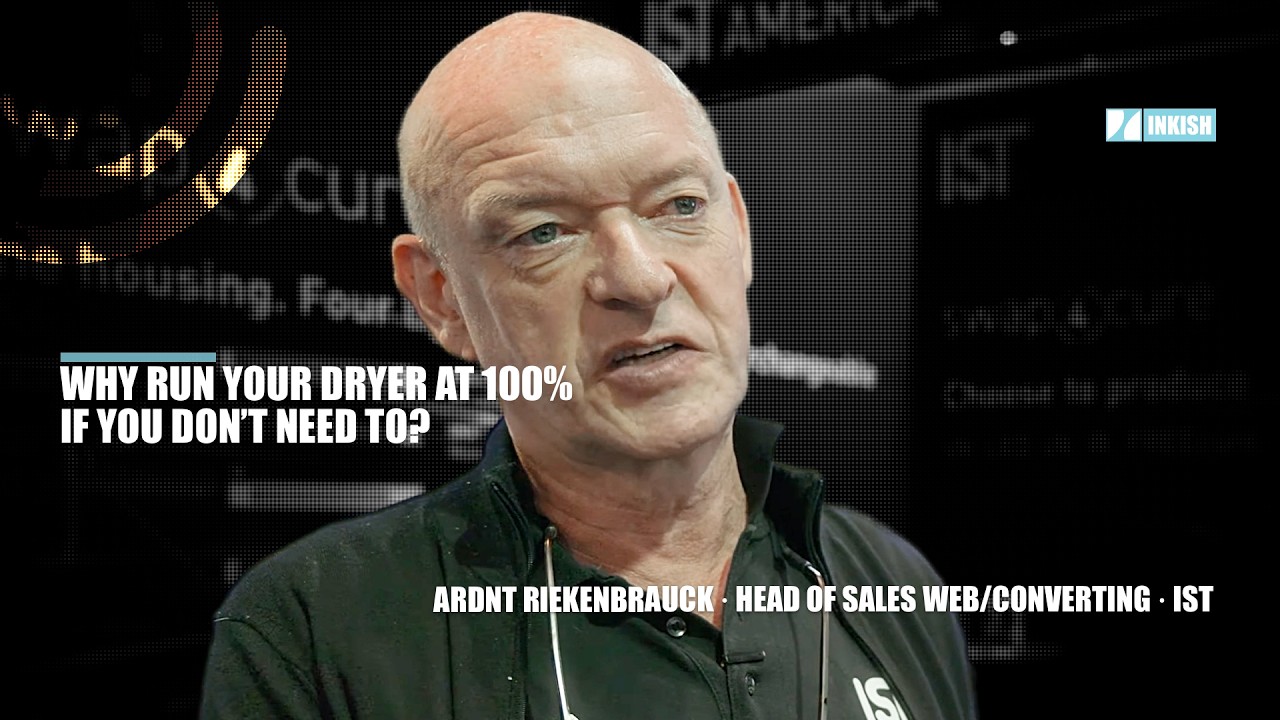
Why Run Your Dryer at 100% If You Don’t Nee...
Walk into many printing plants, and there is a simple approach to curing: Turn the dryer up to 100%. It works. Nobody wants to risk insufficient curing. But it isn't necessarily the smartest or most energy-efficient way to produce. At LOUPE Americas in Chicago, Wayne Beckett meets Anne from IST METZ to talk about the company's new SwapCure platform — shown publicly for the first time at the event — and several technologies that could change how converters think about curing. Flexibility is central to SwapCure. The platform is designed to enable converters to switch between different curing technologies, including infrared, LED, and conventional UV, depending on the application and production requirements. But perhaps one of the most interesting developments is FreeCure. Developed in collaboration with BASF, FreeCure enables UV curing without conventional photoinitiators, addressing a challenge that has traditionally limited UV technology in sensitive applications such as food packaging. IST METZ already has installations operating with the technology in flexible packaging, where reducing concerns around migration and odor can open opportunities for UV in applications where converters may previously have been reluctant to use it. Then there is SmartCure. Rather than simply setting every dryer to maximum power, SmartCure uses production information to predict the curing energy required for a particular job. Job parameters can be used to establish the dryer settings before production begins, and those settings can subsequently be stored and reused when the same work returns. That potentially means lower energy consumption, more repeatable production and — particularly for companies operating multiple sites — a more standardized approach to curing. It is another example of how AI can play a very practical role in print production: not generating content, but using production data to make equipment operate more intelligently. In this INKISH film, Wayne talks with Anne about SwapCure, FreeCure, SmartCure, LED, conventional UV, food packaging, energy consumption, and why curing technology is becoming considerably more flexible — and considerably smarter. Because sometimes improving production isn't about adding more power. It's about knowing exactly how much power you actually need.