







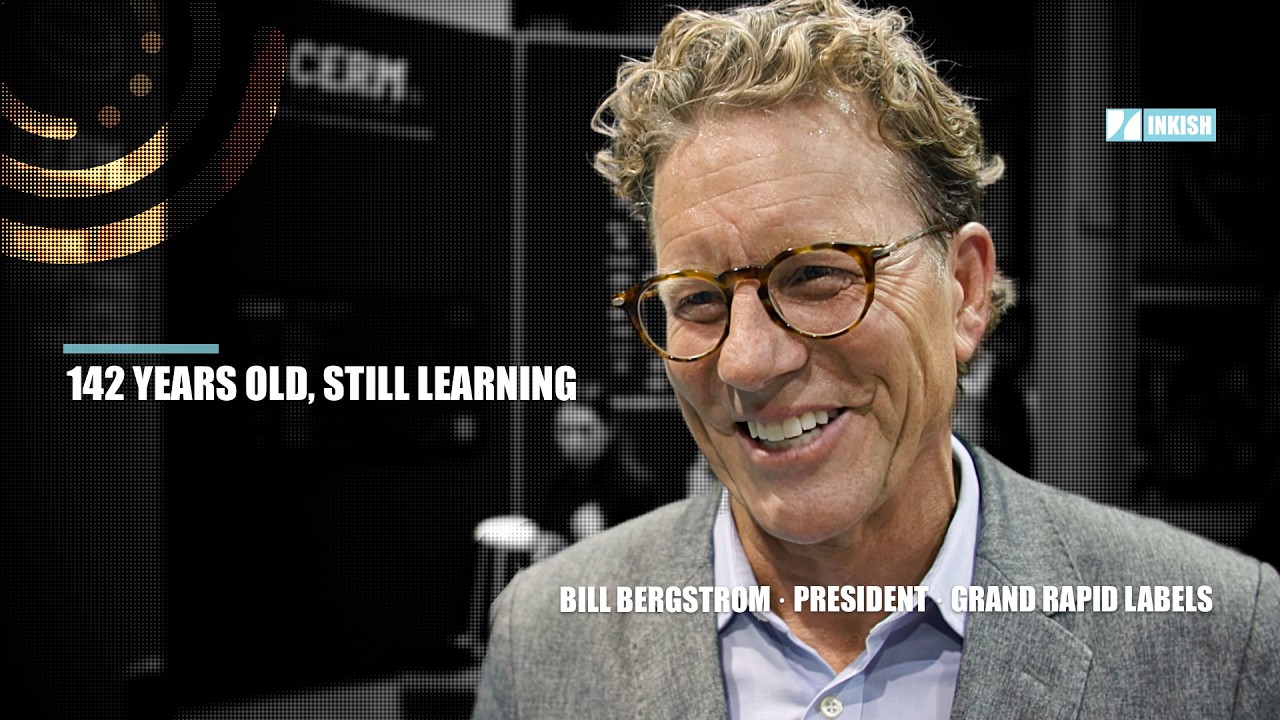
Grand Rapids Label — 142 Years Old, Still Learning · Bill Bergstrom
Grand Rapids Label has been in business for 142 years.
That means the company has obviously done quite a few things right.
But for President Bill, respecting that history doesn’t mean protecting everything the company has always done. It means understanding what made Grand Rapids Label successful — while continuously challenging how the business can become better.
Bill became the first president from outside the founding family just three years ago, and today he is helping prepare Grand Rapids Label for its next chapter, where data, automation, digital production, AI, and increasingly sophisticated software become important tools alongside the knowledge and experience of its people.
One of those investments is CERM.
And the road to CERM wasn’t completely straightforward.
Grand Rapids Label had previously selected another major MIS platform, but during implementation the management team came to a difficult conclusion: it wasn’t the right solution.
So they stopped.
Starting again wasn’t easy, but the experience also gave the company a much clearer understanding of what it actually needed from an MIS partner.
With CERM, Grand Rapids Label took a phased approach. First, focus on what absolutely has to work. Then build from there.
That is particularly important for a company heavily involved in automotive and direct food-contact applications, where regulations, certifications, traceability, supply chains, and customer requirements leave little room for disruption.
Today, CERM is becoming much more than an administrative system.
Combined with Power BI and production technology, the data is being used by cross-functional teams throughout Grand Rapids Label to continuously identify opportunities for improvement — whether that means reducing order-entry time, improving estimating, optimizing press utilization, or finding smarter ways of producing work.
Those teams meet every week.
The objective isn’t simply to collect more data. It is to turn data into better decisions.
And Bill sees another important consequence: good data can allow management to decentralize decision-making. Give people trustworthy information, establish the right guardrails, and employees can make more decisions themselves without being micromanaged.
That also changes how the ROI of an MIS should be considered.
Unlike a printing press, where productivity and return can often be calculated relatively directly, the value of an MIS appears throughout the organization — in faster processes, better costing, higher utilization, improved profitability, stronger decision-making, and ultimately in the culture of the company.
In this INKISH film, Morten B. Reitoft talks with Bill about 142 years of Grand Rapids Label, becoming the company’s first president from outside the family, lessons from an MIS implementation that didn’t work, the move to CERM, Power BI, continuous improvement, AI, and why technology should ultimately give people more freedom to make better decisions.
Because staying successful for 142 years doesn’t mean doing things the same way for 142 years.


No Data Found.
Content for this section will appear here once available
Wed October 7th
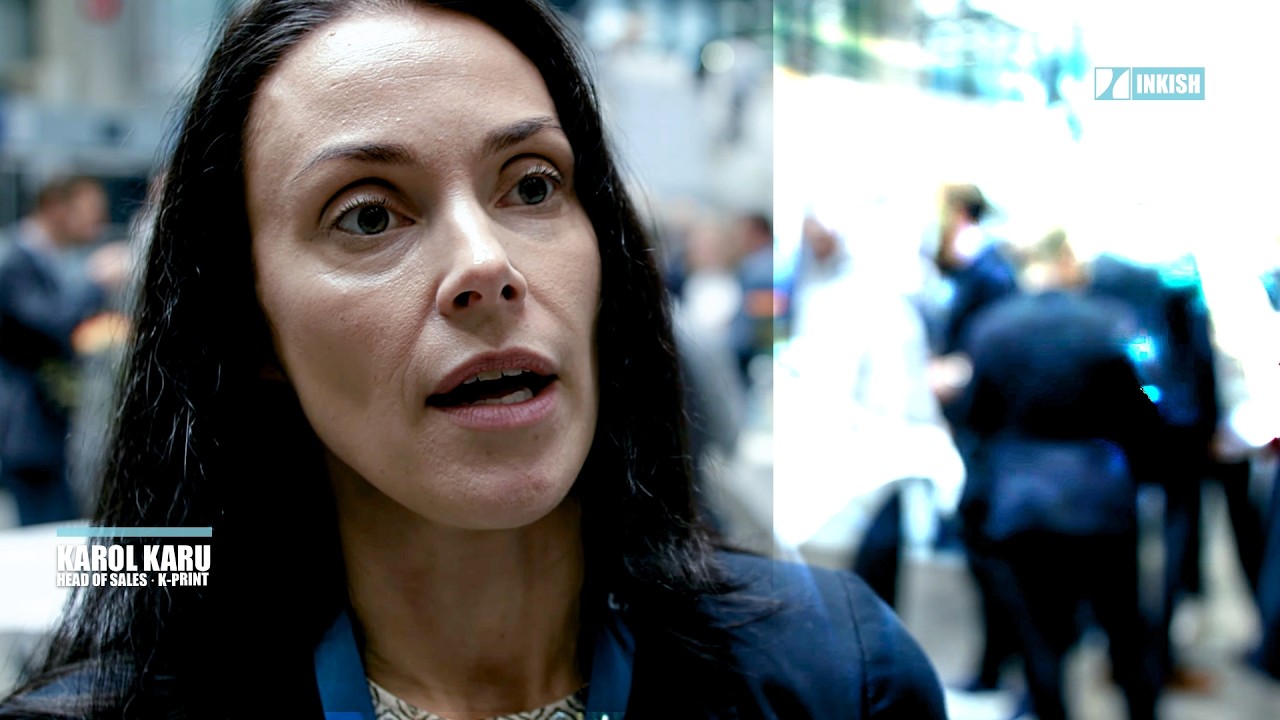
Karol Karu · Head of Sales · K-Print · Sh...
Karol Karu is the Head of Sales for Estonian printing company K-Print. In this interview, she talks about how the Nordia/Baltic consolidation is a huge advantage for them. She also surprises your humble editor by saying that they experience larger print runs on average and therefore, of course, keep an eye on digital, but they are not really afraid of the competition here. Super interesting!