




















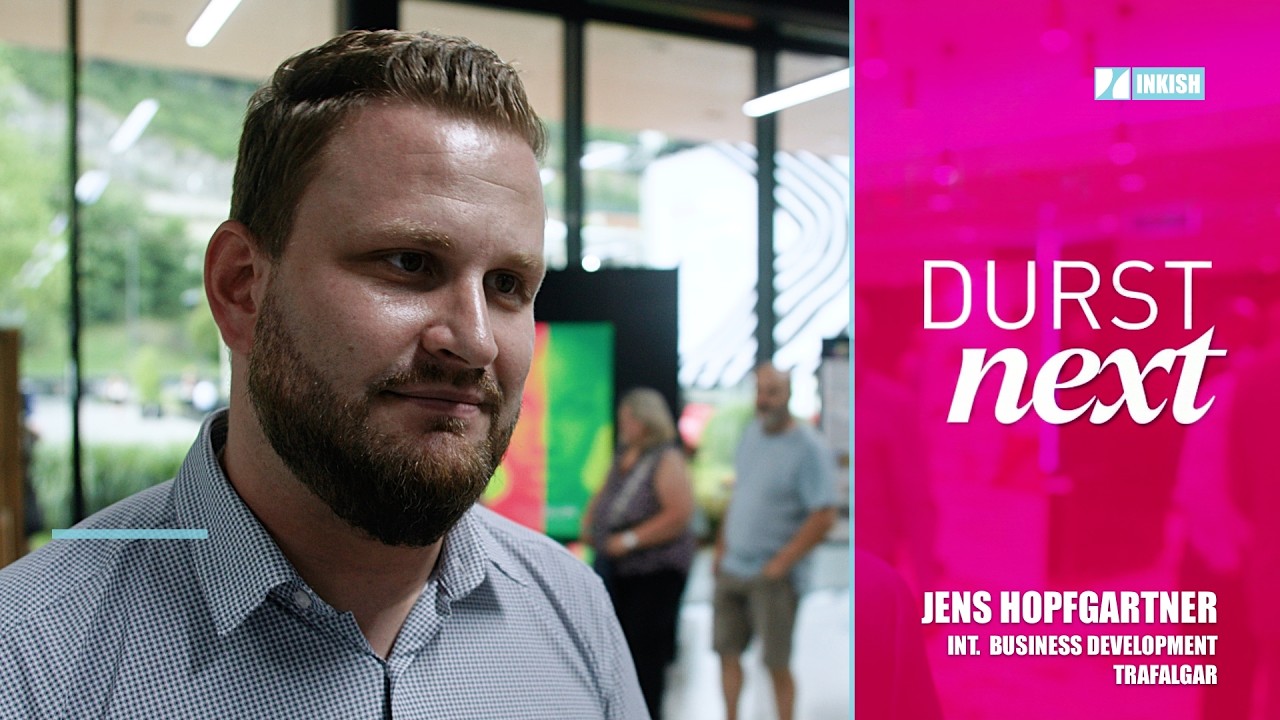
Jens Hopfgartner · International Business Development · Trafalgar · DURST Next
At The Durst Next event in Brixen, Wayne Beckett speaks with Jens Hopfgartner from Trafalgar about one of the most talked-about technologies at the event: humanoid robots and what they could mean for the future of industrial manufacturing and the printing industry.
While the robot accompanying Jens attracted attention from almost every visitor throughout the event, the conversation quickly moves beyond the novelty. The humanoid on display is designed to demonstrate the direction robotics is taking, while industrial versions are already being prepared for real production environments. According to Jens, manufacturing facilities will be among the first places where humanoid robots become commercially viable, long before they find their way into everyday households.
The discussion explores why production environments are ideally suited for this new generation of robotics. Flat factory floors, structured workflows, and trained operators create ideal conditions for robots that can move autonomously between machines, transport materials, load and unload equipment, and take over repetitive or physically demanding tasks. Rather than replacing people, the ambition is to allow employees to focus on work that requires experience, creativity, and decision-making while robots handle the heavy lifting.
One of the most interesting aspects of the conversation is the role of artificial intelligence. Jens explains that the true value of these systems is not found in the mechanical body itself, but in the software controlling it. AI enables robots to understand their surroundings, learn from experience, adapt to changing environments, and communicate directly with manufacturing systems. Instead of performing only one repetitive task, future humanoid robots will be capable of carrying out a wide variety of activities throughout an entire production facility.
The interview also touches on the timeline for adoption. While robots in private homes may still be many years away, industrial applications are developing rapidly. Standardised production environments make implementation significantly easier, and advances in AI are accelerating development at a pace few would have predicted only a few years ago.
For printers attending The Durst Next event, this technology offered a glimpse into what future production facilities may look like. Combined with intelligent workflow orchestration platforms such as Kyveris, autonomous robotics could become a natural part of connected manufacturing environments where machines, software, and people work together more efficiently than ever before.
A fascinating conversation about robotics, artificial intelligence, automation, and why the factory of tomorrow may arrive much sooner than most of us expect.



No Data Found.
Content for this section will appear here once available
Fri June 26th
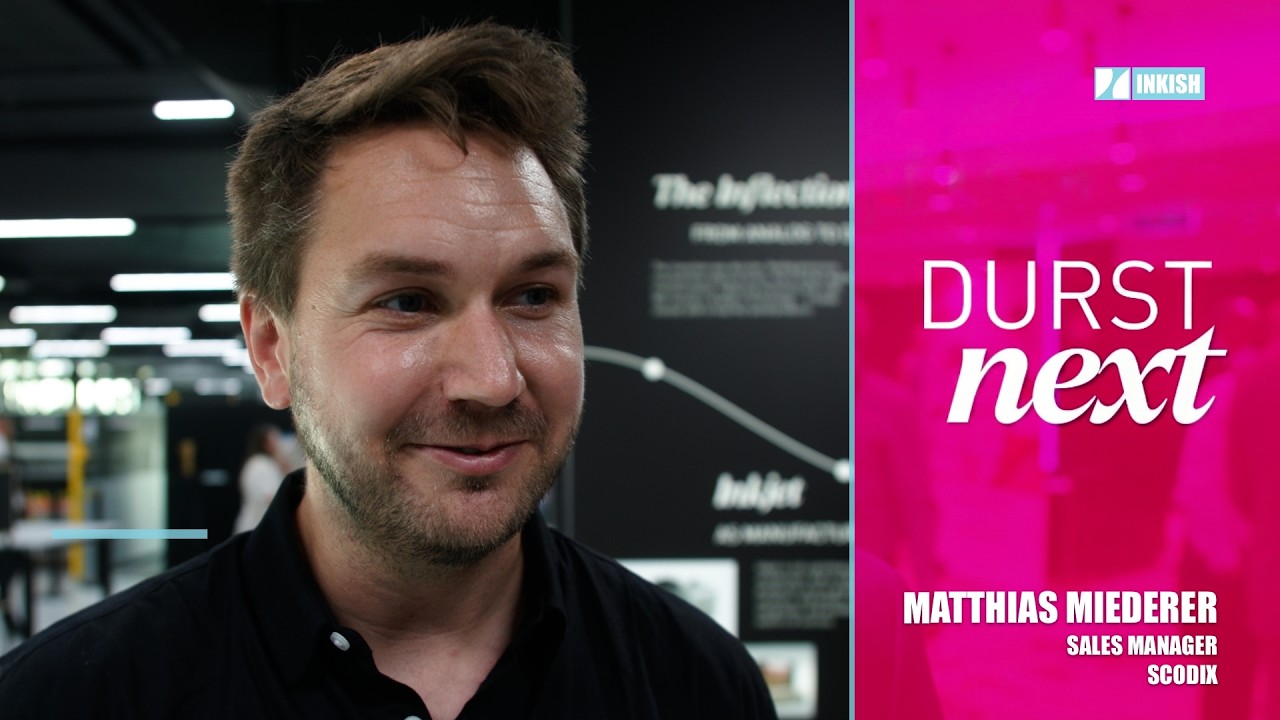
Matthais Miederer · Sales Manager · Scodix ...
At Durst's Print Next event in Brixen, Wayne Beckett speaks with Matthias Miederer, Regional Sales Director DACH at Scodix, about the continued evolution of digital embellishment and why the technology is becoming increasingly relevant across commercial print, packaging, and wide-format applications. Having spent more than a decade working with digital embellishment technologies, Matthias reflects on his journey through the industry and explains why joining Scodix represented the next logical step. Today, he is responsible for the DACH region, one of Europe's most important markets for value-added print, where printers are increasingly looking beyond commodity production towards higher-margin applications. The conversation explores the launch of Scodix's newest platform, which significantly expands the range of printable substrates. From lightweight commercial papers to corrugated board, rigid materials, Dibond, and acrylic, the new press enables print service providers to address a far broader range of applications with a single investment. For many businesses, this opens opportunities to serve new markets while creating greater flexibility across existing production. Wayne also asks an important question that many print service providers may be considering themselves: if you don't already offer digital embellishment, where should you begin? Matthias believes the starting point is not the technology itself but the business case. Digital embellishment is fundamentally about creating additional value, allowing printers to differentiate their products, command higher margins, and generate new revenue streams rather than competing solely on price. The discussion also highlights the growing opportunities within packaging, where shorter production runs and increased demand for premium finishes continue to drive interest in digital embellishment technologies. As brands look for ways to create greater shelf impact without sacrificing flexibility, solutions such as those from Scodix are becoming increasingly relevant. A fascinating conversation about innovation, value creation, premium print, and why digital embellishment continues to open new opportunities across multiple print markets.