


















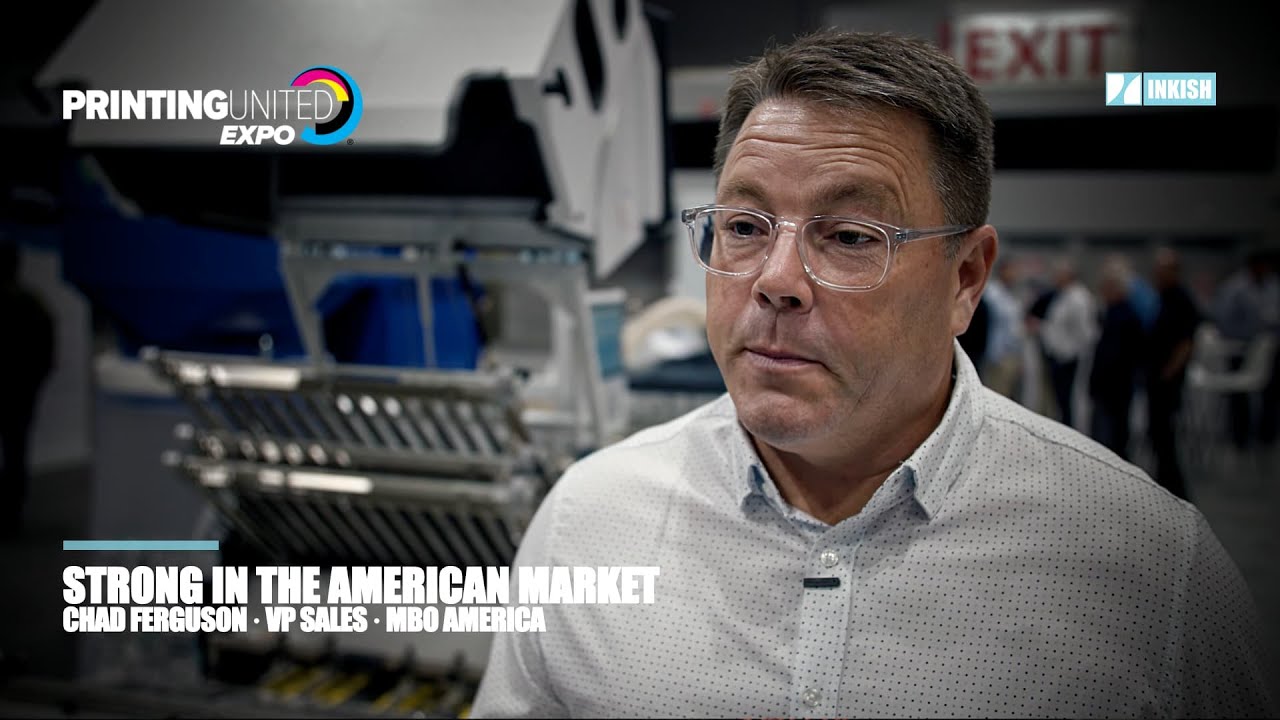
Chad Ferguson · VP Sales · MBO America · PRINTING United 2025
At Printing United in Orlando, Morten B. Reitoft from INKISH speaks with Chad Ferguson, Vice President of Sales at MBO America, about his first year in the role and the company’s expanding footprint in the finishing market. After nine years with Standard Finishing, Chad Ferguson joined MBO America to take on a leadership position focused on driving sales growth, building stronger customer relationships, and broadening awareness of MBO’s digital finishing solutions. He explains that the biggest change for him personally has been moving from working independently as a territory manager to leading a national sales team, emphasizing collaboration and mentorship across the organization.
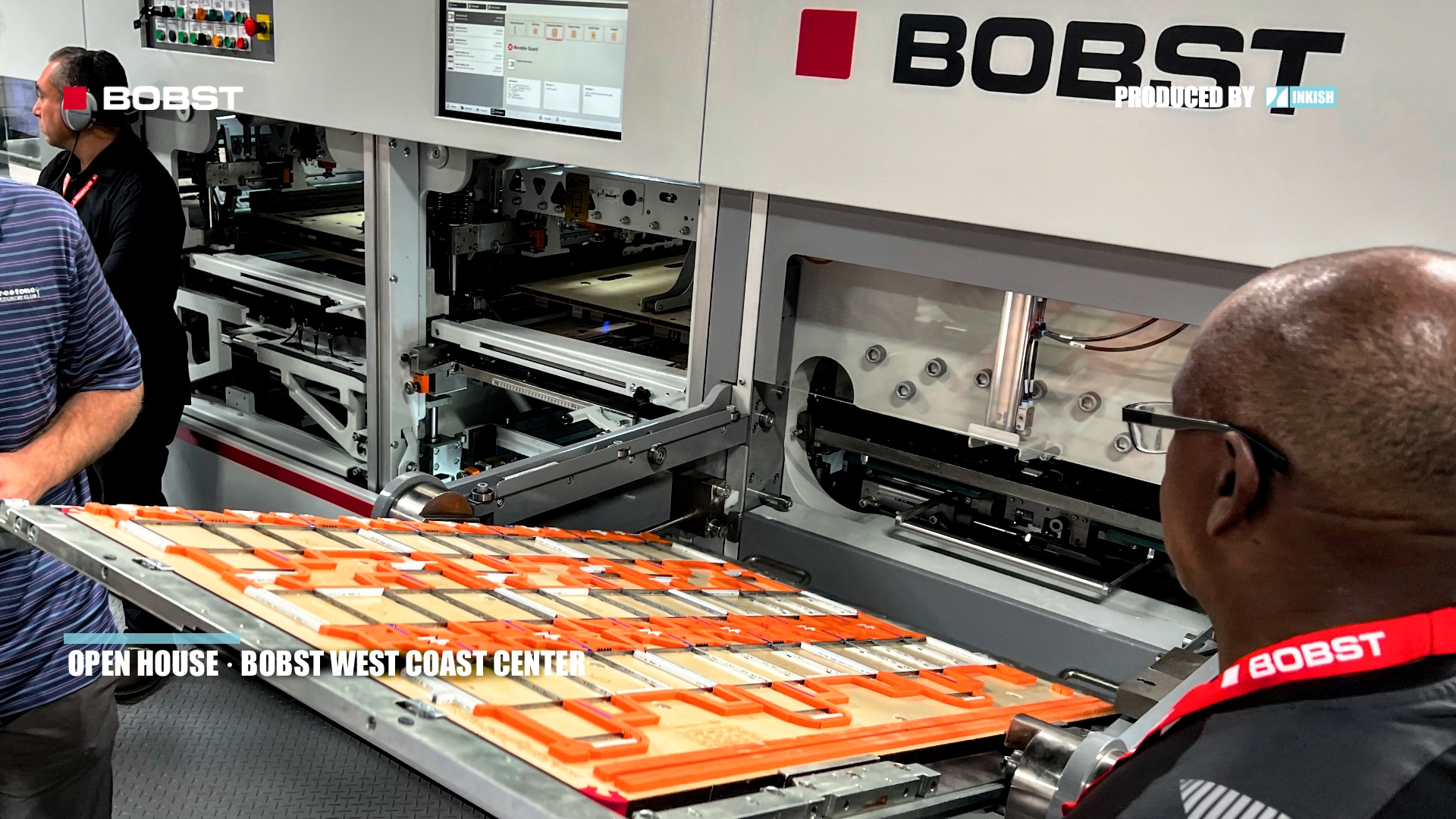
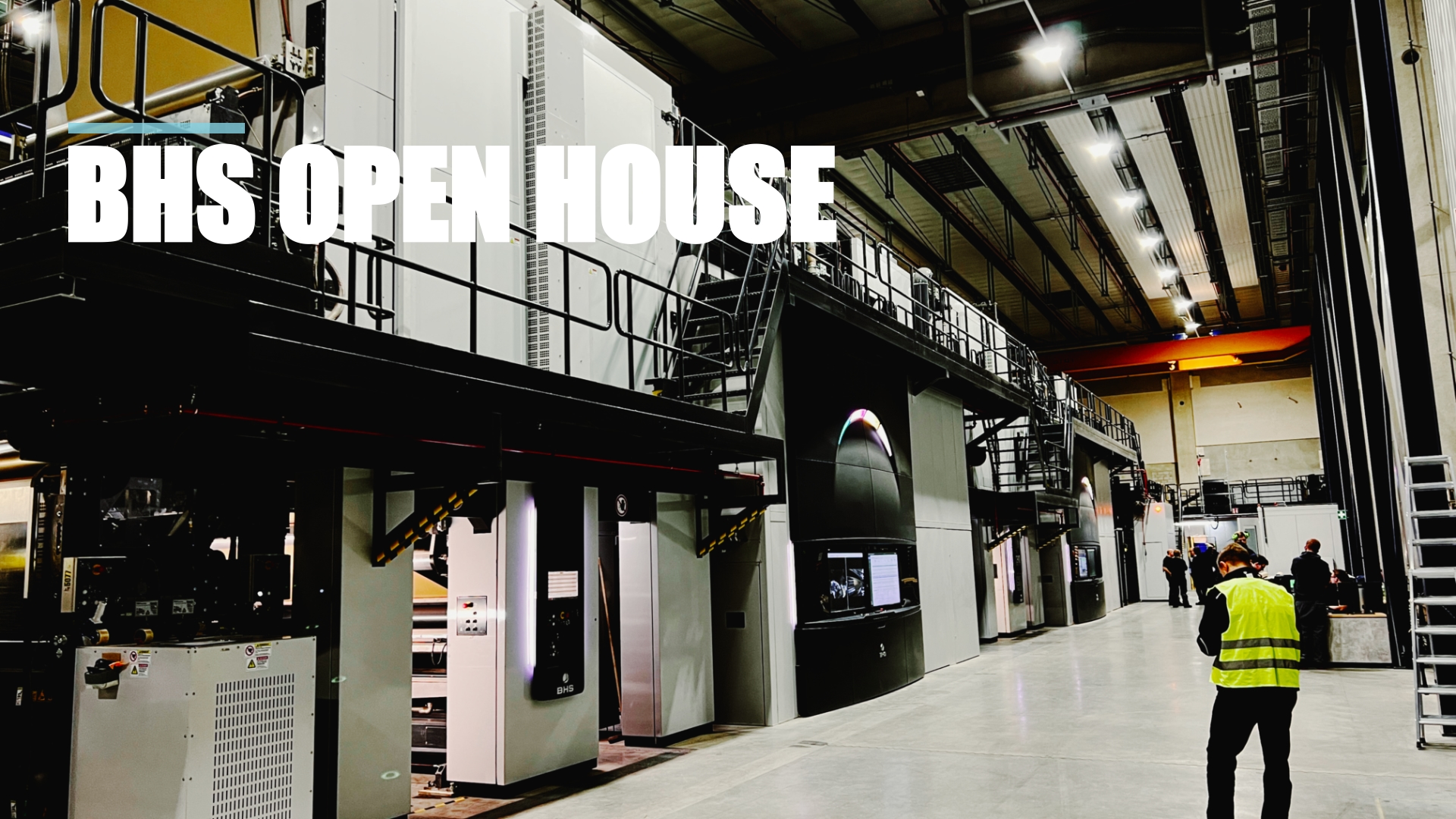
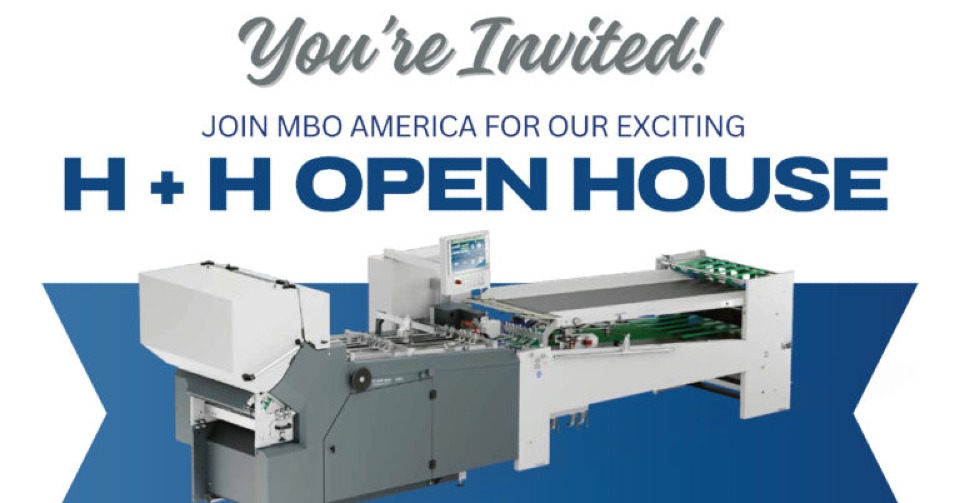
Ferguson highlights that while MBO has long been recognized as a global leader in folding equipment, the company has successfully evolved into a major player in roll-fed digital finishing. At the show, MBO America is demonstrating its roll-fed digital line featuring an auto splicer and the CC23 contour cutter—technologies that showcase the company’s strength in inline production and modular design. Each component is built for flexibility and efficiency, allowing customers to reconfigure their systems as needed. The modular “parking lot method,” as Ferguson describes it, means users can roll components in and out on caster wheels, adapting their setup for specific production jobs with ease.
He emphasizes that many printers still associate MBO primarily with traditional sheetfed folding, yet the company’s modern portfolio includes advanced solutions for high-volume, data-driven applications such as direct mail, transactional printing, and commercial finishing. The hallmark of MBO equipment remains its robustness, precision, and German engineering quality. Ferguson’s goal is to ensure more printers in North America recognize that MBO can support nearly any finishing need, from simple folding to complex inline digital workflows.
Discussing automation, Ferguson notes that while Europe has led in adopting collaborative robots and autonomous systems, the U.S. market is now catching up. He mentions strong customer interest in MBO’s CoBo-Stack and other automation solutions, particularly as print providers struggle with labor shortages. For many shops, he says, the challenge of finding and retaining skilled operators is driving investment in automation. Ferguson believes this shift is inevitable and that MBO’s adaptable, modular approach positions it perfectly to help printers boost productivity, reduce manual handling, and future-proof their operations.




Contact
MBO America
08053 Marlton
New Jersey
USA
Email : sales@mboamerica.com
Fri June 26th
Matthais Miederer · Sales Manager · Scodix ...
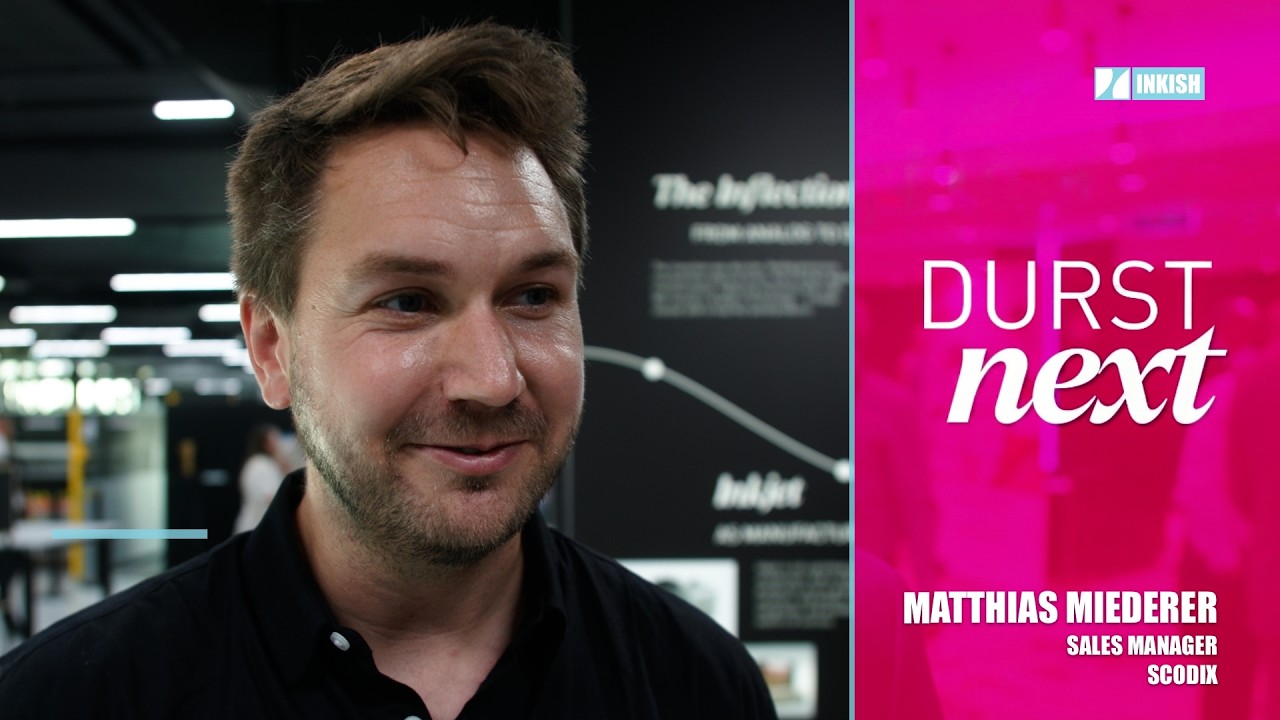
At Durst's Print Next event in Brixen, Wayne Beckett speaks with Matthias Miederer, Regional Sales Director DACH at Scodix, about the continued evolution of digital embellishment and why the technology is becoming increasingly relevant across commercial print, packaging, and wide-format applications. Having spent more than a decade working with digital embellishment technologies, Matthias reflects on his journey through the industry and explains why joining Scodix represented the next logical step. Today, he is responsible for the DACH region, one of Europe's most important markets for value-added print, where printers are increasingly looking beyond commodity production towards higher-margin applications. The conversation explores the launch of Scodix's newest platform, which significantly expands the range of printable substrates. From lightweight commercial papers to corrugated board, rigid materials, Dibond, and acrylic, the new press enables print service providers to address a far broader range of applications with a single investment. For many businesses, this opens opportunities to serve new markets while creating greater flexibility across existing production. Wayne also asks an important question that many print service providers may be considering themselves: if you don't already offer digital embellishment, where should you begin? Matthias believes the starting point is not the technology itself but the business case. Digital embellishment is fundamentally about creating additional value, allowing printers to differentiate their products, command higher margins, and generate new revenue streams rather than competing solely on price. The discussion also highlights the growing opportunities within packaging, where shorter production runs and increased demand for premium finishes continue to drive interest in digital embellishment technologies. As brands look for ways to create greater shelf impact without sacrificing flexibility, solutions such as those from Scodix are becoming increasingly relevant. A fascinating conversation about innovation, value creation, premium print, and why digital embellishment continues to open new opportunities across multiple print markets.