













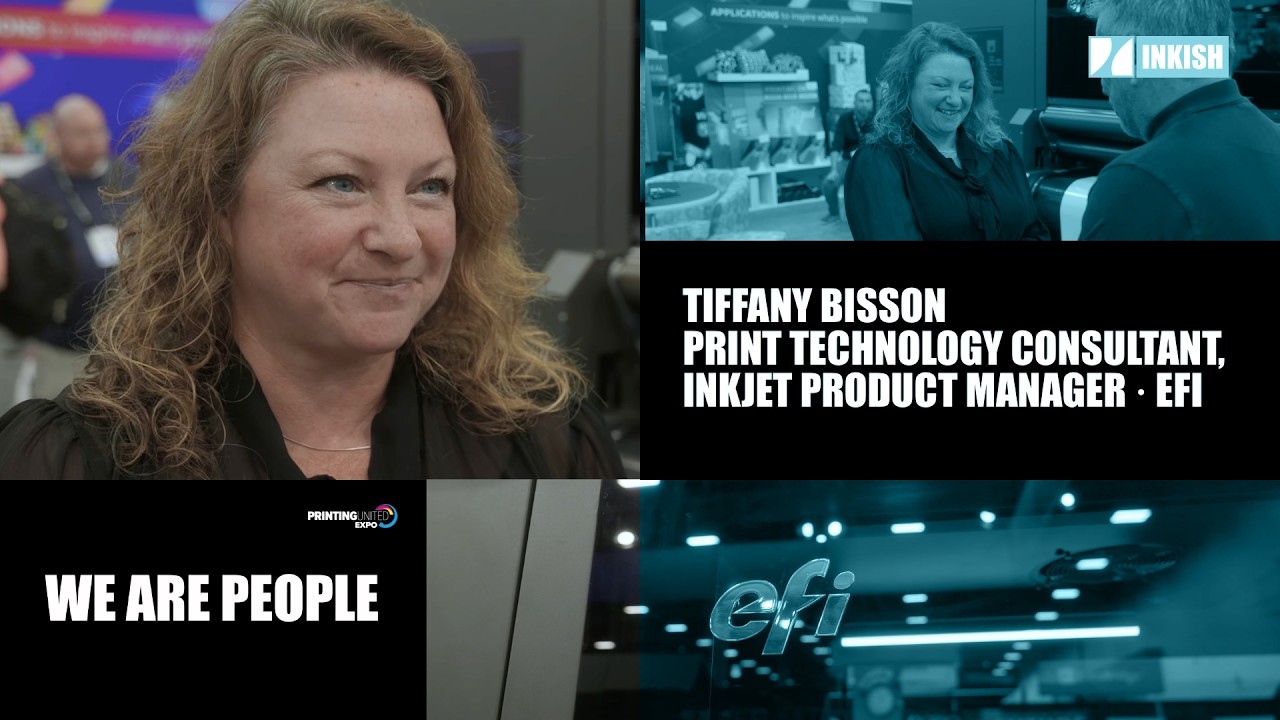
Tiffany Bisson · Print Technology Consultant, Inkjet Product Manager · EFI
A printer may be rated at an impressive number of boards per hour, but how many sellable boards actually make it through production?
At PRINTING United 2026 in Las Vegas, Wayne Beckett meets with Tiffany Bisson from EFI to discuss an increasingly important issue for print service providers: the gap between theoretical machine speed and real-world production throughput.
As part of EFI’s product team, Tiffany works both before and after the sale. On the pre-sales side, that means helping ensure the right technology is placed in the right production environment. After installation, much of her work involves listening to customers — understanding what works, where bottlenecks develop, and which capabilities EFI should consider in future generations of equipment.
And customers aren’t simply asking for faster printers.
They want uptime, easier material handling, fewer downstream processes, and ultimately more finished work through the factory.
A press can have impressive specifications, but if operators struggle with substrates, changeovers, finishing, or maintenance, the advertised speed becomes less relevant. That’s why EFI increasingly looks beyond the print engine itself and considers the complete production process.
One example is inline protective clear ink, which can eliminate separate lamination processes for certain applications. Another is the ability of EFI’s hybrid platforms to move quickly between roll-fed and rigid production, allowing print service providers to handle very different jobs on the same platform.
Automation obviously plays an important role, particularly on high-volume equipment such as the EFI VUTEk Q3h XP. Tiffany explains the different levels of material-handling automation available — from assisted loading and automated stacking to fully automated production.
But she also makes an interesting distinction.
Automation isn’t always the fastest answer.
In a hybrid production environment, a printer may need to switch from roll-to-roll production to rigid boards, from large sheets to multiple smaller pieces, or between completely different applications several times during a shift. Full automation can be extremely effective for long, repetitive production runs, but it can also introduce complexity when versatility and very fast changeovers are more important.
That makes the equation more nuanced: automate the processes where automation genuinely increases throughput, but maintain flexibility where human interaction allows the production line to change direction faster.
EFI’s hybrid platforms illustrate that philosophy. A printer can run two rolls simultaneously with different jobs and then transition relatively quickly into rigid board production. Rolls and substrates can be staged in advance, while different table and media-handling configurations support multi-lane, double-sided and varied production.
For print service providers looking to diversify, that flexibility becomes increasingly valuable. Signage, rigid display graphics, roll-fed applications, textile and other wide-format opportunities may require very different production methods, but customers increasingly expect PSPs to move between them quickly.
The objective isn’t automation for automation’s sake.
It’s uptime. Fewer touches. Faster changeovers. More applications. And ultimately, more sellable output during every production hour.
Watch Wayne Beckett’s conversation with Tiffany Bisson from EFI at PRINTING United 2026 in Las Vegas.



No Data Found.
Content for this section will appear here once available
Wed September 30th
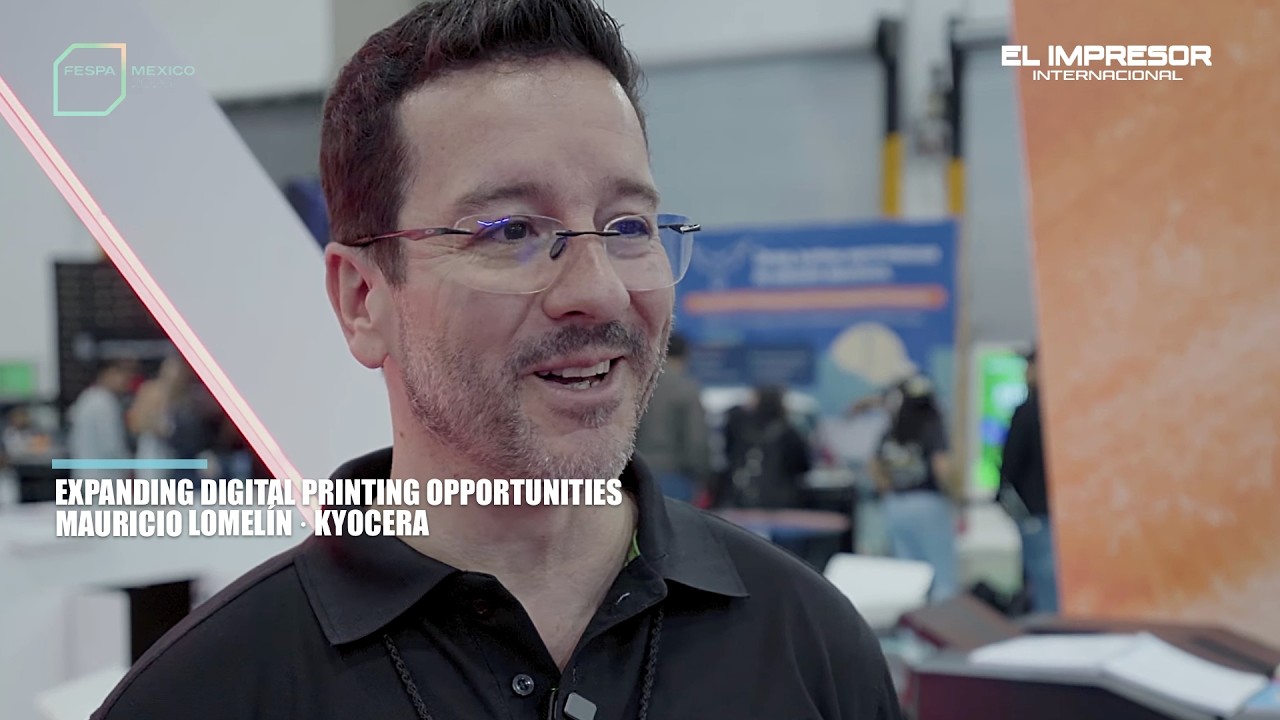
Mauricio Lomelín · Kyocera | Expanding Digi...
English description below: Desde FESPA México 2026, Claudia Mendoza conversa con Mauricio Lomelín, de Kyocera, sobre la evolución de la impresión digital, las nuevas oportunidades para la industria gráfica y la estrategia de la compañía para ampliar su presencia en el mercado de impresión de producción. Mauricio presenta la TASKalfa Pro 15000c, conocida como Victoria, un equipo de inyección de tinta con tecnología propia de Kyocera, capaz de producir hasta 150 páginas por minuto y alcanzar volúmenes de un millón de páginas mensuales. Con aproximadamente 30 equipos instalados en México y 1.000 a nivel mundial, según Mauricio, la compañía continúa consolidando su presencia en aplicaciones como la producción de libros, los documentos transaccionales y la impresión de grandes volúmenes. La conversación también presenta Nova, la nueva propuesta de equipos de producción láser de Kyocera, diseñada para complementar la tecnología inkjet. Mauricio explica cómo la combinación de ambas tecnologías permite a los impresores desarrollar procesos de producción más flexibles, reducir costos operativos y avanzar hacia la impresión bajo demanda. La sustentabilidad, la eficiencia energética, la integración de software y la transición de la impresión tradicional a la digital completan una entrevista que muestra las oportunidades que Kyocera identifica para el futuro de las artes gráficas. --- At FESPA Mexico 2026, Claudia Mendoza speaks with Mauricio Lomelín from Kyocera about the company's expanding presence in production printing and the growing opportunities for print service providers transitioning from conventional to digital technologies. Mauricio introduces the TASKalfa Pro 15000c, nicknamed Victoria, a high-volume inkjet press powered by Kyocera's proprietary printhead technology. Capable of producing up to 150 pages per minute and handling monthly volumes of up to one million pages, the system targets applications ranging from book production to transactional documents. According to Mauricio, Kyocera has approximately 30 installations in Mexico and recently reached 1,000 installations worldwide. The interview also explores Nova, Kyocera's new production toner systems, which complement its inkjet technology and enable printers to combine different production methods. Mauricio discusses how these solutions support the transition toward digital and on-demand printing while emphasizing low operating costs, productivity, and workflow integration. Sustainability, energy efficiency, variable data printing, and Kyocera's broader ambitions in the graphic arts industry are central themes in a conversation about the changing requirements of modern print production.