
























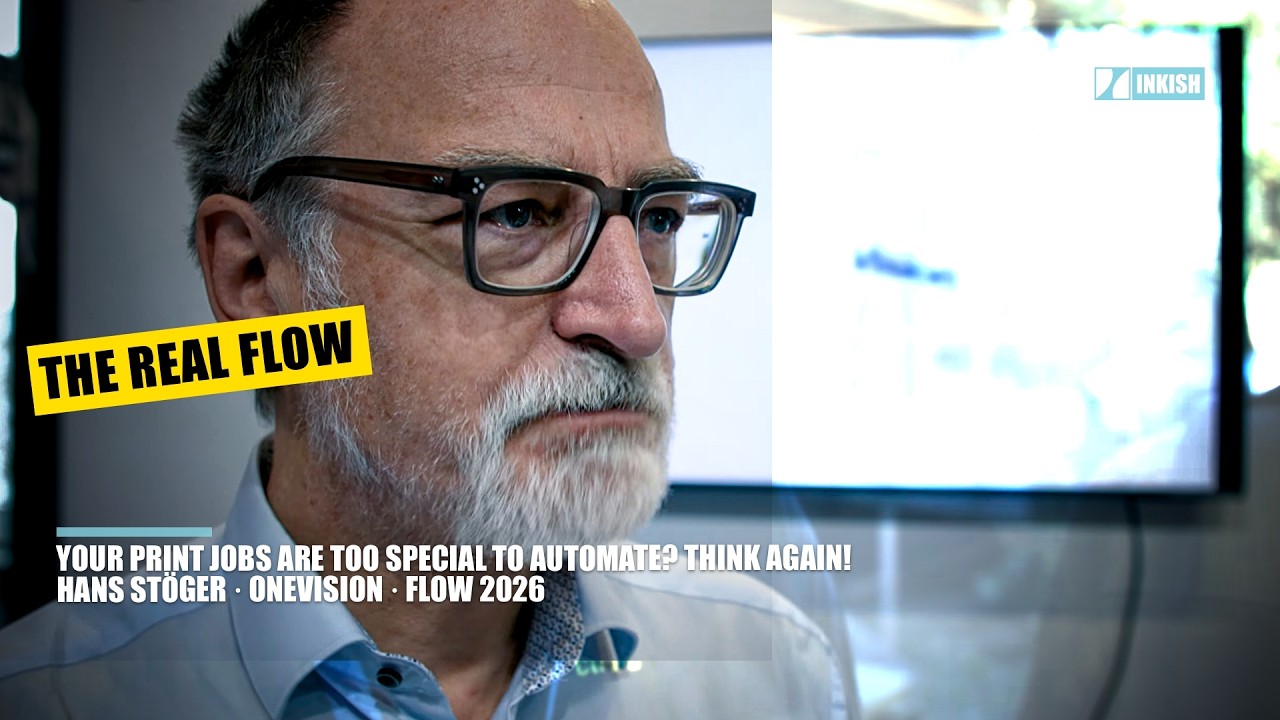
Your Print Jobs Are Too Special to Automate? Think Again! · Hans Stöger · OneVision · FLOW 2026
“Every job is different, so we can’t automate.” Sound familiar? According to Hans Stöger from OneVision, that’s one of the biggest misconceptions in the printing industry. If a process can be described and rules can be defined, it can be automated.
At FLOW 2026 in Bad Hersfeld, Pat McGrew meets Hans Stöger to explore how OneVision has evolved from its roots in PostScript and PDF processing into a comprehensive workflow automation platform serving multiple print segments.
Prepress remains one of the biggest bottlenecks in print production. From preflighting and normalizing PDFs to handling job tickets, routing files, and driving different output devices, OneVision focuses on removing repetitive manual work and making production more predictable.
But automation doesn’t have to happen overnight.
Hans explains how OneVision typically begins with a short workflow audit, followed by a proof of concept that demonstrates how a customer’s existing processes can be automated. From there, printers can expand their automation step by step without having to transform their entire operation at once.
Artificial intelligence also plays an increasingly practical role. Rather than adding AI simply because it’s fashionable, OneVision uses it to solve specific problems, including image upscaling, intelligent bleed generation, interpreting job metadata, and turning complex preflight reports into explanations that production teams can actually understand.
From wide-format and commercial printing to high-volume, on-demand production, the fundamental challenge remains the same: getting files into production quickly, correctly, and with as little manual intervention as possible.
And perhaps Hans’s most important advice is that every printing company needs someone who takes ownership of its workflow. Technology can automate processes, but people must understand and drive the improvements.
A practical conversation about overcoming automation barriers, applying AI where it creates genuine value, and why even the most complicated print production environments can become more efficient.
Recorded at FLOW 2026 · Bad Hersfeld, Germany · INKISH


No Data Found.
Content for this section will appear here once available
Thu November 5th
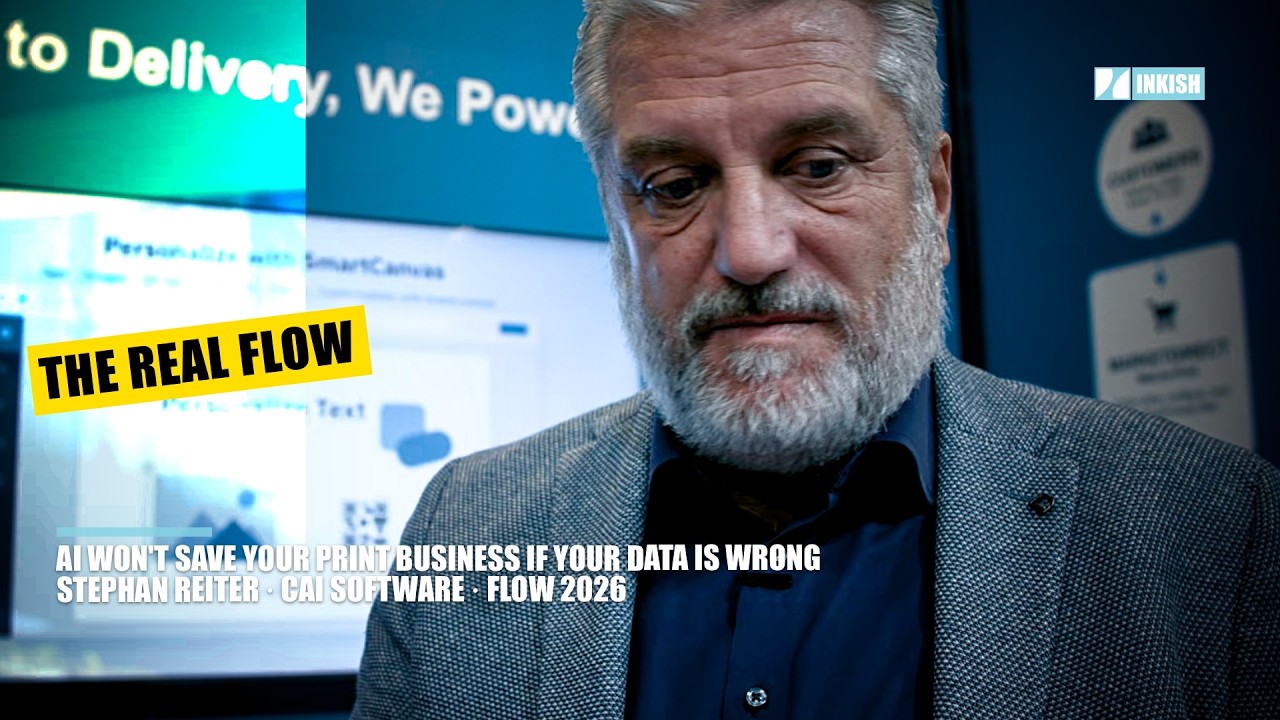
AI Won't Save Your Print Business If Your Dat...
Can you name your 20 most profitable printing jobs from the past six months? If not, you might have a bigger problem than outdated software. At FLOW 2026 in Bad Hersfeld, Pat McGrew meets Stephan Reiter from CAI Software to discuss why the future of print management isn't simply about implementing new technology, but understanding the economics and processes behind every printing job. With roots in EFI and eProductivity Software, CAI brings together an extensive portfolio of MIS, ERP, web-to-print, and workflow solutions serving printing companies of every size, from small businesses to multinational enterprises. But Stephan challenges the traditional way printers approach software investments. Rather than starting with a list of desired features, he asks fundamental business questions: Which jobs actually make money? How much capital is tied up in unused inventory? Where are employees spending time on unnecessary manual processes? CAI uses time-and-motion studies to examine workflows, often tracing completed invoices backward through production, estimating, and order entry to uncover hidden inefficiencies. And what about artificial intelligence? While CAI is developing AI-powered capabilities for onboarding, estimating, migration, and reporting, Stephan is clear that AI alone cannot solve structural problems. Without accurate data and well-defined processes, even the most sophisticated technology will struggle to deliver meaningful results. The conversation also explores why printing companies should reconsider legacy MIS installations that may have served them well for years but no longer reflect their business needs. With changing customer expectations, increasing automation, and growing competitive pressure, Stephan argues that printers need to understand their profitability and rethink how their entire business operates. A thought-provoking conversation about the real value of MIS, the limitations of AI, and why the printing companies that understand their numbers may be the ones best prepared for the future. Recorded at FLOW 2026 · Bad Hersfeld, Germany · INKISH