














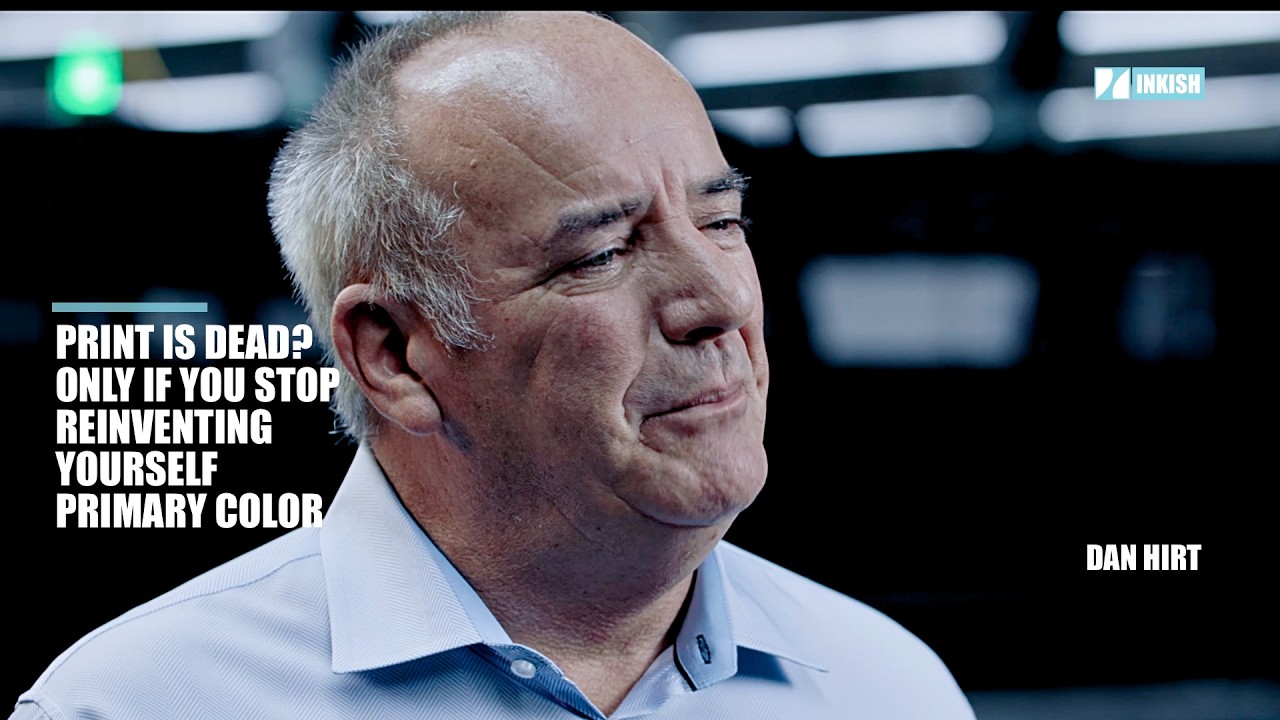
Print Is Dead? Only If You Stop Reinventing Yourself · Primary Color · Dan Hirt – President
Friends still ask Primary Color CEO Dan Hirt whether he is really still in printing. After all, haven’t we been hearing for decades that print is dead?
For Hirt, the answer is much more interesting than simply yes or no.
Printing runs deep in his family. His father’s uncle worked in stone lithography in Nice, France, producing those wonderfully colorful tourist postcards made from black-and-white photographs and hand-coloring. His parents later moved from Switzerland to South Africa, where they established a successful printing company. Dan and his brother returned to Switzerland to complete apprenticeships in the graphic industry before the family eventually reunited in California.
Primary Color started in prepress, at a time when prepress could be an extremely profitable business. But Hirt could see what had happened to typesetters and realized that prepress alone wouldn’t last forever. So the company moved into printing.
Then print changed.
The dot-com boom shifted marketing budgets online. Run lengths became shorter. Traditional print volumes declined. And rather than waiting for everything to return to what it had once been, Primary Color continued changing with its customers.
Today, Hirt says they hardly describe themselves simply as a printing company. Primary Color works with design, structural engineering, wood and metal fabrication, temporary and permanent displays, retail, events, and much more — with print becoming one component of a much larger solution.
Technology follows the same philosophy.
A Heidelberg perfecting press addresses longer-run offset work, while the Landa covers the range from one to the thousands. In large format, Primary Color has worked extensively with Agfa technology and continues investing as quality, productivity, automation, and customer requirements evolve.
Operating in California also means that efficiency isn’t optional. Equipment has to deliver more output in less space and, increasingly, with fewer people — particularly as experienced offset operators retire and become harder to replace.
But perhaps the most important message in this INKISH film isn’t about any particular machine.
It’s about accepting that yesterday isn’t coming back.
Customers probably aren’t suddenly going to start ordering all those brochures again. Markets change. Marketing changes. Technology changes. And Hirt believes the job of a CEO is to keep a finger on the customer’s pulse, understand what’s happening inside the factory, know what technology is becoming available — and constantly connect those three things.
Because print isn’t dead.
But waiting for the past to return might be.



No Data Found.
Content for this section will appear here once available
Contact
Primary Color
90630 Cypress
CA
USA
Email : info@primarycolor.com

Mon September 14th
The Bernard Group — Technology Should Make ...
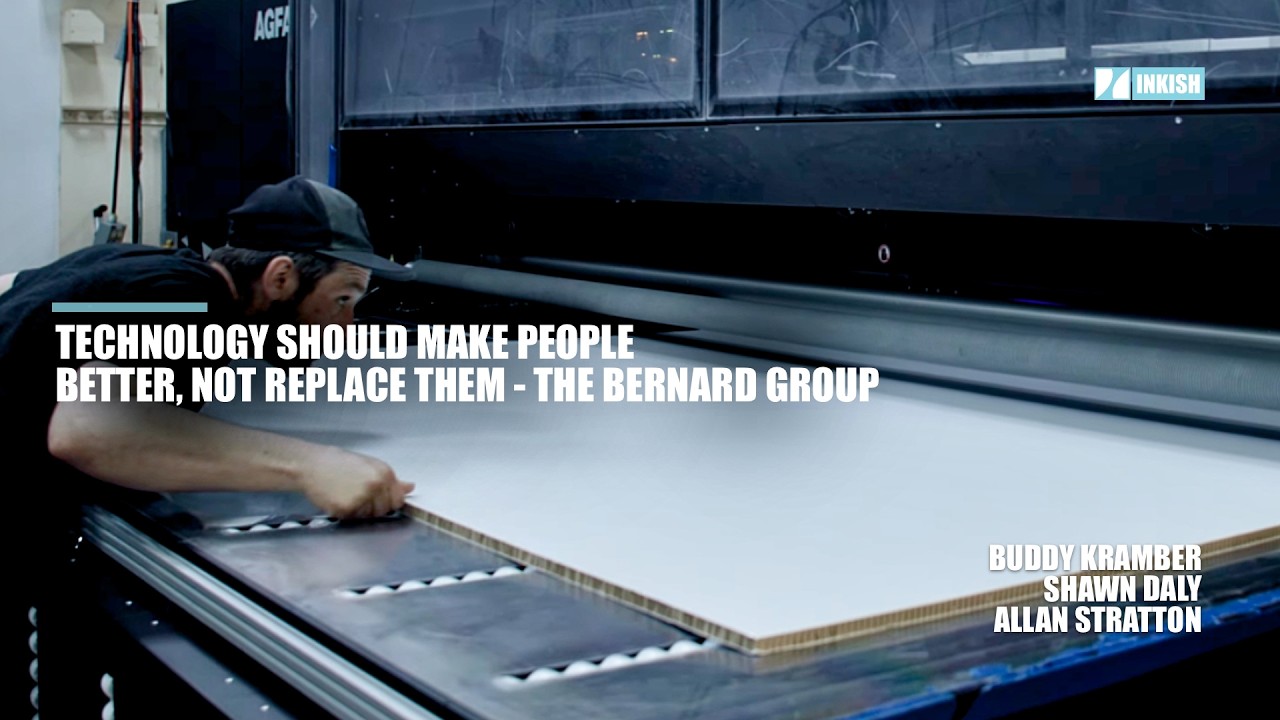
The Bernard Group is far more than a printing company. From large-format and online print to design, engineering, prototyping, plastics, millwork, assembly, fulfillment, and distribution, the employee-owned company has built an operation around one fundamental idea: serve the customer — and give people the tools and authority to do it exceptionally well. Technology and automation play an increasingly important role, but not as replacements for people. At The Bernard Group, the objective is to remove repetitive tasks and complexity so skilled employees can spend more time doing what they do best. That philosophy also extends to the company's relationships with suppliers. Rather than simply buying equipment, The Bernard Group seeks strategic partnerships in which both parties can learn, develop, and solve problems together. A great example is its relationship with AGFA. When changing customer requirements exposed limitations in color reproduction, the teams didn't simply accept what the machines could deliver. The Bernard Group analyzed actual ink consumption, questioned the existing ink configuration, and worked directly with AGFA's engineers to develop a new configuration — replacing part of the cyan capacity with light magenta while simultaneously improving other aspects of print quality. It's a fascinating example of what happens when a printer, its operators, color specialists, management, and an OEM work together around the same problem. And improvement never really stops. With four high-volume systems running up to 24 hours a day, The Bernard Group continually follows the bottleneck — from prepress to printing, cutting, kitting, and shipping — using technology, data, and experience to dynamically increase capacity where it's needed. In this INKISH film, we visit The Bernard Group and talk about employee ownership, culture, automation, color, continuous improvement, strategic vendor relationships, and why the smartest technology investments are ultimately about getting more from the people who use them.