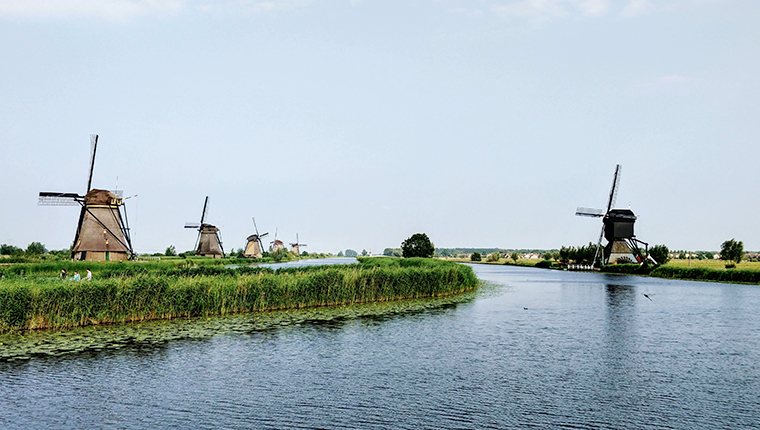












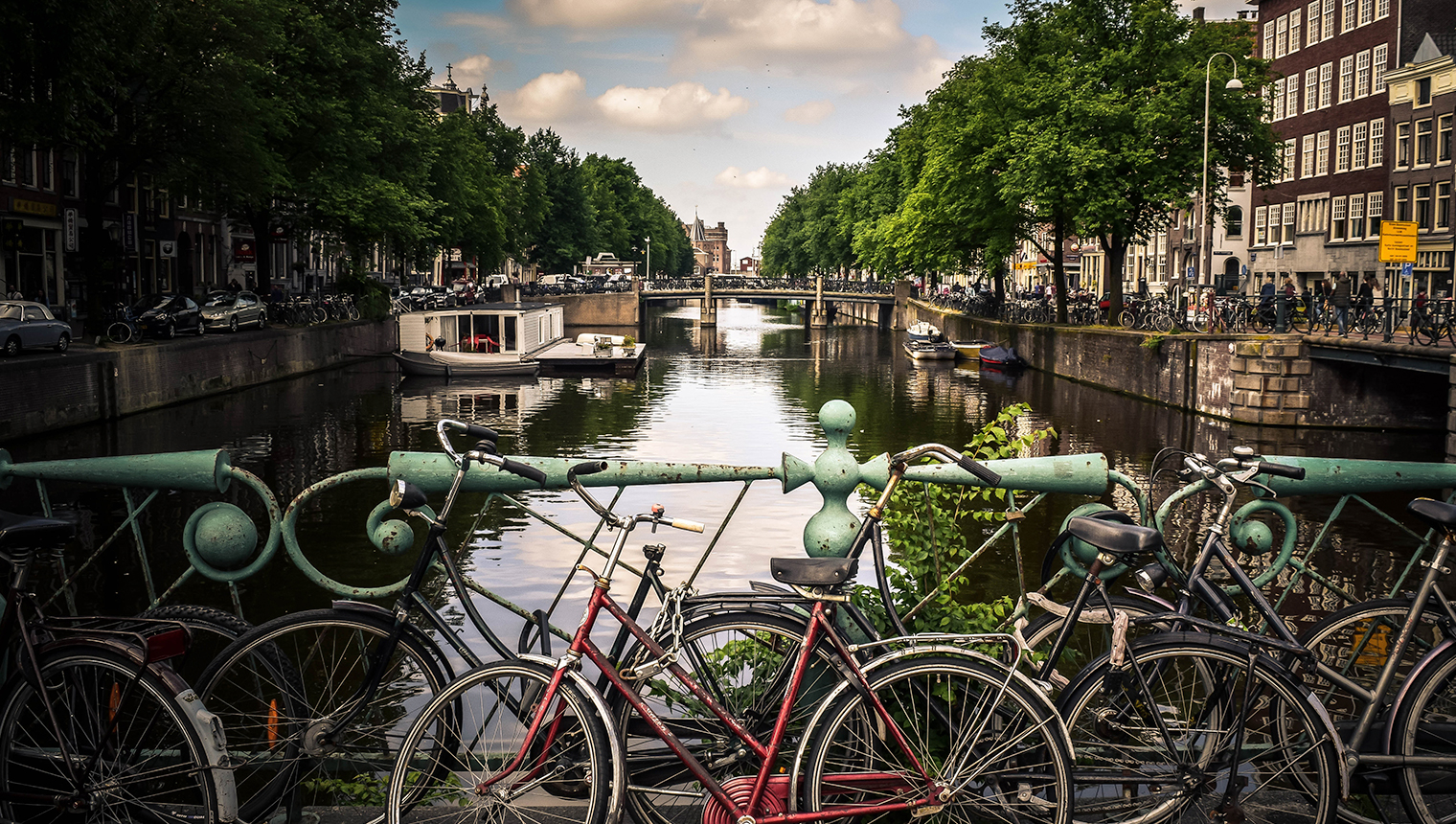
The Netherlands (Dutch: Nederland [ˈneːdərlɑnt] (About this soundlisten); Papiamentu: Hulanda; West Frisian: Nederlân), informally Holland,[12] is a country in Western Europe with some overseas territories in the Caribbean. In Europe, it consists of 12 provinces that border Germany to the east, Belgium to the south, and the North Sea to the northwest, with maritime borders in the North Sea with those countries and the United Kingdom.[13] Together with the Caribbean Netherlands, consisting of Bonaire, Sint Eustatius, and Saba, it forms a constituent countryof the Kingdom of the Netherlands. The country’s official language is Dutch, with English and Papiamentu as secondary official languages in the Caribbean Netherlands, and West Frisian as a secondary official language in the province of Friesland.[1] Dutch Low Saxon and Limburgish are recognised regional languages (spoken in the east and southeast respectively), while Sinte Romani and Yiddish are recognised non-territorial languages.[1]

The four largest cities in the Netherlands are Amsterdam, Rotterdam, The Hague, and Utrecht.[14] Amsterdam is the country’s most populous city and nominal capital,[15] while The Hague holds the seat of the States General, Cabinet and Supreme Court.[16] The Port of Rotterdam is the busiest seaport in Europe, and the busiest in any country outside Asia.[17]Amsterdam Airport Schiphol is the busiest airport in the Netherlands, and the third busiest in Europe. The country is a founding member of the EU, Eurozone, G10, NATO, OECD and WTO, as well as a part of the Schengen Area and the trilateral Benelux Union. It hosts several intergovernmental organisations and international courts, many of which are centered in The Hague, which is consequently dubbed ‘the world’s legal capital’.[18]

Netherlands literally means ‘lower countries‘ in reference to its low elevation and flat topography, with only about 50% of its land exceeding 1 metre (3 ft 3 in) above sea level, and nearly 17% falling below sea level.[19] Most of the areas below sea level, known as polders, are the result of land reclamation that began in the 16th century. With a population of 17.4 million people, all living within a total area of roughly 41,800 square kilometres (16,100 sq mi)—of which the land area is 33,500 square kilometres (12,900 sq mi)—the Netherlands is the 12th most densely populated country in the world and the 5th most densely populated country in Europe, with a density of 521 per square kilometre (1,350/sq mi). Nevertheless, it is the world’s second-largest exporter of food and agricultural products (after the United States), owing to its fertile soil, mild climate, intensive agriculture and inventiveness.[20][21][22]

The Netherlands has been a parliamentary constitutional monarchy with a unitary structure since 1848. The country has a tradition of pillarisation and a long record of social tolerance, having legalised abortion, prostitution and human euthanasia, along with maintaining a liberal drug policy. The Netherlands abolished the death penalty in 1870, allowed women’s suffrage in 1917, before becoming the world’s first country to legalise same-sex marriage in 2001. Its mixed-market advanced economy had the thirteenth-highest per capita incomeglobally. The Netherlands ranks among the highest in international indexes of press freedom,[23] economic freedom,[24] human development and quality of life, as well as happiness.[25][i]In 2009, the Netherlands had the seventh highest economy as measured by GDP per capita. In 2013, it ranked fourth on the human development index.

Photo Credits
Photo by Vishwas Katti on Unsplash
Photo by Daniel Spilka on Unsplash
Photo by Jace & Afsoon on Unsplash
En thumbnials of the images

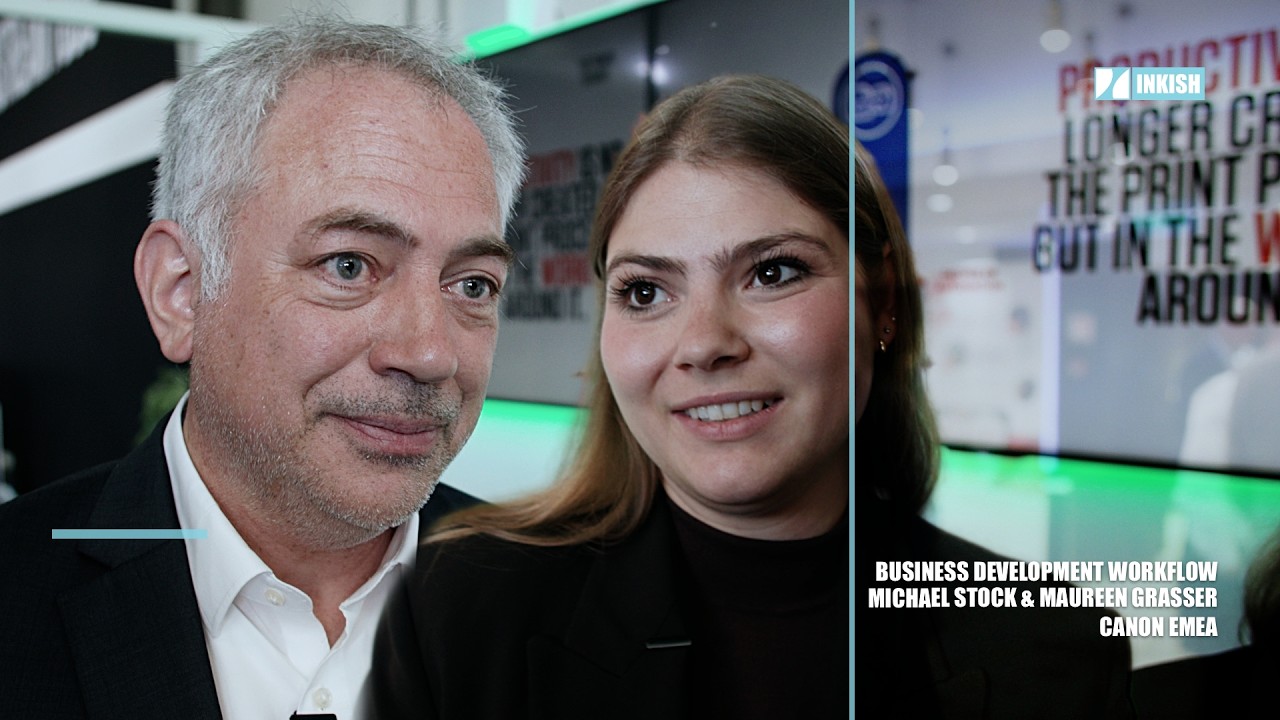
Maureen Grasser & Michael Stock · Business Development Workflow · Canon EMEA · Power to Print

At Canon's Power to Move event in Venlo, Morten Reitoft speaks with Cathy Bittner and Tino Waegelein from Canon EMEA about a topic that is becoming increasingly important in modern print production: workflow. While much attention in the industry is focused on presses and print quality, Bittner and Waegelein argue that the future of productivity lies in understanding and optimizing the entire production process—from order intake to final delivery. Rather than taking a print-centric view, Canon is encouraging customers to adopt an end-to-end workflow mindset that considers every step in the value chain. A fascinating part of the discussion revolves around Canon's "End-to-End Experience," a methodology that uses physical building blocks and gamification techniques to visualize workflows, identify bottlenecks, and uncover opportunities for improvement. Originally developed as a teaching tool, the concept has evolved into a practical framework for helping customers understand complex production environments and make better decisions about automation and integration. The conversation also explores workflow openness, software integration, cloud-based solutions, strategic partnerships, and the importance of connecting specialized technologies rather than forcing customers into closed ecosystems. Canon's approach, according to Bittner and Waegelein, starts with understanding customer requirements before recommending the right combination of software, services, and production technologies. Finally, the discussion turns to artificial intelligence and whether AI may one day design and manage workflows on its own. While both see enormous potential for AI as a productivity tool, they believe human expertise, decision-making, and oversight will remain critical components of successful print production for years to come. This is a thoughtful conversation about workflow, automation, integration, and why the future of print may be less about individual devices and more about how everything works together.

En thumbnials of the images

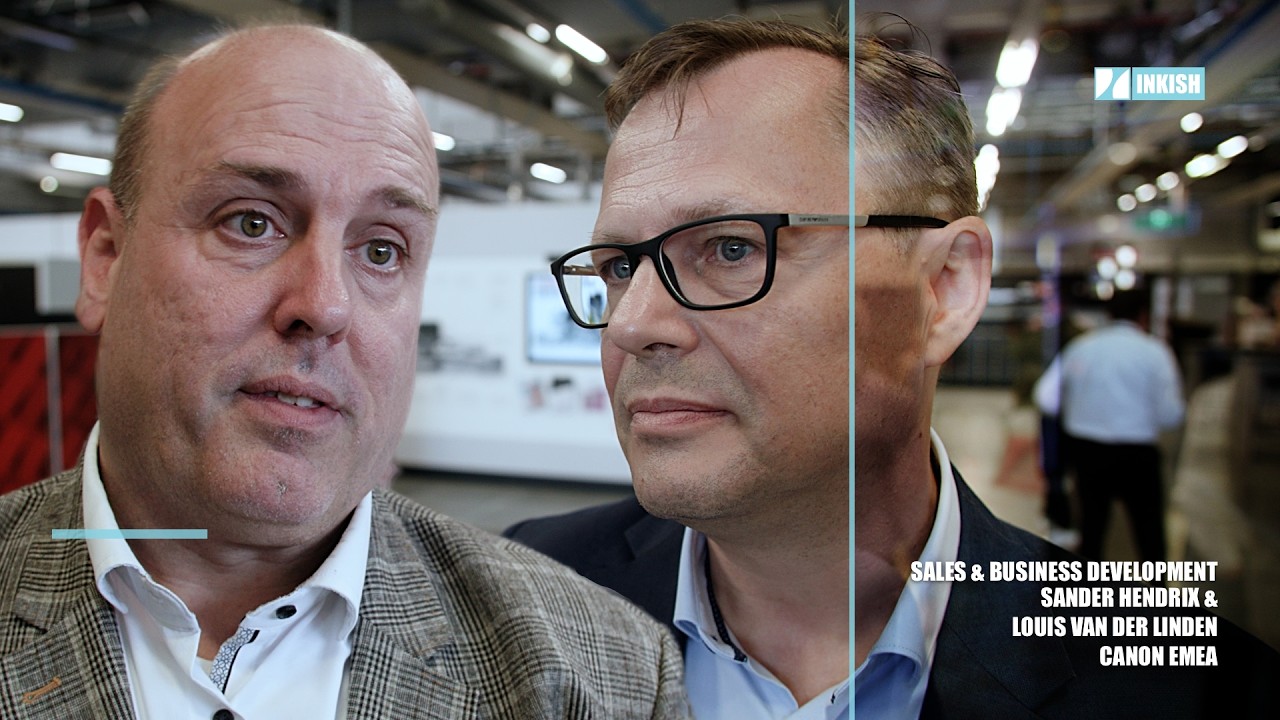
Louis Van der Linden & Sander Hendrix · Business Development Workflow · Canon EMEA · Power to Print

At Canon's Power to Move event in Venlo, Morten Reitoft speaks with Sander Hendrix and Louis Van der Linden about one of Canon's biggest success stories in production inkjet: the varioPRINT iX3200. From the launch of Canon's first sheetfed inkjet platform in 2015 to nearly 900 installations worldwide today, the conversation explores the technological journey that helped create an entirely new market segment. Hendrix and Van der Linden explain the engineering challenges behind sheetfed inkjet, including paper handling, registration accuracy, and scaling a concept from prototype to industrial production platform. The discussion also examines why the iX3200 has gained traction across multiple market segments, from transactional printing and commercial print to online printing and, increasingly, the demanding photo products market. The ability to deliver high image quality, productivity, reliability, and media versatility has enabled customers to expand applications while maintaining the efficiency required for peak production periods. A significant part of the interview focuses on Canon's Prisma workflow ecosystem and the importance of open integration. Rather than forcing customers into a closed environment, Canon's approach is designed to connect with existing workflows, MIS systems, prepress solutions, and production environments. Hendrix and Van der Linden explain how scalable workflow architectures, automated processing, and flexible integration help printers transition from offset to digital production while maintaining operational efficiency. The conversation also touches on mass customization, RIP performance, workflow scalability, and the growing importance of software in modern print manufacturing. As run lengths become shorter and customer demands become more complex, workflow and automation are becoming just as important as the presses themselves. Finally, the discussion highlights Canon's unique portfolio strategy, spanning toner, sheetfed inkjet, B2 inkjet, and web-fed production inkjet, enabling customers to find the right technology for virtually any production requirement.

En thumbnials of the images

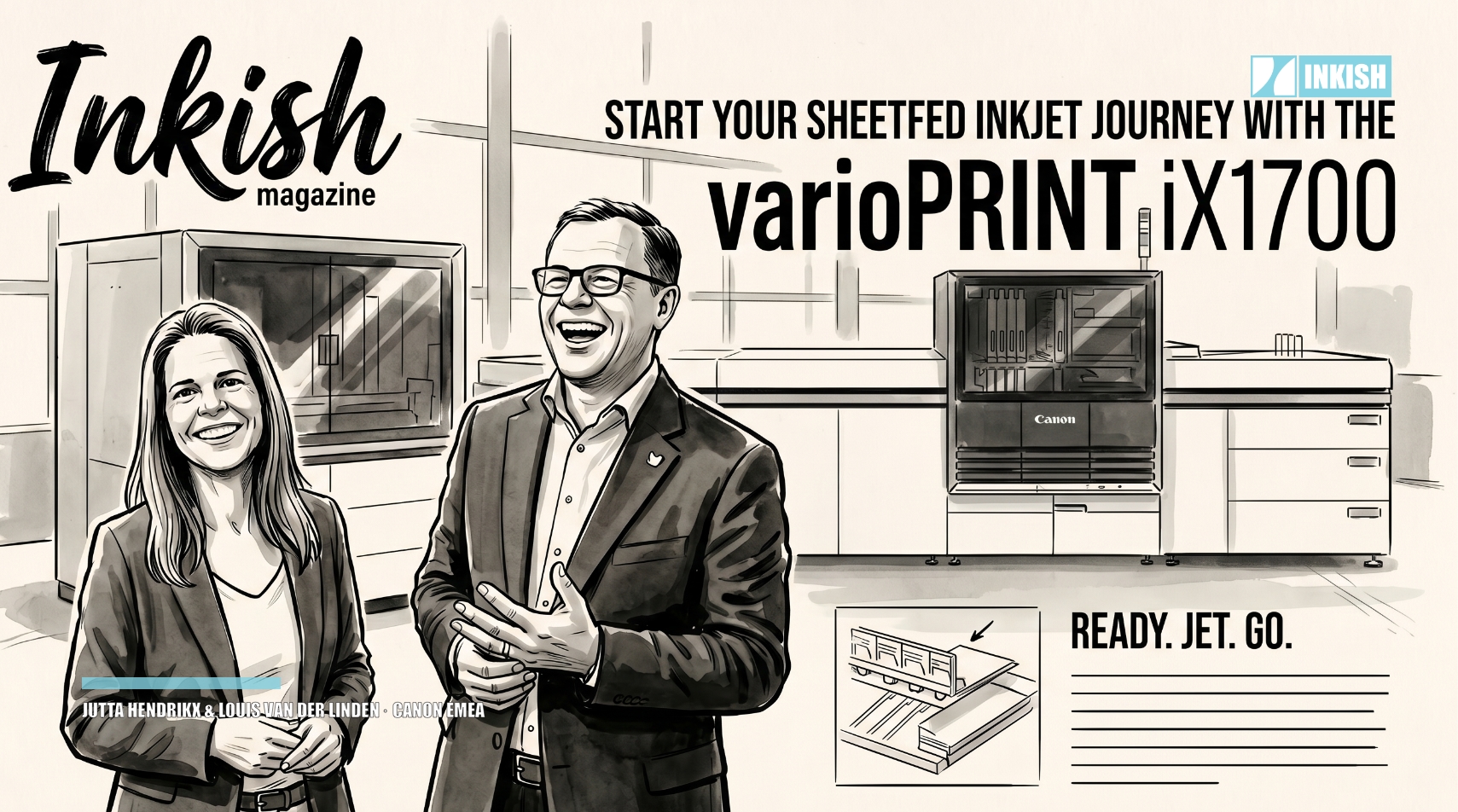
Louis Van der Linden & Jutta Henrikx · Canon EMEA · Canon iX1700 · Power to Move

At Canon's Power to Move event in Venlo, Morten B. Reitoft speaks with Jutta Hendrikx and Louis Van der Linden about the VarioPrint iX 1700, Canon's latest addition to its growing sheetfed inkjet portfolio. While Canon's larger sheetfed inkjet presses have attracted significant attention for their ability to replace higher-volume production environments, the VarioPrint ix 1700 has been developed to address a different segment of the market. Designed for monthly volumes starting around 300,000 A4 impressions, the press opens the door to sheetfed inkjet for print providers who may previously have considered the technology beyond their requirements or investment range. The conversation explores how the VarioPrint iX 1700 fits into Canon's broader strategy of providing customers with multiple technology options rather than forcing a choice between toner and inkjet. According to Hendrikx and Van der Linden, the market increasingly demands solutions that combine the flexibility traditionally associated with toner devices with the productivity and efficiency advantages of inkjet technology. The VarioPrint iX 1700 is intended to bridge that gap. The discussion also looks at the types of applications Canon expects the press to serve. Commercial print, brochures, postcards, greeting cards, and other high-quality applications are obvious targets, but the platform's quality also makes it relevant to markets such as photo products and premium print applications. At the same time, the machine's flexibility allows customers to configure paper input and output capacities to meet their specific production requirements. Another topic is the increasingly important role of long-sheet applications. With support for sheet sizes up to 364 × 660 mm, including duplex printing, the VarioPrint iX 1700 enables the production of products such as six-page brochures, larger-format covers, and a variety of value-added commercial print applications that traditionally required alternative production methods. Throughout the conversation, Hendrikx and Van der Linden emphasize that Canon's objective is not to replace one technology with another, but to provide customers with the widest possible range of choices. As print businesses continue to evolve, selecting the right technology becomes less about whether a device uses toner or inkjet and more about matching production volumes, applications, workflow requirements, and business objectives. Recorded at Canon's Customer Experience Center in Venlo ahead of the Power to Move event, this interview offers insight into how Canon sees the next phase of sheetfed inkjet adoption and where the VarioPrint iX 1700 fits within that vision.

En thumbnials of the images

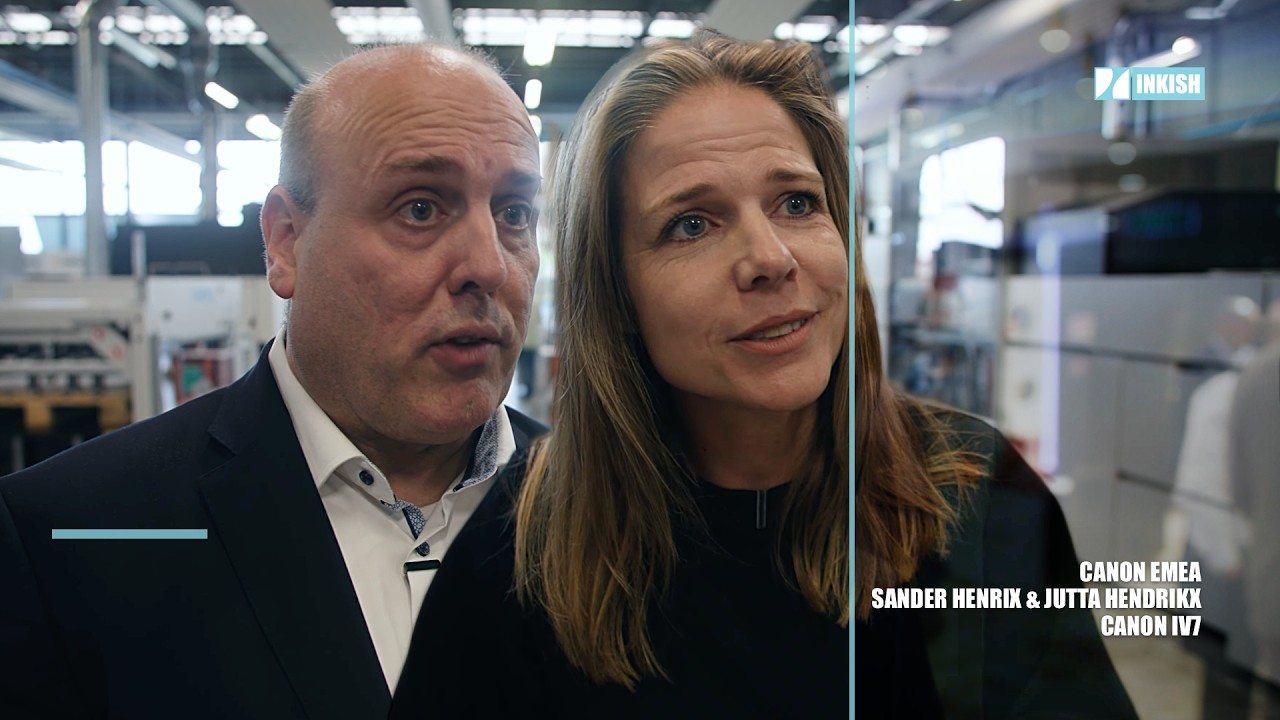
Sander Hendrix & Jutta Henrikx · Canon EMEA · Canon IV7 · Power to Move

At Canon's Power to Move event in Venlo, Morten B. Reitoft speaks with Sander Hendrix and Jutta Hendrikx about one of Canon's most significant developments in sheetfed inkjet printing: the new VarioPress iV7. The conversation explores the long journey that led to the launch of Canon's new B2 sheetfed inkjet platform. Building on years of experience gained from the VarioPrint i300 and iX3200 platforms, Canon has developed a press designed to address the growing demand for higher productivity, greater flexibility, and larger sheet sizes while maintaining the quality and workflow advantages that have made sheetfed inkjet increasingly attractive to commercial printers. Hendrix and Hendrikx explain how customer feedback has played a central role in the development process. As print runs continue to decline and turnaround times become increasingly critical, printers are looking for technologies that can streamline production from order entry through finishing. The VarioPress iV7 is designed to fit into that reality, offering the benefits of digital production while expanding the range of applications and volumes that can be handled efficiently. The discussion also examines the evolving relationship between offset and inkjet printing. Rather than focusing solely on ink costs or the press's speed, Canon emphasizes total production efficiency, reduced lead times, improved workflow integration, and the ability to move jobs seamlessly through the production process. According to Canon, the crossover point between offset and digital continues to move upward as both technology and business requirements evolve. A key part of the interview focuses on the technical innovations behind the VarioPress iV7, including Canon's own printhead technology, advanced automation, continuous ink circulation, and a newly developed flat paper path that supports a wider range of substrates while maintaining consistent print quality. Combined with technologies inherited from earlier platforms, these developments are intended to deliver the reliability, quality, and labor efficiency required in modern production environments. The conversation concludes with a broader discussion about the future of sheetfed inkjet, the importance of workflow optimization, and Canon's ambition to help commercial printers transition more offset work into digital production without compromising quality or profitability. Recorded at Canon's Customer Experience Center in Venlo ahead of the Power to Move event, this interview provides valuable insight into Canon's strategy for the future of commercial print and the thinking behind the development of the VarioPress iV7.

En thumbnials of the images

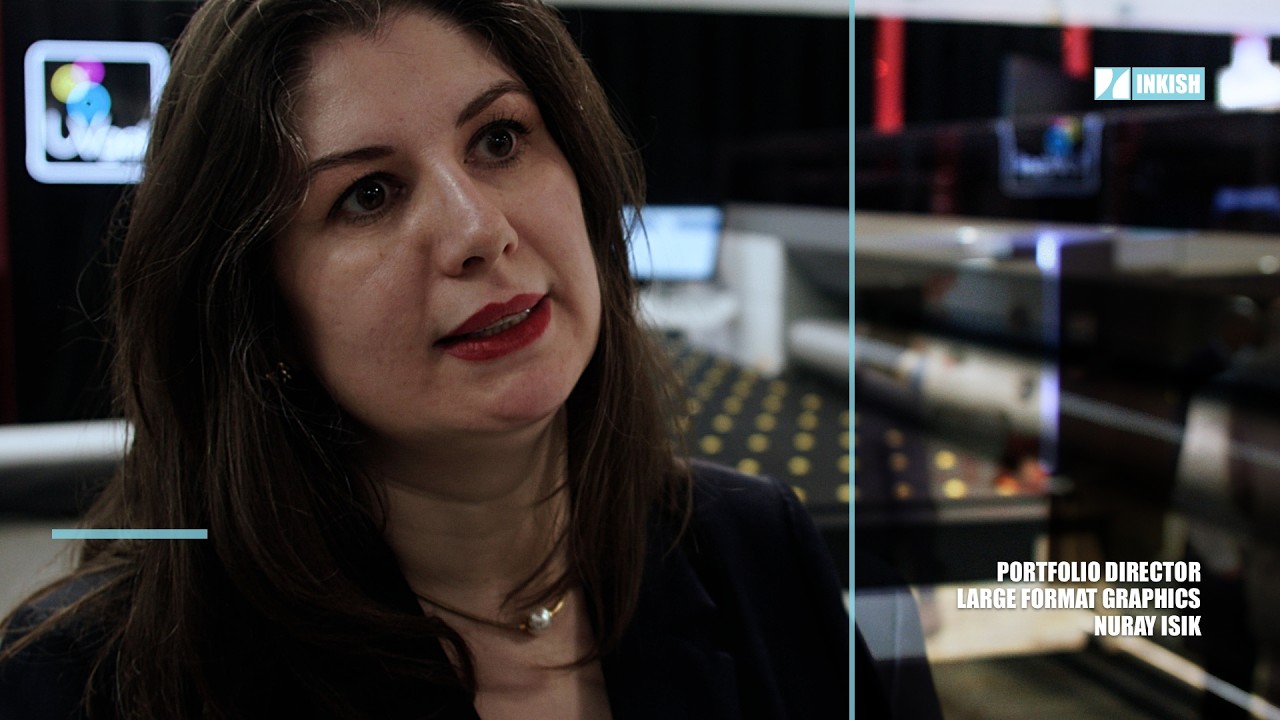
Nuray Isik · Portfolio Director Large Format Graphics · Canon · Colorado XL · Power to Move

At Canon's Power to Move event in Venlo, Nuray Isik and Morten B. Reitoft discuss the evolution of Canon's Colorado platform and the introduction of the new Colorado XL. The conversation begins with the story behind UVgel technology, which has been at the heart of the Colorado family for nearly a decade. Isik explains how Canon set out to overcome the compromises traditionally associated with large-format printing by developing a technology that combines the advantages of multiple print processes while avoiding many of their limitations. The result is a platform capable of printing on a wide variety of media with excellent durability, low ink consumption, and consistent image quality. A significant part of the discussion focuses on the unique properties of UVgel technology. Unlike conventional inks, UVgel maintains its shape on the substrate, enabling precise image reproduction, reduced ink usage, and consistent performance across a broad range of applications. Isik also explains how the technology enables the creation of both matte and gloss effects with the same ink set, eliminating the need for additional varnishes or dedicated channels and giving print service providers new opportunities to add value to their products. The conversation also explores Canon's approach to color reproduction. While some competing technologies rely on multiple additional colors to expand the color gamut, UVgel achieves impressive results with a streamlined CMYK configuration and optional white ink. According to Isik, this simplifies operation while still delivering the color performance customers require. Attention then turns to the Colorado XL, Canon's latest addition to the portfolio. Building on the success of the Colorado M-series, the XL expands the platform into wider-format and rigid-media applications while maintaining the productivity, automation, and ease of use that have become hallmarks of the Colorado family. Isik explains how customer demand for larger formats and greater application flexibility helped shape the development of the new platform. The discussion concludes with a broader look at trends in the large-format graphics market. While speed remains important, Isik believes customers are increasingly focused on overall productivity, workflow efficiency, and application versatility. The ability to produce more work, on more substrates, with less complexity is becoming a key differentiator as print service providers look for new ways to grow their businesses. Recorded at Canon's Power to Move event in Venlo, this interview offers insight into the thinking behind one of Canon's most important recent product developments and the future direction of large-format graphics printing.

En thumbnials of the images

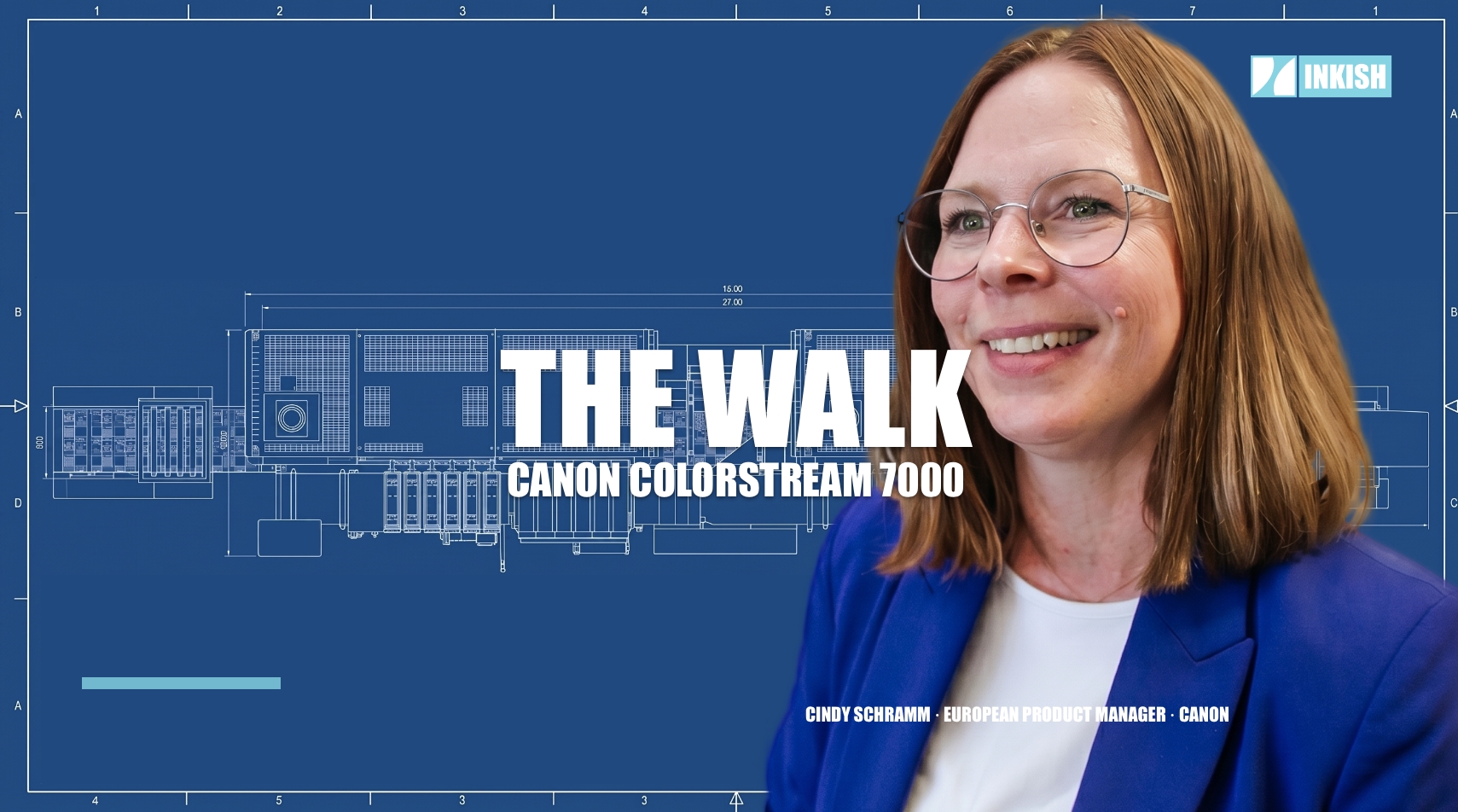
Cindy Schramm · European Product Manager · Canon · ColorStream 7000 walkthrough · Power to Move

At Canon's Power to Move event in Venlo, Morten B. Reitoft speaks with Canon Europe Product Manager Cindy Schramm about the world premiere of the new ColorStream 7000. While the machine is officially positioned as the successor to the ColorStream 6000, the conversation quickly reveals that the story is much more about bringing proven technologies from the flagship ColorStream 8000 platform to a broader segment of the market. Schramm explains how Canon has combined more than fifteen years of customer feedback with the latest developments in web-fed inkjet technology to create a platform aimed at business communication printers, transactional printers, direct mail specialists, and selected book manufacturers. The ColorStream 7000 introduces several technologies previously reserved for higher-end systems, including advanced web cleaning and automation features designed to improve uptime, reduce maintenance, and make productive printing on recycled papers a realistic business proposition. The discussion also covers the changing requirements of print service providers, the replacement cycle now facing many first-generation inkjet installations, and the importance of balancing productivity, quality, security, and operational simplicity. As Schramm explains, not every customer requires the highest speeds or resolutions available in the market, but every customer expects reliability, profitability, and a platform that can evolve with future needs. The interview concludes with a guided walk around the new press, providing insight into the engineering decisions behind the ColorStream 7000 and Canon's strategy for continuous-feed inkjet in the years ahead.

En thumbnials of the images

David Dilling · Managing Director · Markzware Europe

In this interview with David Dilling from Markzware, we learn about the new Markzware portal that enables conversions of different formats online. You may think this is less important today, as many formats already are inter-exchangeable, but that is not the case; with Markzware, you get options to convert to and from some of the most used graphical applications in the market - but you also have the option to get your PDF files pre-flighted for more accessible print and handling - but listen to David Dilling and enjoy the next almost half an hour!

En thumbnials of the images

Stephan de Vries · CEO · Fotofabriek · Reporting (almost) from Drupa 2024

Friday May 31st, Fujifilm had an award show at the Hyatt hotel in Düsseldorf - and one of the winners was Stephan de Vries from Fotofabriek in the Netherlands. First and foremost, congratulations - and second, in this interview you will learn more about how Fotofabriek won the Innovation Award by making a children's book product using AI.  
En thumbnials of the images

Chris De Jonge · Fotofabriek · Reporting from the Drupa 2024 show floor

Growth is given at Fotofabriek in the northern Netherlands, and with an increased order intake, technology needs to adapt. Chris De Jonge was featured on INKISH a year ago, and with more than 15,000 daily orders, Fotofabriek is very happy with Ultimate Tech. Chris De Jonge explains how Impostrip, Bindery, and the dynamic scaling of the solutions help them achieve growth :-) Enjoy!  
En thumbnials of the images

Ultimate TechnoGraphic Scalable, Bindery & New Nesting engine · Stephan de Vries · Fotofabriek.nl

How can you explain software that you can hardly see? In this case, we have told a story about a successful company based in Groningen, in the North West of The Netherlands. Ziga Kovac and Editor Morten B. Reitoft arrive at the company Chris Russel and quickly realize that the company operates with several names - to serve different markets. This film focuses on Fotofabriek.nl, which delivers photo-related products, as the name indicates. Fotofabriek produces over 6,000 products daily; most orders are shipped out the same day. On top of that, all productions are filmed so the customer can follow the production process - the users share these films and generate further interest for Fotofabriek.nl, which adds up to a total of more than 2 million videos a year. Can you imagine managing imposition, planning, binding, and logistics without software? Totally impossible, and that's where workflow/automation comes in place. All printing companies have workflow software, often delivered with your hardware. With Fotofabriek, this is the same, but a strategy of streamlining the workflow will minimize or even eliminate other workflow solutions and focus all into Impostrip/Bindery is what's in plan - and when we visit Fotofabriek.nl, we hear for the first time how the new scalable solution in Impostrip allow the company to scale processing power and nesting engines based on needs. This is SUPER cool and very valuable as Scalable allows any company to adjust to workload instantly! Here is also the link to the 'testimonial' we did for Ultimate TechnoGraphics, where Chris de Jonge explains how Ultimate TechnoGraphics is being used to solve all of the above challenges! Stephan de Vries https://www.linkedin.com/in/stephan-de-vries-52098142/ Chris De Jonge https://www.linkedin.com/in/chris-de-jonge-b5b30a257/