










Henrik Klem Lassen · Fast Forward · Israel · Dog · INKISH · Valueproposition

That photo is taken from one of the last trips before the Corona started. We didn’t really know what was going to hit us. When I look at that photo, it shows the international mindset. It shows the lack of worries that we had at the time. It’s a mindset taking in what is interesting and good around us in the world. And people meet up internationally. We do come with our own culture. But we are still open to learn from others. The dog is clearly looking at a bright horizon. To have a dog is something that my wife and kids always wanted. And it has made us appreciate more of the things that we have in the area of our house. I’ve never taken so many walks. Even at six o’clock in the morning, because you can see the sun is rising. When you walk along the beach, walk in your own thoughts and think. And maybe we do too little of that. We are so busy answering the next e-mail that we stop thinking about what is actually not just the values, but also one of the opportunities. I do that as an offset for, for instance, our business development. We were hit really hard by this Covid-19 and we had to stop our usual business traveling around making films. And all of a sudden we had to rethink: what are we doing? Communication companies have to rethink their communication. How do we capture the value for our customers and for our business? In the beginning, we all thought that this was just going to go away in a matter of months. Now we’re in the new reality. And I think that we’ve all learned a lot from that. And I think that our business models have developed as well. Some of the virtual meetings is here to stay. And I see INKISH as a new way of communicating. I think that it’s very common for a lot of trade medias to communicate with the industry in a way where they preserve the already known ways of doing it.

En Mark Andy turns against the industry · My name is Morten B. Reitoft, and I am the editor of INKISH

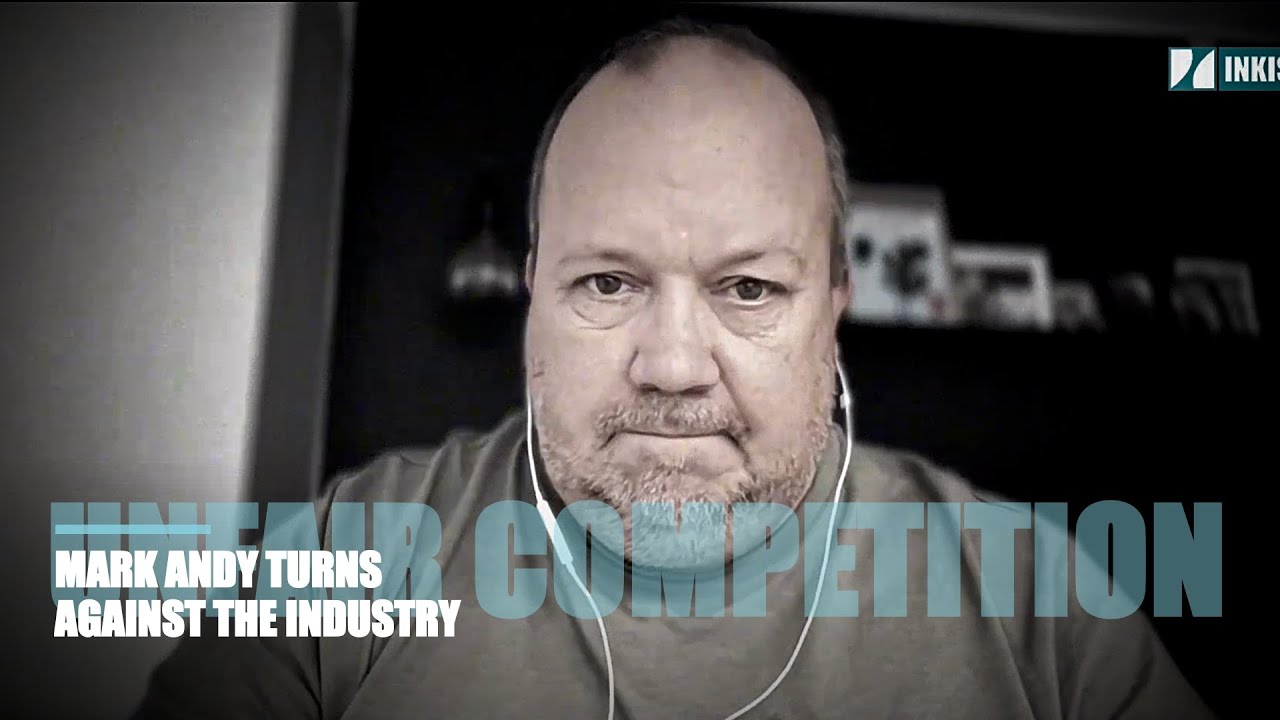
Mark Andy turns against the industry · My name is Morten B. Reitoft, and I am the editor of INKISH

When a label or flexo converter considers buying a new press, the process should be straightforward. You sit down with your numbers, weigh technology against features, evaluate price against value, and make the best decision for your business. Sometimes you compare what’s available on the market: perhaps another supplier offers the same at a better price, or something more advanced for the same money. It’s not a daily exercise—you don’t invest in a new press every week—but when you do, the decision matters. The wrong press can cripple you for years; the right one can secure your future. Some care deeply about buying American-made. Others chase the cheapest machines from China. Most care about performance, service, workflow integration, and reliability—factors that determine whether the press actually strengthens their business. In a free economy, those choices should be yours. It should not be dictated by politics. Unfortunately, in America today, the flexo market is already distorted by the simple fact that there is only one major manufacturer left: Mark Andy. When Donald Trump became president, tariffs were inevitable. It wasn’t a surprise. What seems to be forgotten, however, is that tariffs are not paid by the sellers. They are paid by you, the American converters and printers. Bobst doesn’t pay. Gallus doesn’t pay. MPS doesn’t pay. You do. The 15% tariff on flexo presses negotiated between the US and the EU was already painful, but at least predictable. You could run the numbers and see the impact. Geography softened the blow—Europe is far away, after all. But Canada and Mexico are right next door, and their converters can now deliver products into the US without carrying the same cost burden. Currency only makes it worse. The dollar has lost around 15% of its value against the euro. That means you’re not only facing a 15% tariff, but you’re also paying 15% more in currency exchange fees. Suddenly, the press you had your eye on is 30% more expensive than it was just a few years ago. And now comes the real outrage. Recently, Mark Andy’s leadership wrote to Washington asking for flexo presses to be classified not as presses, but as steel, subject to a 50% tariff. Let’s be honest: this is not about fairness. Yes, presses contain steel, but they are not steel. This is a blatant attempt by one company to bend the rules for its own selfish benefit. Converters have always chosen Bobst, Gallus, MPS, or others because those presses offered something better: higher productivity, superior quality, or features that met specific needs. To now claim that American-made presses are “cheaper” only because competitors are artificially handicapped is dishonest. It is manipulation dressed up as patriotism. Why should Washington decide which machines you can buy? Why should a single manufacturer believe it has the right to use political influence to block your choices? Every monopoly in history has led to higher prices, lower innovation, and stagnation. Without competition, R&D dries up. Customers pay more for less. That is not what a free economy looks like—it is what protectionism and corporate lobbying create. And don’t think the rest of the world will sit idle. European manufacturers will look to Canada, Mexico, and Latin America instead, exporting freely into markets that can then indirectly feed the US. The distortion will not disappear; it will simply grow more complex, leaving you—American converters—trapped in the middle. Do you honestly believe that every converter in the United States will one day operate exclusively with Mark Andy equipment? Of course not. And you shouldn’t. American converters still possess tremendous strengths, including craftsmanship, the ability to produce short runs, exclusive labels, and high-quality work. But for one supplier to make it harder—almost impossible—for you to access the presses you truly need to compete is nothing less than sabotage of your future. Tariffs should protect national security, not serve as a means for corporate vanity projects. What we are witnessing is not a matter of economic policy. It is selfishness weaponized. And that, friends, is a reality you cannot afford to ignore.