








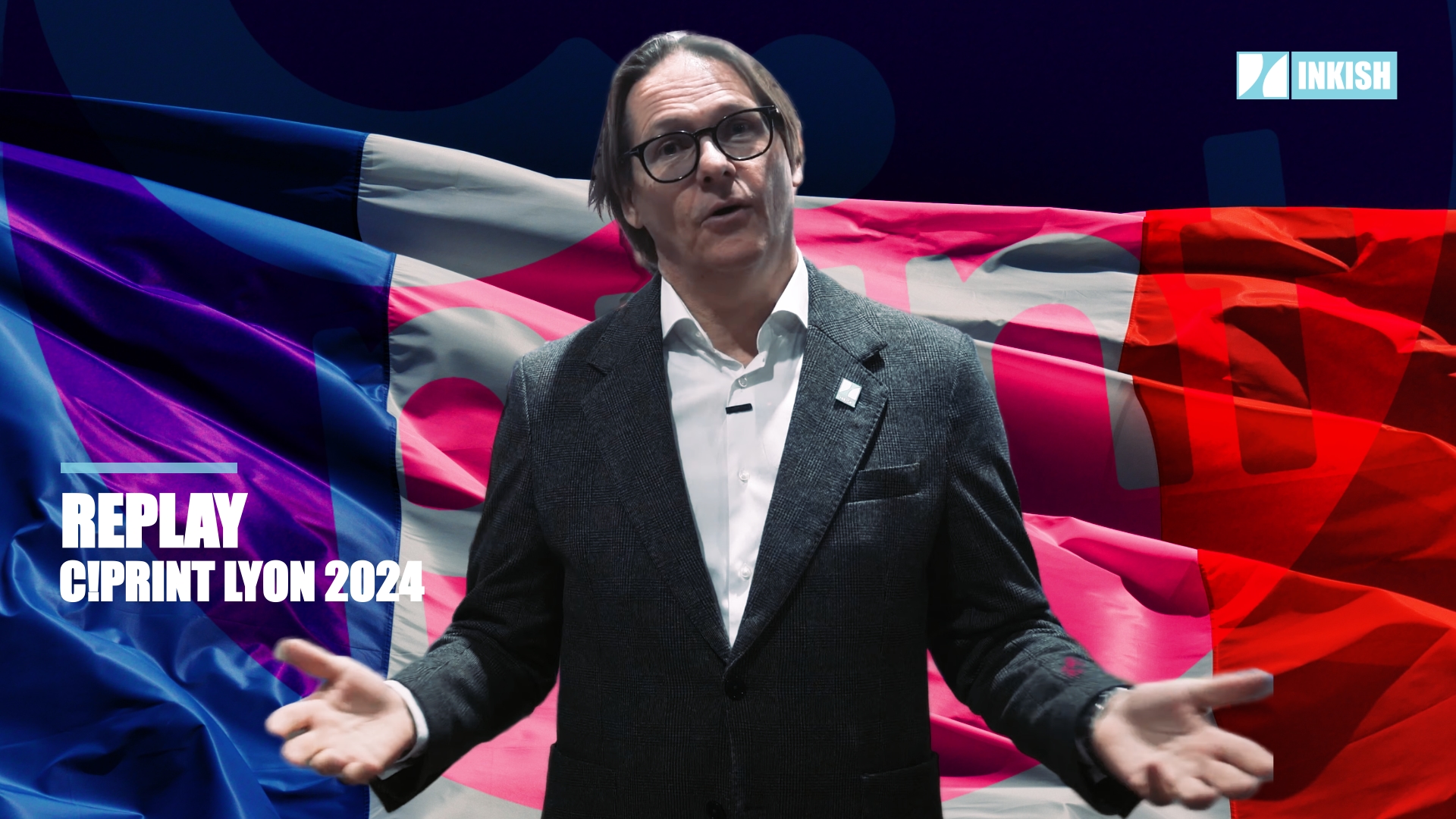







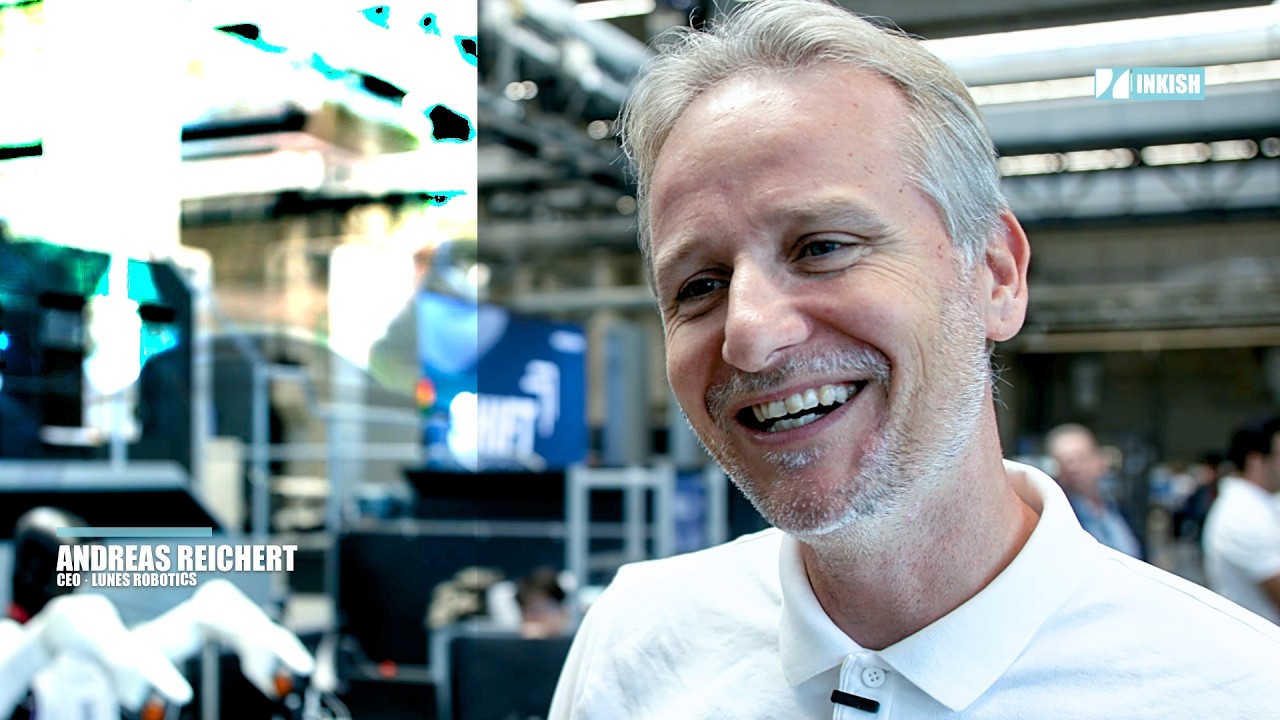
Andreas Reichert · CEO · Lunes Robotics · Shift
At the HEIDELBERG SHIFT event in Wiesloch, we met Andreas from Lunes Robotics, a company developing what it describes as an operating system for industrial robots — with a particular focus on robots that need to move, adapt, and work flexibly rather than simply repeat one fixed task.
That distinction is important. Traditional industrial robots are extremely good at doing the same thing over and over again, but the next generation of robotics needs to understand much more about context, intent, and changing environments. Andreas explains that this is where software becomes critical. A robot that understands why a task is being performed can potentially react faster, recover better when something changes, and become far more useful in real production environments.
We also talk about the rapid development of AI, memory, self-learning, and the difference between an impressive demonstration and something that is truly reliable and repeatable in industry. Robotics is moving extremely fast, but Andreas is careful to distinguish between hype and practical applications that companies can actually deploy.
Lunes Robotics takes a hardware-agnostic approach. Rather than betting everything on a single robot platform, the company focuses on specific use cases and selects the hardware best suited to solving them. For Andreas, this is also why the idea of one universal robot capable of doing everything remains a risky proposition. Industrial automation needs focus, reliability, and a clear understanding of the tasks that actually need to be solved.
The printing industry is one of the areas Lunes Robotics is now exploring, and HEIDELBERG has helped the company better understand where robotics may create value in print production. The interest at SHIFT clearly shows that printers are increasingly looking beyond traditional automation and toward more flexible robotic solutions.
The technology may already work, but another challenge remains: safety. Bringing mobile robots into real production environments requires security concepts, certification, and careful integration, and Andreas explains that this can currently take longer than getting the robot itself to perform the task.
Robotics is therefore not only about creating a machine that can move. It is about creating a system that understands, adapts, works safely, and solves real industrial problems.


No Data Found.
Content for this section will appear here once available
Wed October 7th
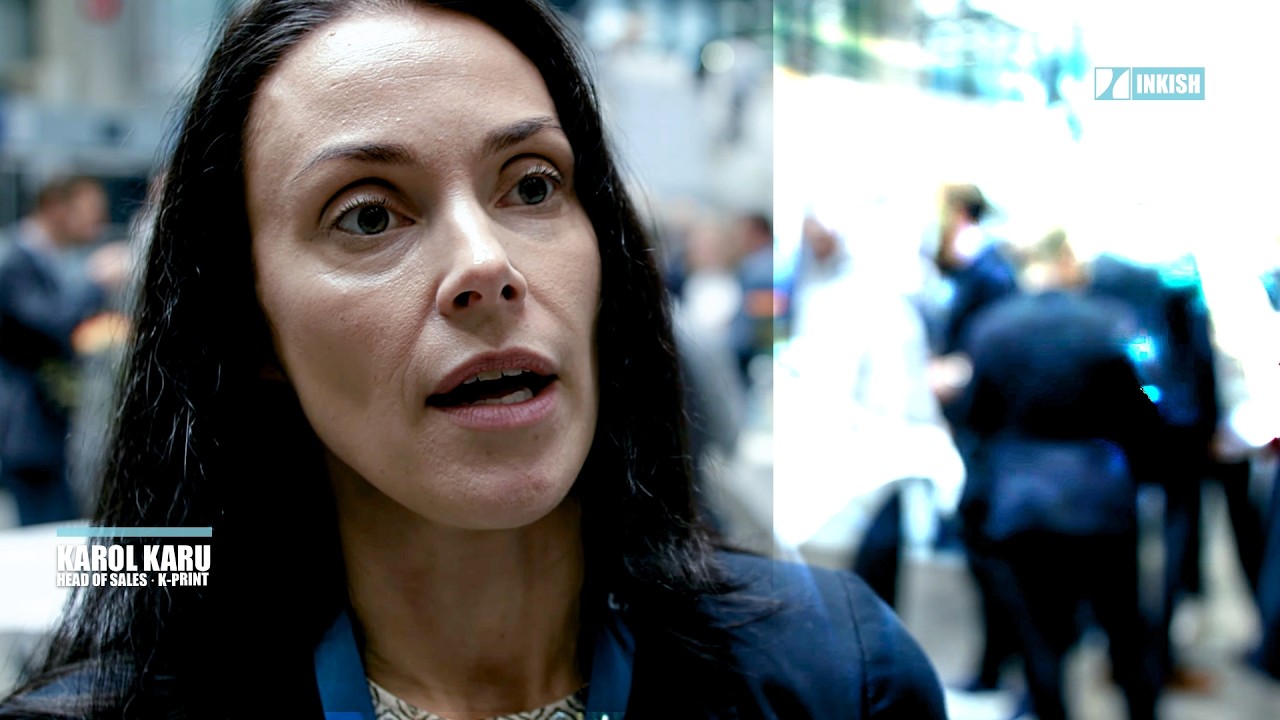
Karol Karu · Head of Sales · K-Print · Sh...
Karol Karu is the Head of Sales for Estonian printing company K-Print. In this interview, she talks about how the Nordia/Baltic consolidation is a huge advantage for them. She also surprises your humble editor by saying that they experience larger print runs on average and therefore, of course, keep an eye on digital, but they are not really afraid of the competition here. Super interesting!