

































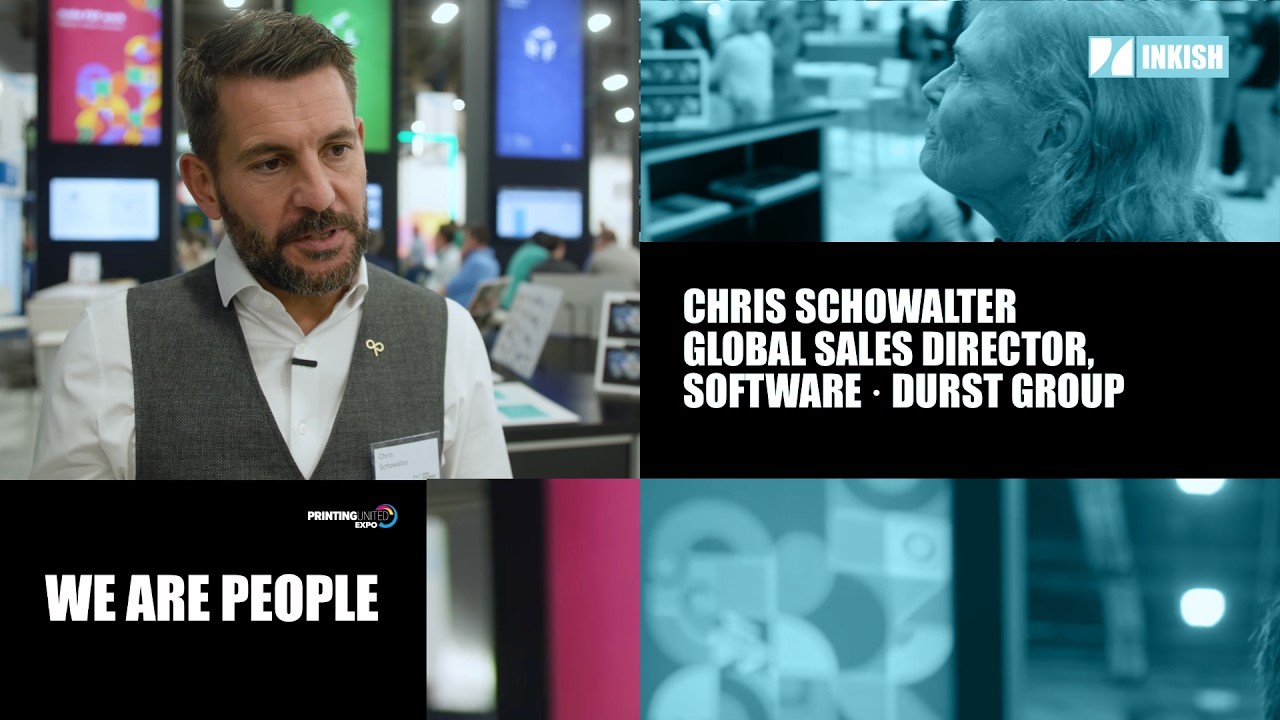
Chris Schowalter · Global Sales Director, Software · DURST GROUP
For decades, the printing press dominated the investment conversation. The press made the money, while software was often regarded as something that simply cost money.
That equation is changing.
At PRINTING United 2026 in Las Vegas, Pat McGrew meets Chris Schowalter from Durst at the company’s dedicated Open Software Initiative booth for a conversation about open architecture, Kyveris, CoCoCo, AI — and ultimately the journey toward lights-out production.
And Chris starts by making an important distinction.
Open Software Initiative doesn’t mean open source.
For Durst, “open” means that customers don’t have to buy an entire Durst software stack to gain value from it. The portfolio spans web-to-print, ERP, prepress automation, RIP, and production workflow, but customers can select the components they need and integrate them into the technology they already use.
Documented APIs are fundamental to that philosophy.
The second part of the Open Software Initiative is the partner ecosystem. Durst works with integrators, workflow specialists, color experts, and other software companies that may represent technology from several vendors. Chris sees that independence as important: sometimes the best solution for a customer isn’t another Durst product, but something from another supplier that can be connected into the same production environment.
The objective is not to own every component.
It is to make the components work together.
That becomes even more important as Durst moves toward its broader Kyveris vision. Introduced as part of the company’s future direction, Kyveris is about connecting machines, software, production data and process knowledge so systems can increasingly understand what is happening on the production floor and make better decisions.
Lights-out production is the long-term destination, but Chris is careful not to make it sound like every printer needs to switch off the factory lights tomorrow.
The same intelligence that may eventually enable autonomous production can already help companies today. If machines and software can exchange information, understand jobs, recognize substrates, anticipate production requirements and make more decisions automatically, operators don’t need the same level of specialist knowledge to run increasingly complex production environments.
That matters in an industry struggling to find skilled labor.
Pat also raises an important question about APIs. Printers are increasingly accepting that systems need to communicate, but connecting different software packages still frequently requires translations between different definitions of jobs, products, substrates, materials and production resources.
This is where CoCoCo enters the picture.
Rather than every system maintaining its own interpretation of the same production information and continuously translating between each other, the idea is to establish a common data layer that different systems can use. One job, one consistent set of production data, available across the connected environment.
For Chris, that creates an important foundation not only for integration, but also for AI.
Artificial intelligence is only as useful as the data it receives. If production information is fragmented, inconsistent or incomplete, AI has very little reliable context from which to make decisions. Connect the production environment and standardize the underlying data, however, and AI can potentially begin to understand what is happening across the factory.
That could eventually mean systems capable of predicting problems, optimizing production and making decisions with considerably less human intervention.
But does that mean every printing company needs to hire its own team of software engineers?
Chris says no.
In fact, he sees overly complex workflows built and maintained by a single internal specialist as another potential risk. If only one person understands the system, the company becomes dependent on that person. Durst therefore wants software to become increasingly product-aware and easier to maintain, allowing the workflow itself to understand more about how a particular application should be produced.
That is perhaps the most significant change in Durst’s software strategy.
The company still builds printing presses, but the future it describes is increasingly about what happens between those presses — the data, APIs, workflows, automation and intelligence that allow an entire production environment to function as one connected system.
The printer still makes money.
But increasingly, it may be software that determines how much money the printer can make.
Watch Pat McGrew’s conversation with Chris Schowalter from Durst at the Open Software Initiative booth at PRINTING United 2026 in Las Vegas.



No Data Found.
Content for this section will appear here once available
Wed September 30th
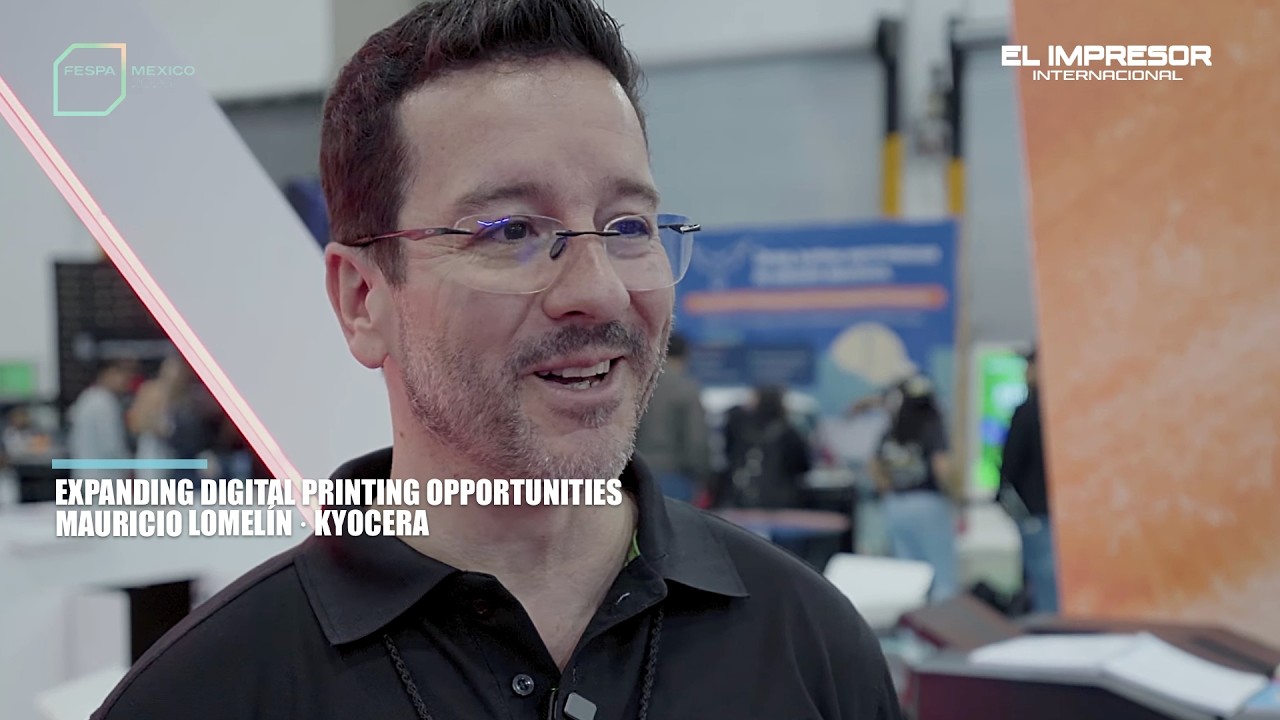
Mauricio Lomelín · Kyocera | Expanding Digi...
English description below: Desde FESPA México 2026, Claudia Mendoza conversa con Mauricio Lomelín, de Kyocera, sobre la evolución de la impresión digital, las nuevas oportunidades para la industria gráfica y la estrategia de la compañía para ampliar su presencia en el mercado de impresión de producción. Mauricio presenta la TASKalfa Pro 15000c, conocida como Victoria, un equipo de inyección de tinta con tecnología propia de Kyocera, capaz de producir hasta 150 páginas por minuto y alcanzar volúmenes de un millón de páginas mensuales. Con aproximadamente 30 equipos instalados en México y 1.000 a nivel mundial, según Mauricio, la compañía continúa consolidando su presencia en aplicaciones como la producción de libros, los documentos transaccionales y la impresión de grandes volúmenes. La conversación también presenta Nova, la nueva propuesta de equipos de producción láser de Kyocera, diseñada para complementar la tecnología inkjet. Mauricio explica cómo la combinación de ambas tecnologías permite a los impresores desarrollar procesos de producción más flexibles, reducir costos operativos y avanzar hacia la impresión bajo demanda. La sustentabilidad, la eficiencia energética, la integración de software y la transición de la impresión tradicional a la digital completan una entrevista que muestra las oportunidades que Kyocera identifica para el futuro de las artes gráficas. --- At FESPA Mexico 2026, Claudia Mendoza speaks with Mauricio Lomelín from Kyocera about the company's expanding presence in production printing and the growing opportunities for print service providers transitioning from conventional to digital technologies. Mauricio introduces the TASKalfa Pro 15000c, nicknamed Victoria, a high-volume inkjet press powered by Kyocera's proprietary printhead technology. Capable of producing up to 150 pages per minute and handling monthly volumes of up to one million pages, the system targets applications ranging from book production to transactional documents. According to Mauricio, Kyocera has approximately 30 installations in Mexico and recently reached 1,000 installations worldwide. The interview also explores Nova, Kyocera's new production toner systems, which complement its inkjet technology and enable printers to combine different production methods. Mauricio discusses how these solutions support the transition toward digital and on-demand printing while emphasizing low operating costs, productivity, and workflow integration. Sustainability, energy efficiency, variable data printing, and Kyocera's broader ambitions in the graphic arts industry are central themes in a conversation about the changing requirements of modern print production.