








































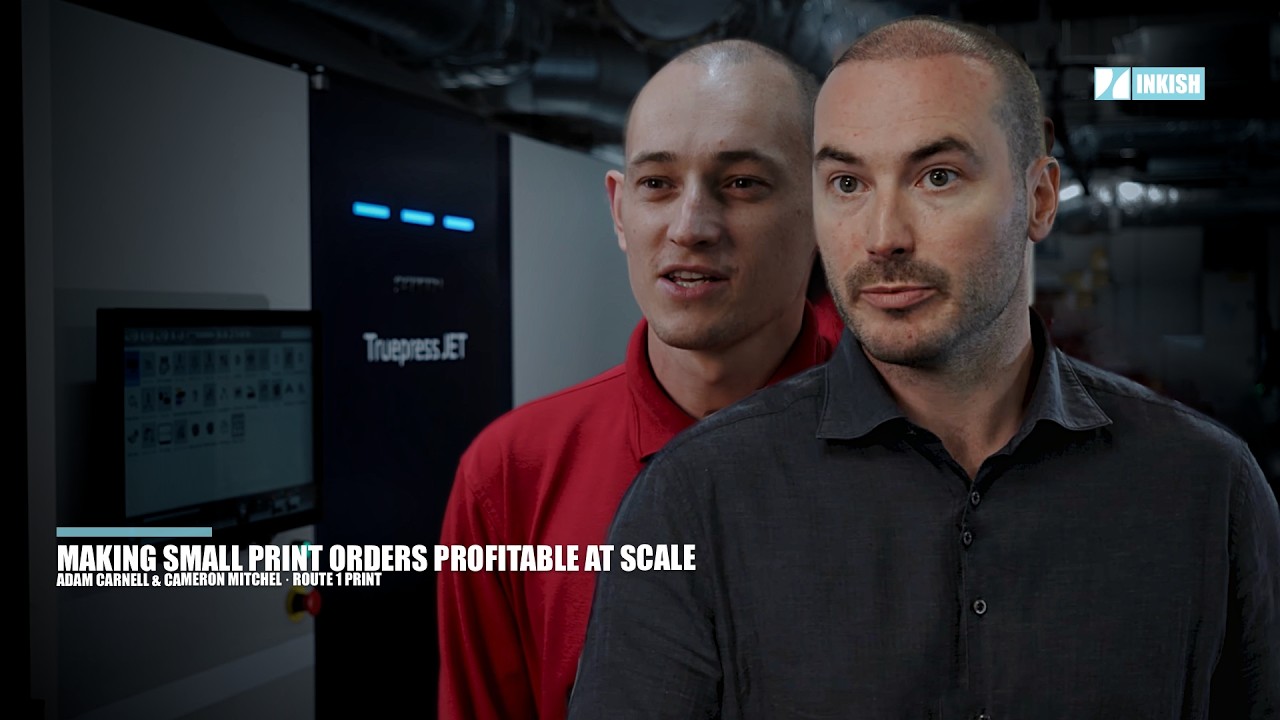
Making Small Print Orders Profitable at Scale · Adam Carnell & Cameron Mitchel · Route 1 Print
How do you turn thousands of small print orders into an efficient, highly automated industrial production process? At Route 1 Print in the UK, the answer lies in intelligent job aggregation, sophisticated workflow software, and investment in high-performance printing and finishing technology.
In this INKISH film, Adam Carnell, Co-CEO, explains how Route 1 Print, part of the Bluetree Group, has developed its e-commerce and trade printing business around a simple principle: combining small, individual customer orders into larger production batches and directing each job to the most suitable technology.
A central part of this strategy is the new SCREEN Truepress JET 560HDX, which replaces the company’s previous generation of SCREEN inkjet presses. With production speeds of up to 150 meters per minute, improved print quality, and the ability to handle both coated and uncoated substrates, the press significantly increases capacity while reducing operator intervention.
But the story is about much more than printing speed. Route 1 Print has invested heavily in workflow automation, including SCREEN’s EQUIOS software, automated job grouping, and integration with Hunkeler and other finishing technologies. Rather than treating each order as a separate production task, the company establishes continuous production streams that maximize equipment utilization and reduce per-unit cost.
Automation also extends beyond the printing presses. Robots already handle pallet movements, while the company continues to investigate how material handling, finishing, packing, and logistics can become increasingly automated.
Interestingly, Carnell does not believe that a completely lights-out printing factory is immediately achievable. Printing technology and workflow software have advanced enormously, but physically moving, handling, and packing printed products remain significant challenges. Nevertheless, certain production streams could become almost entirely automated within the next five years.
An insightful look at how one of the UK’s leading online trade printers combines technology, software, and industrial thinking to make short-run printing profitable at scale—and why the next major productivity gains may happen after the printing press rather than on it.


No Data Found.
Content for this section will appear here once available
Contact
Route1Print
S63 5DR Wath upon Dearne
United Kingdom
Email : sales@route1print.co.uk

Fri October 23rd
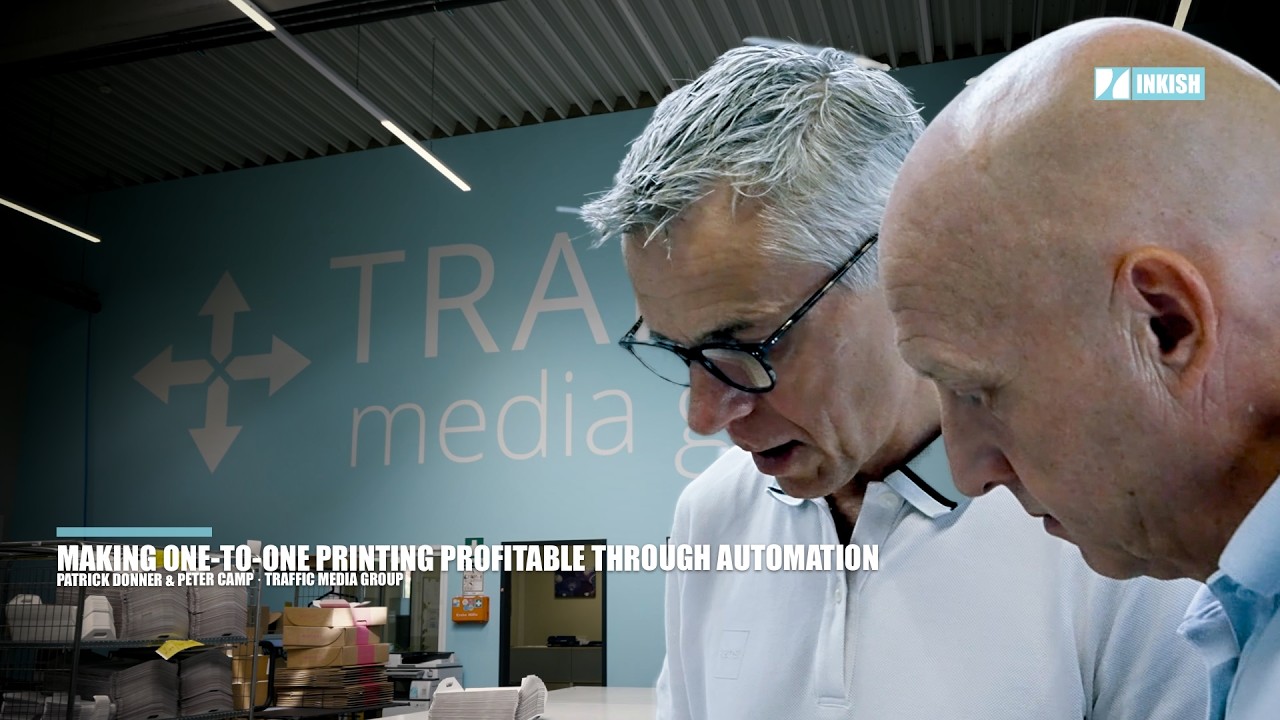
Making One-to-One Printing Profitable Through...
Producing a single personalized print product profitably requires much more than digital printing technology. It demands intelligent workflows, seamless data integration, and a production environment where automation eliminates unnecessary manual processes. In this INKISH film, Patrick Donner and Peter Camp explain how nearly 30 years of experience in digital printing, variable data, and IT have shaped a business built around individualized print production. With HP Indigo presses, Xerox equipment, Scodix embellishment, MotionCutter technology, and automated finishing, the company handles everything from personalized direct mail to large-scale fulfillment and individually customized products, including Merci chocolate packaging. A central part of the operation is its automated workflow that combines Enfocus Switch, PitStop Server, and Ultimate Impostrip. By standardizing incoming customer data and automating imposition, the company has significantly reduced operator intervention, improved production quality, and increased efficiency. Machine operators can concentrate on running their equipment rather than preparing individual jobs. Perhaps most interesting is the company's approach to IT. With more software developers than bookbinders, the business considers software development and automation essential to making one-to-one production commercially viable. And the next step? Further investment in software, digitalization, and potentially humanoid robots to support fulfillment operations as labor shortages continue to challenge the printing industry. An interesting insight into a printing business where innovation is not simply about buying faster machines but about integrating data, software, printing, and finishing into a single efficient production process.