All videos

Select the movie you want to view

Thu January 7th

En

From Pirate to Corporate America Christo...

Mergers and Acquisitions take many shapes, and in this film, we talk to Christoph Schacht, who recently left his position as COO from EFI/Direct Smile. Direct Smile is a well-known software used by many print service providers globally. This story is about the company, which Christoph Schacht himself refers to as a 'Pirate' company, and how the failed three times getting to America, how they got in contact with EFI, and how Due Diligence was a process that has been a learning experience about Corporate America for Christoph Schacht. Enjoy - yet another great session about M&As. https://www.linkedin.com/in/christoph-schacht-919aa796/

Thu January 7th

En

From Owner of Alpha Picture to owner of ...

In our series of films about Mergers and Acquisitions, we in this film meet Gerhard Märtterer, one of Alpha Picture's founders seventeen years ago. Everything developed fantastic until the financial crisis in 2008/09 directly influenced customers and forced Märtterer to file for insolvency. In this film, Gerhard Märtterer openly tells us about the failure, the shame, and the opportunities that eventually ended with Märtterer to buy back Alpha Picture together with two friends. This is an amazing story to learn from! https://www.linkedin.com/in/gerhardmaertterer/

Thu May 19th

En

From Offset to Inkjet Hayco van Gaal �...

It was supposed to be a behind the scene film from Venlo in the Netherlands and Poing in Germany. Inspired by the openness of Canon, and the amazing opportunity to see everything from how inks are made, to R&D labs with machines in development, to the production of the sold machines is by all means interesting. Regardless this film came to be about the transformation from offset to inkjet - and it is really good - Hayco van Gaal and Hans Schmidbauer from Canon EMEA share their insights. We will, however, shortly also deliver a more behind-the-scenes film, where you get an insight into how Canon works - pretty sure you will be as amazed as we were!

Tue June 29th

Ar De En Es Fr It Ja Nl Pt Ru Zh

From more to smarter mail solutions Lee ...

Lee Borns is the Vice President and 2nd. generation owner of Borns Group, Aberdeen, South Dakota, USA. Borns Group has grown over the years and experience that customers demand becomes more demanding. As he says, this changes the philosophy of printing/mailing more; it's about printing/the mailing smarter. To get the business operating as efficiently as possible, the company continues to invest in new technology, from new presses to smart software. One of the partners is Solimar, who delivers software enabling the Borns Group to create more innovative solutions. In this film, we get the opportunity to hear from Lee Borns about how Solimar supports their business.

Tue November 3rd

En

From Mass Printing to Personalized Produ...

What if your next growth opportunity isn't printing more of the same, but producing something completely unique for every customer? At FLOW 2026 in Bad Hersfeld, Pat McGrew meets Krzysztof Szczepańczyk from Printbox to explore how printing companies can expand into the business-to-consumer market with personalized products, from photo books and posters to wall art, gifts, and much more. Printbox provides a ready-to-use personalization platform that integrates with existing e-commerce environments, including Shopify and custom storefronts. Rather than developing complex online editors themselves, printers can offer customers intuitive tools to create their own products, while Printbox handles the ordering process and delivers print-ready files into existing production workflows. But personalization is becoming even more exciting with artificial intelligence. With Masterpiece AI, Printbox brings generative AI directly into the product creation experience, making it easier for consumers to transform their photos and ideas into unique printed products. Imagine uploading a picture of your dog and turning it into a royal portrait, ready to print, frame, and give as a gift! The important part is that Printbox doesn't need to replace the printer's existing production systems. Through APIs and other integration methods, orders can move into established MIS, imposition, and production workflows. A fascinating conversation about e-commerce, AI, personalization, and how printers can develop new revenue opportunities by making it easier for customers to create something truly personal. Recorded at FLOW 2026 · Bad Hersfeld, Germany · INKISH

Mon August 3rd

En

From many systems to one CERM · Sergio S...

From just 15 people working in a garage to one of Mexico’s significant label and printing operations, the ETIFLEX story is about growth, people, relationships—and the importance of knowing exactly what is happening on the production floor. Today, ETIFLEX operates 23 production lines, including 20 flexographic presses and three digital presses. The company produces labels, tickets, tags, promotional products, and RFID solutions for customers across retail, logistics, food, chemicals, health and beauty, textiles, transportation, and entertainment. Mexico offers significant opportunities. With a population of around 130 million people, a strong manufacturing base, and direct access to the United States, the country has become an increasingly important export market. But competitiveness is no longer simply about offering the lowest price. It is about productivity, innovation, quality, service, and the ability to create long-term relationships with customers and suppliers. Measurement has therefore become part of the culture at ETIFLEX. The philosophy is simple: What you do not measure, you cannot fix or improve. Before implementing CERM, ETIFLEX used five or six separate systems for estimating, production control, warehouse management, purchasing, accounting, and finance. The information existed, but the systems did not communicate effectively with each other. Introducing CERM was a major strategic decision. Changing an MIS or ERP platform requires investment, leadership, time, and commitment throughout the organization. However, continued growth demanded a single integrated system capable of connecting the company’s operational areas and providing reliable, real-time information. With better data, the ETIFLEX team can understand the true cost of every job, identify products that may be subsidizing others, reduce waste, improve printing speeds, shorten setup times, and make better decisions about equipment and capital investments. Perhaps most importantly, the data is no longer reserved for management. Employees throughout ETIFLEX can analyze their own processes, identify opportunities, and suggest improvements. With hundreds of people observing production through the same system, operational knowledge becomes a shared resource. The next chapter will include even more automation, robotics, integration, and information. Technology will play an increasingly important role—but people, culture, and the ability to make informed decisions will remain at the heart of ETIFLEX. Watch the film and meet a Mexican printing company that has transformed measurement from a management tool into part of its DNA.

Thu October 22nd

En

From Labels to Flexible Packaging · Spri...

Chinese printing equipment manufacturers are increasingly competing on technology, quality, and innovation rather than price alone. At All in Print China in Shanghai, INKISH Editor-in-Chief Morten B. Reitoft meets Spring Xu from WEIGANG to discuss the company's international growth and its expanding portfolio of printing and converting solutions. Originally focused on narrow-web label production, WEIGANG is now moving further into flexible packaging and folding cartons. At the exhibition, the company introduces its new 920 mm rotary offset press, designed to handle everything from 12-micron PET films to 400 gsm carton board. Combining offset quality with flexo, cold stamping, and other production capabilities, the machine targets a market increasingly interested in shorter runs, lower production costs, and greater efficiency. Spring Xu also addresses one of the traditional concerns about Chinese equipment: reliability and service. With more than 85% of mechanical components manufactured in-house, a global service organization of over 150 people, and plans to establish a European service center in Portugal in 2027, WEIGANG is investing in supporting customers beyond the initial machine purchase. The conversation explores automation, Industry 4.0 connectivity, international market differences, and the challenges of finding skilled operators. Spring Xu also demonstrates applications produced on WEIGANG's offset and flexo equipment, illustrating the company's ambition to offer complete solutions covering printing, embellishment, and converting. An interesting conversation about how Chinese manufacturers are developing their technology, strengthening their international presence, and challenging established perceptions of what Chinese printing equipment can deliver.

Wed September 21st

En

From Intern to Planner to Procurement · ...

Matthew Allen never planned a career in print, yet he now sees himself growing within the company he got part of years ago. Matthew Allen works at Eurostampa North America, an OMET customer throughout Europe and North America. An interesting journey for Matthew - enjoy the film!

Wed September 16th

En

From Great Machines to Intelligent Produ...

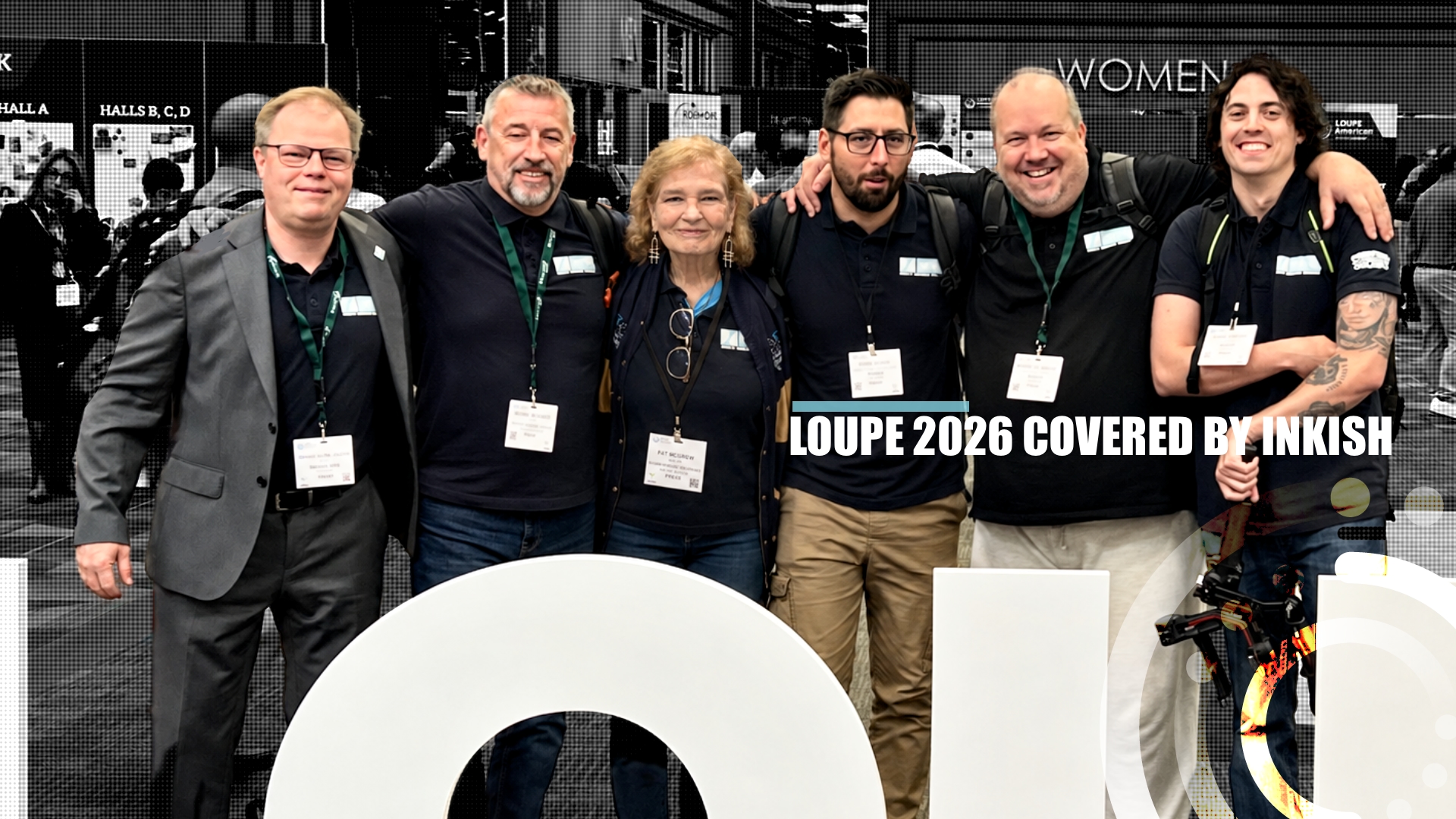
Steve Lynn used to compete against Durst. From the outside, he saw a premium brand, strong technology, highly reliable equipment, and a company that wasn't particularly easy to compete with. So when the opportunity came to join Durst North America seven or eight years ago, he didn't need much convincing. Today, as Executive Director of Durst North America, Steve has watched the company expand its position across labels, large format, corrugated, folding carton, software, and increasingly automation and AI. At LOOP in Chicago, Morten B. Reitoft talks with Steve about what drives that development. One characteristic is ambition. When Durst decides to enter a segment, the objective isn't simply to participate. In labels, for example, Durst made a strategic decision years ago to become a significant player, followed by continued investments in technology, products, people, and customer relationships. And those customer relationships are important. Steve describes how Durst tries to make every customer a reference customer — because whether a company officially introduces a prospect to that customer or not, people in the industry talk. The experience with the technology, service, people, and support ultimately becomes part of Durst's reputation. That feedback also travels back into development. Durst brings R&D and management close to customers in the individual regions, allowing the company to understand requirements that may differ between North America and Europe and use those conversations to influence future technology. But perhaps the biggest change is that Durst is increasingly thinking beyond individual printing systems. Kyveris represents an ambitious vision where machines, software, data, automation, and AI become part of one intelligent production environment. Rather than optimizing isolated pieces of equipment, the objective is to connect the factory and ultimately move toward increasingly autonomous production. For Steve, that responds directly to challenges printers already face: labor availability, automation, productivity, and the many isolated systems currently solving individual parts of the production process. And it is a bold promise. Kyveris isn't simply another machine with a specification and a price tag. It is a longer-term strategy for how production could operate — and one that will require not only technology development, but also close cooperation between Durst, its regional teams, and its customers. In this INKISH film, Morten talks with Steve Lynn about Durst's culture, customer relationships, competition, labels, software, future packaging opportunities, and why Kyveris may represent one of the company's most ambitious commitments yet. Because the next step isn't necessarily building a faster press. It may be making the entire factory smarter.

Wed August 2nd

En

From four to two machines Brian Stone &#...

Visiting a company like ColorDynamics is an experience in itself. The entrance is impressive, and the company's design makes it interesting, with gardens, courtyards, and space. The history of ColorDynamics is also fascinating, as it was founded in Chicago but moved years ago to Allen in Dallas and has since grown through excellent management and acquisitions. We learned all this from Brian Stone and David Dey, along with how the company reduced their four wide-format digital printers to two new Agfa wide-format printers, delivering more than anticipated and higher quality. ColorDynamics is a fantastic printing company specializing in trading cards and providing solutions using their Heidelberg and HP presses and web-offset machines with tailor-made finishing - super lovely company!

Thu May 19th

En

From Estonia to Finland with Agfa, Kongs...

At the Sign, Print & Promotion 22 event in Helsinki we get the chance to meet with CEO and Founder Ailar Arna, who represent Agfa and Kongsberg in Estonia and Finland. Estonia is a country with only 1.3 million people, so when Airlar Arna set his eyes on expansion Finland was the obvious choice - and so did Agfa and Kongsberg think. Hear more about how it is running a company across different cultures!

Tue February 7th

En

From Digital to Rotogravure Peter Metcal...

In the suburbs of Cape Town in South Africa, we got the chance to visit quite an amazing printing company, Novus Holdings. The company was formerly known as Paarl Media, but as it went public, it changed its name. Peter Metcalf, Group Executive: Sales & Marketing, welcomes INKISH to the almost 70,000 m2 facility that houses all the printing equipment you can think of, from cut-sheet digital to rotogravure machines. In this film, you'll get an overview of the company, how they manage power outs for up to ten hours a day, and how they re-circulate ventilation and optimize their production. An amazing story and we are confident you will like it!

Fri November 6th

De

From Cutting Robots to Humanoids · Flori...

What happens when one of the world's largest robotics manufacturers discovers the enormous automation potential of the printing industry? And how far away are we from robots that can recognize, learn, and adapt to new tasks on their own? At FLOW 2026 in Bad Hersfeld, INKISH's Morten Reitoft meets Florian Kohut from Japanese robotics giant Yaskawa to discuss industrial automation, the company's collaboration with Komori and MBO, and the next generation of intelligent robotics. Yaskawa has decades of experience supplying industrial robots to industries ranging from automotive manufacturing to food and pharmaceuticals. But as Florian explains, the printing industry offers significant opportunities, particularly in the processes surrounding printing presses, where manual handling, repetitive movements, and material transport continue to create bottlenecks. At FLOW, Yaskawa and Komori demonstrate a fully automated guillotine solution, combining industrial robotics with printing industry expertise. Rather than simply supplying a robot to be programmed by an integrator, Yaskawa works closely with Komori and MBO to develop a complete solution built around actual customer requirements. And what looks relatively simple from the outside involves sophisticated engineering, software integration, data exchange, and precise robotic movements. The conversation also explores how artificial intelligence, faster processors, and advanced sensors are opening new possibilities for robotics. Florian describes Yaskawa's development of adaptive robotic systems incorporating NVIDIA technology, enabling robots to recognize objects and potentially learn new skills. And then there's the question everyone is asking: humanoid robots. Florian shares Yaskawa's ambitions to introduce humanoid robot pilots in the coming years, with broader commercialization targeted around 2030. While the applications are still being explored, he believes humanoids will eventually find their place alongside established industrial robotics. An interesting conversation about partnerships, practical automation, intelligent robotics, and why the printing industry's next productivity improvements may come from everything happening around the printing press. Recorded at FLOW 2026 · Bad Hersfeld, Germany · INKISH

Tue June 30th

Fr

From Band Manager to Leading Online Prin...

Antonie Roux is the CEO and owner of the successful online-printer PrintOclock.com in France. The online printing company is for now only in French. With one of the largest print markets in Europe, Antoine Roux continues to see growth in his market - however, being close to Spain, Roux is considering a Spanish version of PrintOclock as well.

Tue November 3rd

En

From a Simple Prompt to a Finished Print...

What if creating an entirely new personalized print product could start with a simple sentence rather than hours of design, programming, and complicated template development? Axel Marciniak from Printess introduces a new approach to web-to-print, where artificial intelligence does far more than generate attractive images. With the Printess AI Assistant, natural language can be used to create editable designs, product templates, personalization options, and even the logic behind complex web-to-print applications. For printing companies, the implications could be significant. Faster product development, fewer technical barriers, and the ability to offer customers increasingly sophisticated personalization without requiring extensive programming expertise. As the printing industry moves toward connected workflows, e-commerce, and intelligent automation, Printess demonstrates how AI could change not only the way products are designed, but also how they are created, sold, and produced. An interesting look at what happens when artificial intelligence becomes an active part of the print production ecosystem.

Wed April 6th

En

Frida Julin Scandinavian Print Group fro...

Frida Julin is part of the greatest Scandinavian print success over the past many years - namely the Scandinavian Print Group - now part of German Onlineprinters. At Sign & Print in Stockholm, the group is promoting their Whitelabel solutions which enable printers to utilize the vast capacity the group has in the printing facilities around Denmark, Sweden, and Poland. Listen - this group has shown how printing companies can thrive and grow!

Fri April 29th

En

Frederik Parrein Operations Digi-Paq Dur...

Frederik Parrein found great value in the DURST Expo because the access to the technical people allowed for one-on-one communication. He felt this is not possible at a larger show where there are thousands of attendees. Frederik also was pleased that the selected vendors were label market experts.

Tue January 31st

Fr En Fr

Frédéric Pambianchi est le Directeur Gén...

Frederic Pambianchi est le Directeur Général France de Koenig & Bauer. Il nous présente leur portefeuille qu'ils apportent et proposent sur le marché européen et en particulier en France. Dans cette interview très sympathique, nous parlons entre autres du cycle de vie d'une boîte en carton et de l'importance de leur rôle dans l'agenda "Green". INKISH mesure l'envie et la motivation en France d'investir dans les technologies nécessaires pour rester compétitif et pertinent.

Wed December 6th

En

Frederic Deliat DS Smith Operational Pro...

Frederic Deliat from DS Smith joined the BHS Open House earlier this year - and besides saying that each of DS Smith's plants can have different suppliers, he also told Editor Morten B. Reitoft that he is at the BHS Open House to see and experience the new BHS JetLiner. Interesting to see how BHS attracts many different people and how the Jetliner seems to be exciting for people to see at the Schumacher site :-)

Tue May 21st

En

Fred Duquenne · Product Director · BW Pa...

After the COVID pandemic, BW Papersystems' folding carton business faced new challenges, with the market becoming more segmented and requiring shorter orders and credit times. Fred Duquenne explains that BW Papersystems developed a new generation of the web-fed platen die cutter, to address these needs. The "Mercury," ideal for food and beverage and general folding cartons like pharmaceutical and luxury packaging, offers significant advantages over traditional methods, including faster speeds and reduced raw material waste. At Drupa, BW Papersystems will announce the new product line to meet customers' evolving needs. The web-fed platen die cutter is not widely known outside North America but provides twice the speed of flatbed die cutters and impressive raw material savings. This technology is now ready for the European market. "We're launching the new generation machine "Mercury" with a very short make-ready time, designed for medium converters and folding carton plants, offering faster production and significant cost savings," Fred Duquenne says. LinkedIn Profile: https://www.linkedin.com/in/frederic-duquenne-1b5a723a/

Tue June 3rd

En

Frazer Chesterman Co Founder Future Prin...

FuturePrint are running a conference programme at the IST UV Days 2025 entitled the Evolution of Inkjet and also talks to Wayne about a new exhibition scheduled for January of next year.

Thu March 12th

En

Franz Repp Vice President, Sales EMEA St...

As web-to-print providers look for more ways to differentiate what they can offer, many are turning to Steinemann to explore the opportunities created by print embellishment to bring shimmer, shine, and a luxury feel. Frank Repp explains how to create unique high-value products to your portfolio.

Wed February 26th

En

Franz Repp President Scodix EMEA · Hunke...

The eye-catching displays focused on the publishing industry get your attention when you enter the Scodix booth. With over 20 new approved substrates to print on, Scodix is excited about the latest opportunities this opens for its customers. Packaging embellishments are still very much a growing market, and the demand is not slowing down.