All videos

Select the movie you want to view

Wed April 29th

En

From Project to Product · Maik Laubin · ...

At Koenig & Bauer Durst’s variJET Open House in Radebeul, I sat down with Maik Laubin, and the conversation confirmed something I’ve been thinking every time I’ve seen the machine over the past couple of years. The variJET has moved from development into production. That may sound like a small distinction, but it isn’t. Anyone who has followed digital print knows how long that transition can take. You tweak inks, adjust software, improve handling, expand substrate compatibility, and every time you think you are close, something else needs to be solved. What Maik explains here is that we are no longer in that phase. There are still improvements, there always will be, but the machine is now operating as a production platform, not as an ongoing experiment. One of the biggest hurdles has been substrates. Digital packaging has historically come with compromises, special materials, pre-coating requirements, limitations that made integration into existing workflows more complicated than necessary. The ambition with the variJET has been to remove that friction and allow converters to run the same materials they already use in offset. According to Maik, that ambition is now largely fulfilled, and that is probably one of the most important steps toward real adoption. Because the real story here is not “digital versus offset.” It is how the two technologies work together. The variJET 106 and the Rapida 106 are built around the same format, the same production logic, and the same finishing environment. This is not about replacing one with the other, but about understanding where each technology makes the most sense. And that comes down to cost and application. Short runs are central to that discussion, but not in the way many people still think about them. We are not talking about a few hundred sheets. We are talking about several thousand B1 sheets, where setup time, flexibility, and versioning start to outweigh the efficiencies of conventional production. That is where digital begins to make economic sense, and that is where this platform is positioned. Color has also been a point of discussion for years, particularly in packaging where brand consistency is critical. With a seven-color configuration and extended gamut, the results coming off the variJET are now at a level where comparisons with offset are not theoretical anymore. They are practical. Whether one is “better” than the other is less relevant than the fact that both can now deliver what the market expects. What I find more interesting is how the perception changes once people see it running. There are still customers who approach digital with skepticism, and there are others who immediately understand the implications. Some come with years of digital experience, others have none. That variation is still very present, but it is also clear that the direction is moving toward shorter runs, more complexity, and a need for greater flexibility in production. That is exactly where this type of platform fits. The mistake would be to look at it through an offset lens. If you do that, you reduce it to a slower version of something you already understand. If you instead look at what it enables, how it can be integrated, where it changes the economics, and how it opens up new applications, then the discussion becomes far more relevant. This interview with Maik Laubin is not about future potential. It is about where the technology stands today and how it is being positioned in real production environments.

Fri November 25th

En

From Printed Sheets to Finished Books Mu...

Horizon presents nothing less than 21 end-to-end solutions; all targeted to different applications and all very real scenarios for the thousands of IGAS attendees. In this film, we talk to Muneki Ban from Horizon International. He shows us a setup that is actually two solutions. The first half is fed with up to B1 sheets, which are folded into typically 16-pages signatures, and where the signatures are moved to the pallet using a robot solution. The second half of the setup in this film is where the signatures are placed in a machine gathering the signatures into book blocks, moved on a conveyor to the BQ500 binding solution, and finally, using a three-knife trimmer delivering finished books - and all handled with only one operator. The solution can even be extended with AGVs that can drive the pallets from a printing press to the feeder and the folded signatures to the gatherer - simply amazing and extremely productive!

Thu March 20th

En

From Pressman to Print Expert: Ken Huize...

In this episode of Taktiful Tuesdays, we sit down with industry veteran Ken Huizenga, a print production expert with over 40 years of hands-on experience. Ken has seen everything from running sheet-fed presses in the ‘80s to embracing cutting-edge digital print and embellishment technology. We dive into: - How print production has evolved over the decades - The growing demand for faster turnaround times and higher-quality print - The role of digital embellishments in shaping the future of print - The skills modern press operators need to succeed - Why preventative maintenance is key to keeping your press running smoothly And on a fun note, we also talk car racing, whiskey, and the thrill of going fast—on and off the press!

Tue November 24th

En

From Pixel to Output Michael Deflorian, ...

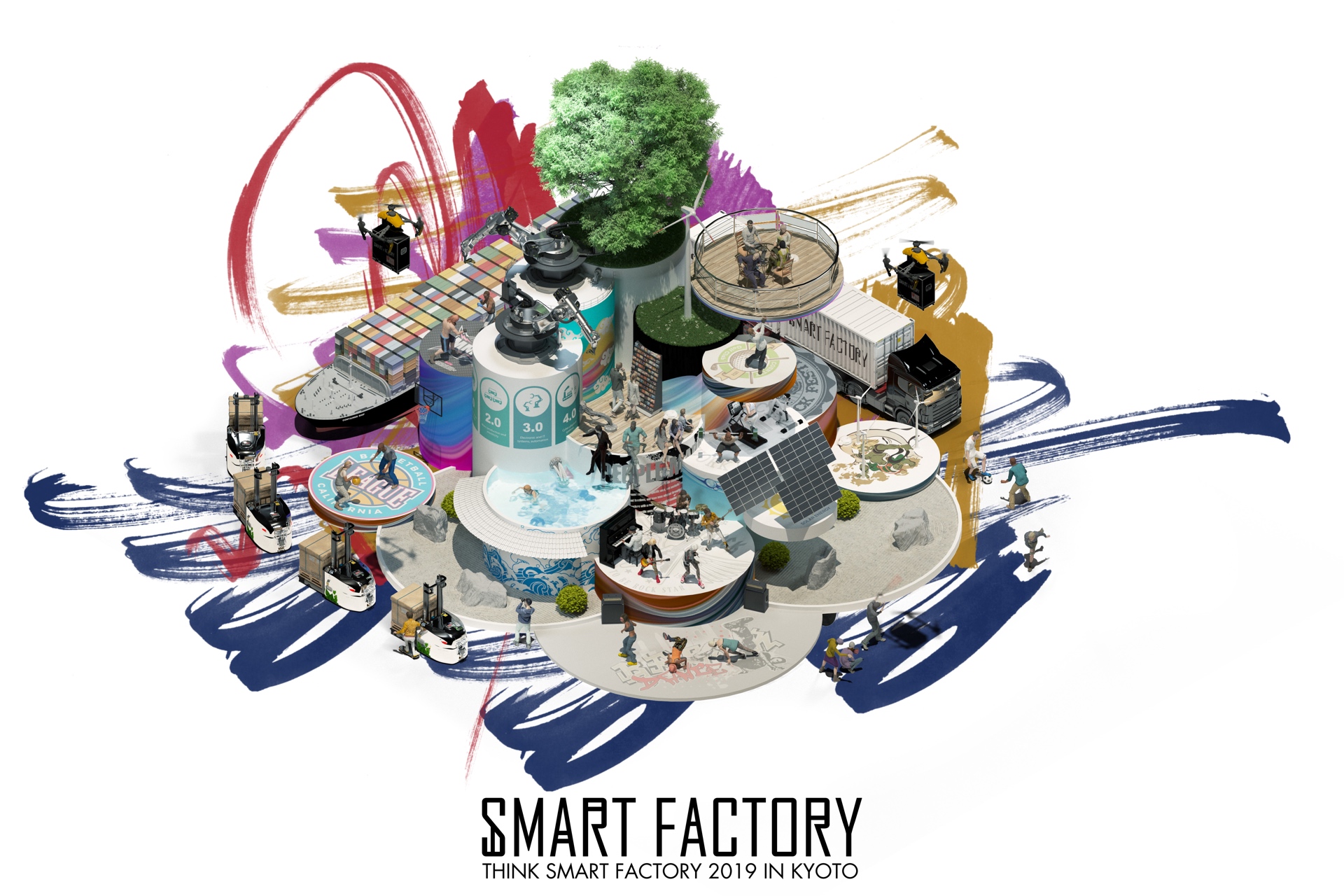
To establish a smart factory a digital mindset and 360-degree business solutions are needed. We present our interpretation of a smart factory with the goal of full automation of repetitive task and a self-optimizing production. The scope is not limited to the digitalization of production and print data workflows or to automate production lines with smart and connected machines but includes the sales process, customer communication and enterprise resource planning. To make it tangible, we discuss a potential end-2-end business solution using the example of a personalized face mask and cookie box from the creation of a business idea to the shipped product – from Pixel to Output.

Thu January 7th

En

From Pirate to Corporate America Christo...

Mergers and Acquisitions take many shapes, and in this film, we talk to Christoph Schacht, who recently left his position as COO from EFI/Direct Smile. Direct Smile is a well-known software used by many print service providers globally. This story is about the company, which Christoph Schacht himself refers to as a 'Pirate' company, and how the failed three times getting to America, how they got in contact with EFI, and how Due Diligence was a process that has been a learning experience about Corporate America for Christoph Schacht. Enjoy - yet another great session about M&As. https://www.linkedin.com/in/christoph-schacht-919aa796/

Thu January 7th

En

From Owner of Alpha Picture to owner of ...

In our series of films about Mergers and Acquisitions, we in this film meet Gerhard MĂ€rtterer, one of Alpha Picture's founders seventeen years ago. Everything developed fantastic until the financial crisis in 2008/09 directly influenced customers and forced MĂ€rtterer to file for insolvency. In this film, Gerhard MĂ€rtterer openly tells us about the failure, the shame, and the opportunities that eventually ended with MĂ€rtterer to buy back Alpha Picture together with two friends. This is an amazing story to learn from! https://www.linkedin.com/in/gerhardmaertterer/

Thu May 19th

En

From Offset to Inkjet Hayco van Gaal �...

It was supposed to be a behind the scene film from Venlo in the Netherlands and Poing in Germany. Inspired by the openness of Canon, and the amazing opportunity to see everything from how inks are made, to R&D labs with machines in development, to the production of the sold machines is by all means interesting. Regardless this film came to be about the transformation from offset to inkjet - and it is really good - Hayco van Gaal and Hans Schmidbauer from Canon EMEA share their insights. We will, however, shortly also deliver a more behind-the-scenes film, where you get an insight into how Canon works - pretty sure you will be as amazed as we were!

Tue June 29th

Ar De En Es Fr It Ja Nl Pt Ru Zh

From more to smarter mail solutions Lee ...

Lee Borns is the Vice President and 2nd. generation owner of Borns Group, Aberdeen, South Dakota, USA. Borns Group has grown over the years and experience that customers demand becomes more demanding. As he says, this changes the philosophy of printing/mailing more; it's about printing/the mailing smarter. To get the business operating as efficiently as possible, the company continues to invest in new technology, from new presses to smart software. One of the partners is Solimar, who delivers software enabling the Borns Group to create more innovative solutions. In this film, we get the opportunity to hear from Lee Borns about how Solimar supports their business.

Mon August 3rd

En

From many systems to one CERM · Sergio S...

From just 15 people working in a garage to one of Mexico’s significant label and printing operations, the ETIFLEX story is about growth, people, relationships—and the importance of knowing exactly what is happening on the production floor. Today, ETIFLEX operates 23 production lines, including 20 flexographic presses and three digital presses. The company produces labels, tickets, tags, promotional products, and RFID solutions for customers across retail, logistics, food, chemicals, health and beauty, textiles, transportation, and entertainment. Mexico offers significant opportunities. With a population of around 130 million people, a strong manufacturing base, and direct access to the United States, the country has become an increasingly important export market. But competitiveness is no longer simply about offering the lowest price. It is about productivity, innovation, quality, service, and the ability to create long-term relationships with customers and suppliers. Measurement has therefore become part of the culture at ETIFLEX. The philosophy is simple: What you do not measure, you cannot fix or improve. Before implementing CERM, ETIFLEX used five or six separate systems for estimating, production control, warehouse management, purchasing, accounting, and finance. The information existed, but the systems did not communicate effectively with each other. Introducing CERM was a major strategic decision. Changing an MIS or ERP platform requires investment, leadership, time, and commitment throughout the organization. However, continued growth demanded a single integrated system capable of connecting the company’s operational areas and providing reliable, real-time information. With better data, the ETIFLEX team can understand the true cost of every job, identify products that may be subsidizing others, reduce waste, improve printing speeds, shorten setup times, and make better decisions about equipment and capital investments. Perhaps most importantly, the data is no longer reserved for management. Employees throughout ETIFLEX can analyze their own processes, identify opportunities, and suggest improvements. With hundreds of people observing production through the same system, operational knowledge becomes a shared resource. The next chapter will include even more automation, robotics, integration, and information. Technology will play an increasingly important role—but people, culture, and the ability to make informed decisions will remain at the heart of ETIFLEX. Watch the film and meet a Mexican printing company that has transformed measurement from a management tool into part of its DNA.

Wed September 21st

En

From Intern to Planner to Procurement · ...

Matthew Allen never planned a career in print, yet he now sees himself growing within the company he got part of years ago. Matthew Allen works at Eurostampa North America, an OMET customer throughout Europe and North America. An interesting journey for Matthew - enjoy the film!

Wed August 2nd

En

From four to two machines Brian Stone &#...

Visiting a company like ColorDynamics is an experience in itself. The entrance is impressive, and the company's design makes it interesting, with gardens, courtyards, and space. The history of ColorDynamics is also fascinating, as it was founded in Chicago but moved years ago to Allen in Dallas and has since grown through excellent management and acquisitions. We learned all this from Brian Stone and David Dey, along with how the company reduced their four wide-format digital printers to two new Agfa wide-format printers, delivering more than anticipated and higher quality. ColorDynamics is a fantastic printing company specializing in trading cards and providing solutions using their Heidelberg and HP presses and web-offset machines with tailor-made finishing - super lovely company!
Thu May 19th

En

From Estonia to Finland with Agfa, Kongs...

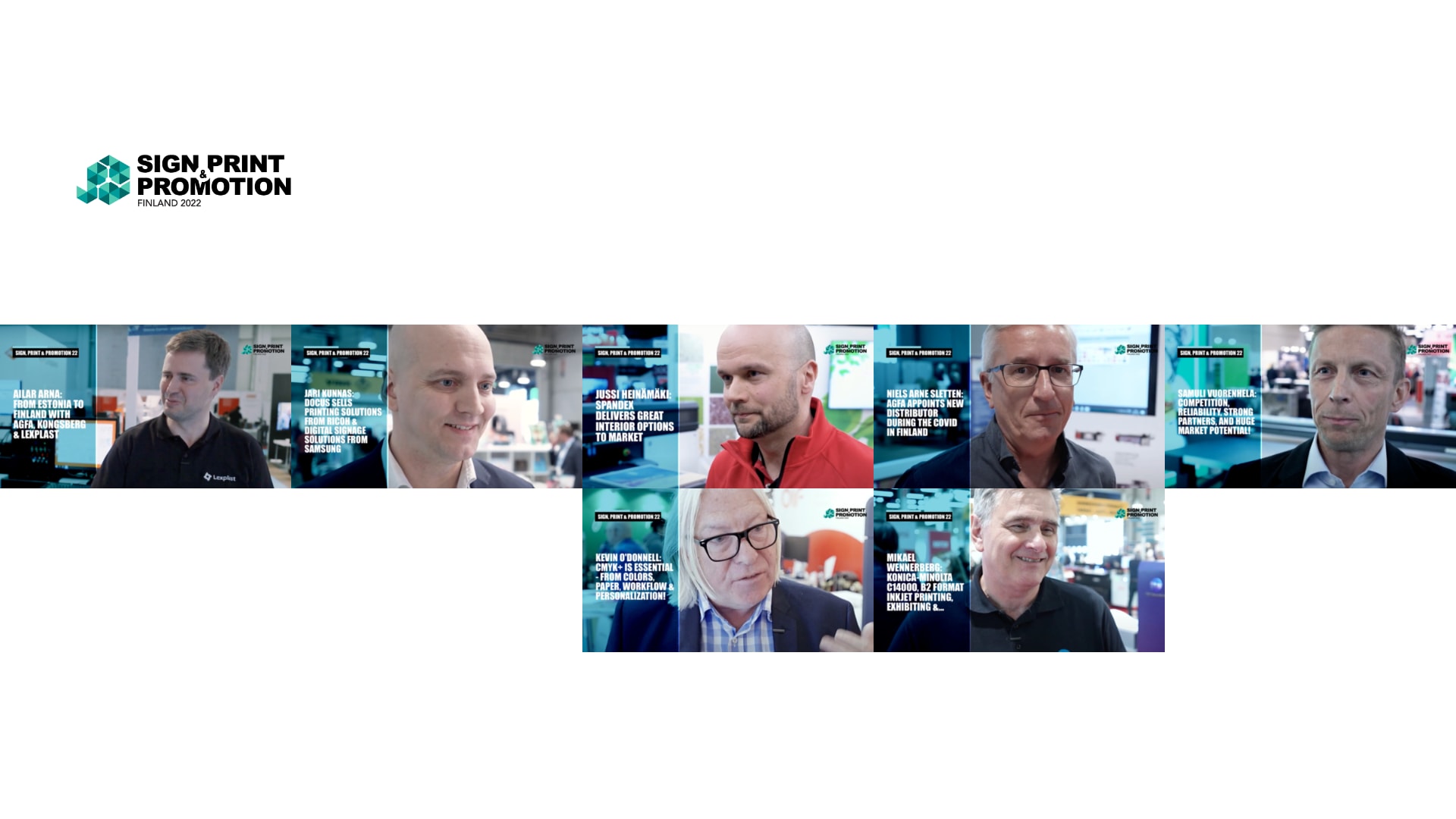
At the Sign, Print & Promotion 22 event in Helsinki we get the chance to meet with CEO and Founder Ailar Arna, who represent Agfa and Kongsberg in Estonia and Finland. Estonia is a country with only 1.3 million people, so when Airlar Arna set his eyes on expansion Finland was the obvious choice - and so did Agfa and Kongsberg think. Hear more about how it is running a company across different cultures!

Tue February 7th

En

From Digital to Rotogravure Peter Metcal...

In the suburbs of Cape Town in South Africa, we got the chance to visit quite an amazing printing company, Novus Holdings. The company was formerly known as Paarl Media, but as it went public, it changed its name. Peter Metcalf, Group Executive: Sales & Marketing, welcomes INKISH to the almost 70,000 m2 facility that houses all the printing equipment you can think of, from cut-sheet digital to rotogravure machines. In this film, you'll get an overview of the company, how they manage power outs for up to ten hours a day, and how they re-circulate ventilation and optimize their production. An amazing story and we are confident you will like it!

Tue June 30th

Fr

From Band Manager to Leading Online Prin...

Antonie Roux is the CEO and owner of the successful online-printer PrintOclock.com in France. The online printing company is for now only in French. With one of the largest print markets in Europe, Antoine Roux continues to see growth in his market - however, being close to Spain, Roux is considering a Spanish version of PrintOclock as well.

Wed April 6th

En

Frida Julin Scandinavian Print Group fro...

Frida Julin is part of the greatest Scandinavian print success over the past many years - namely the Scandinavian Print Group - now part of German Onlineprinters. At Sign & Print in Stockholm, the group is promoting their Whitelabel solutions which enable printers to utilize the vast capacity the group has in the printing facilities around Denmark, Sweden, and Poland. Listen - this group has shown how printing companies can thrive and grow!

Fri April 29th

En

Frederik Parrein Operations Digi-Paq Dur...

Frederik Parrein found great value in the DURST Expo because the access to the technical people allowed for one-on-one communication. He felt this is not possible at a larger show where there are thousands of attendees. Frederik also was pleased that the selected vendors were label market experts.

Tue January 31st

Fr En Fr

Frédéric Pambianchi est le Directeur Gén...

Frederic Pambianchi est le Directeur Général France de Koenig & Bauer. Il nous présente leur portefeuille qu'ils apportent et proposent sur le marché européen et en particulier en France. Dans cette interview trÚs sympathique, nous parlons entre autres du cycle de vie d'une boßte en carton et de l'importance de leur rÎle dans l'agenda "Green". INKISH mesure l'envie et la motivation en France d'investir dans les technologies nécessaires pour rester compétitif et pertinent.

Wed December 6th

En

Frederic Deliat DS Smith Operational Pro...

Frederic Deliat from DS Smith joined the BHS Open House earlier this year - and besides saying that each of DS Smith's plants can have different suppliers, he also told Editor Morten B. Reitoft that he is at the BHS Open House to see and experience the new BHS JetLiner. Interesting to see how BHS attracts many different people and how the Jetliner seems to be exciting for people to see at the Schumacher site :-)

Tue May 21st

En

Fred Duquenne · Product Director · BW Pa...

After the COVID pandemic, BW Papersystems' folding carton business faced new challenges, with the market becoming more segmented and requiring shorter orders and credit times. Fred Duquenne explains that BW Papersystems developed a new generation of the web-fed platen die cutter, to address these needs. The "Mercury," ideal for food and beverage and general folding cartons like pharmaceutical and luxury packaging, offers significant advantages over traditional methods, including faster speeds and reduced raw material waste. At Drupa, BW Papersystems will announce the new product line to meet customers' evolving needs. The web-fed platen die cutter is not widely known outside North America but provides twice the speed of flatbed die cutters and impressive raw material savings. This technology is now ready for the European market. "We're launching the new generation machine "Mercury" with a very short make-ready time, designed for medium converters and folding carton plants, offering faster production and significant cost savings," Fred Duquenne says. LinkedIn Profile: https://www.linkedin.com/in/frederic-duquenne-1b5a723a/

Tue June 3rd

En

Frazer Chesterman Co Founder Future Prin...

FuturePrint are running a conference programme at the IST UV Days 2025 entitled the Evolution of Inkjet and also talks to Wayne about a new exhibition scheduled for January of next year.

Thu March 12th

En

Franz Repp Vice President, Sales EMEA St...

As web-to-print providers look for more ways to differentiate what they can offer, many are turning to Steinemann to explore the opportunities created by print embellishment to bring shimmer, shine, and a luxury feel. Frank Repp explains how to create unique high-value products to your portfolio.

Wed February 26th

En

Franz Repp President Scodix EMEA · Hunke...

The eye-catching displays focused on the publishing industry get your attention when you enter the Scodix booth. With over 20 new approved substrates to print on, Scodix is excited about the latest opportunities this opens for its customers. Packaging embellishments are still very much a growing market, and the demand is not slowing down.

Tue April 21st

En

Franz Repp Over The Skype Scodix

Franz Repp is responsible for the Scodix sales in the DACH countries (Germany, Switzerland, and Austria), and with a broad background in the printing industry and an always positive go-to- strategy I think he is one of the reasons why Scodix is successful. In this film, we talk, of course, a little about the coronavirus, how Scodix helps the customers to increase customer value and therefore also profit. As with all our 'Over the Skype' interviews, quality is limited to bandwidth, web-cams, and ability to literally LIVE mix the conversations. However, it works, and with Over the Skype, we will bring you more than 20 exciting people, and angles on the industry as it is right now. Enjoy!